Tag: Zoroastrianism

  • Zoroastrian Esotericism

    Zoroastrian Esotericism is a special issue of Religiographies, vol. 3, no. 1, edited by Mariano Errichiello, Daniel J. Sheffield, and Yuhan Sohrab-Dinshaw Vevaina.

    Table of contents

    Editorial

    New Perspectives on the Study of Esotericism and Zoroastrianism
    Mariano Errichiello, SOAS University of London
    Francesco Piraino, Giorgio Cini Foundation / Harvard Divinity School
    Yuhan Sohrab-Dinshaw Vevaina, University of Oxford
    [PDF] 1-6

    Articles

    The Mazdean Esoteric Dimension between Ritual and Theology
    Antonio Panaino, University of Bologna
    [PDF] 7-26

    Exploring Zoroastrianism and Esotericism in the Context of Global Religious History
    Moritz Maurer, Institut für Religionswissenschaft, Universität Heidelberg
    [PDF] 27-43
    (more…)
  • Zoroastrian Apocalypticism in The Maʿnī-yi Vahman Yasht

    Zoroastrian Apocalypticism in The Maʿnī-yi Vahman Yasht

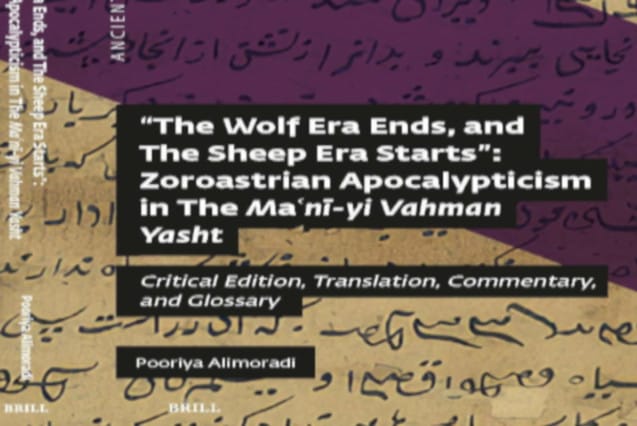
    Alimoradi, Pooriya. 2024. “The wolf era ends, and the sheep era starts”: Zoroastrian apocalypticism in the Maʿnī-yi Vahman Yasht. Leiden: Brill.

    This book studies, for the first time, the Maʿnī-yi Vahman Yasht , the New Persian version of the Zand ī Wahman Yašt , the most important Zoroastrian text in apocalyptic genre. Through offering a critical edition, translation, and commentary, Alimoradi argues that the MVY is not a translation of the extant Pahlavi ZWY and is derived from another recension of apocalyptic materials in Pahlavi. He also offers suggestions in identifying several unspecified characters and events referred to in the text whose identities have been debated for decades. The book is relevant to those interested in Zoroastrianism, Iranian apocalyptic traditions, and anyone studying the Arab conquests in Western and Central Asia in 6ᵗʰ to 9ᵗʰ c. CE.

  • Domestic Slaves in Zoroastrianism

    Foroutan, Kiyan. 2024. On the question of domestic slaves in late medieval and early modern Zoroastrianism. Bulletin of the School of Oriental and African Studies, FirstView. 1–25.

    This article collects and analyses passages about male and female domestic slaves in the Persian Rivāyats. The Rivāyats consist of correspondence between Iranian and Indian Zoroastrians (Parsis) from the late fifteenth to the eighteenth centuries ce. In these letters, Parsis sought the opinions of Iranian Zoroastrians on various doctrinal and ritual issues. The passages in question cover a range of subjects, including the issue of converting household slaves to Zoroastrianism, their participation in domestic religious ceremonies, the exposure of their dead bodies in the towers of silence, and marrying female slaves. These references to slaves challenge the conventional narrative that pre-modern Zoroastrians were oppressed, marginalized, and poor communities. This narrative has overshadowed these pieces of evidence and has caused them not to be studied seriously. This paper seeks to go beyond this traditional reconstruction by examining these texts based on their context. The passages reflect the actual socio-religious issues of Zoroastrians, especially Parsis, and demonstrate their participation in the slave-owning milieu of late medieval and early modern Gujarat and Iran rather than mere anachronistic elements or rhetorical tools reflecting a scholastic treatment of a defunct legal question.

    Abstract
  • Religious Conversion

    Vol. 15, no. 2 of the open access journal Entangled Religions is a special issue dedicated to the question of Religious Conversion in a Religiously Plural World.

    Religious conversion is a phenomenon that has intrigued scholars, theologians, and sociologists for centuries. As the conscious choice of a particular form of religion over another, it is eminently a form of religious contact. Religious conversion may be approached psychologically, sociologically, and conceptually. The contributions of this special issue show all three approaches and cover a wide array of geographical, social, and religious contexts.

    Benedikt Römer has an article on Neo-Zoroastrianism, titled Reversion, Revival, Resistance: Framing Iranian Neo-Zoroastrian Religiosities

  • Dabir (vol. 10)

    Volume 10 of Dabir, dated 2023, is now available with two issues.

    Issue 1:

    • Nima Asefi: Open Access Frāy in Seven Documents from the Pahlavi Archive of Hastijan
    • Majid Daneshgar: Anthologies of Persian Poetry Inscribed in Indonesia: A Handlist of Rare Manuscripts
    • Mustafa Dehqan: Restricted Access From Historian to Poet: A Checklist of the Persian Poems of Idrīs Bidlīsī (Hašt Bihišt VI, Nuruosmaniye 3209)
    • Marco Ferrario: Before Skunḫa. A (Trans)Local Perspective on the Rise of the Teispid-Achaemenid Frontiers in Baktria, Sogdiana, and Beyond
    • Saloumeh Gholami: The Zoroastrian Manuscripts of the Rostam Jāmāsb’s Family and a New Dating of Videvdād 4100
    • Book Review:
    • David Gilinsky: ‘Shirat Moshe: A Complete Hebrew translation of Shahin’s Musa Nameh – the greatest poet of Iranian Jewry’ [Hebrew] , written by Baruch Pickel

    Issue 2:

    • Negar Habibi: On Persian Design and Fashion in Twentieth-Century France: The 1930 Jean Pozzi Catalogue of Persian Art
    • Stefan Härtel: Thoughts on the Iconography of the Sophytos Coinage
    • Götz König: On the Yašt Gāhān (= Gāh Sārnā)
    • Nina Mazhjoo: Taking the Bull by His Horn: Augustus Slays the Mithraic Bull
    • Daniel T. Potts: Restricted Access The Tassels of Royal and Divine Sasanian Horses
    • Enrico G. Raffaelli: Restricted Access Dahmān Āfrīn and Srōš: Analyzing a Connection
    • Book Reviews:
    • Khodadad Rezakhani: the Age of the Great Kings , written by Lloyd Llwellyn-Jones
    • Hossein Sheikh: Hunnic peoples in Central and South Asia: sources for their origin and history , edited by Dániel Balogh
  • TISS-Parzor Academic Programme

    ‘Parzor is delighted to announce its long awaited TISS-Parzor Online Academic Programme on Culture & Heritage Studies’. As part of this programme, you can ‘learn, gain credits, explore exciting issues of environment and sociology, craft, art, literature, theatre, cuisine as well as business and philanthropy’.

    Dr. Shernaz Cama announces the start of the TISS Parzor Online Academic Programme on Culture & Heritage Studies.

    For admissions and programme details, visit the TISS Website. Admissions are open till 31st August and open to all! Apply now!

  • Zoroastrian Iconographies from Pre-Islamic Persia and Central Asia

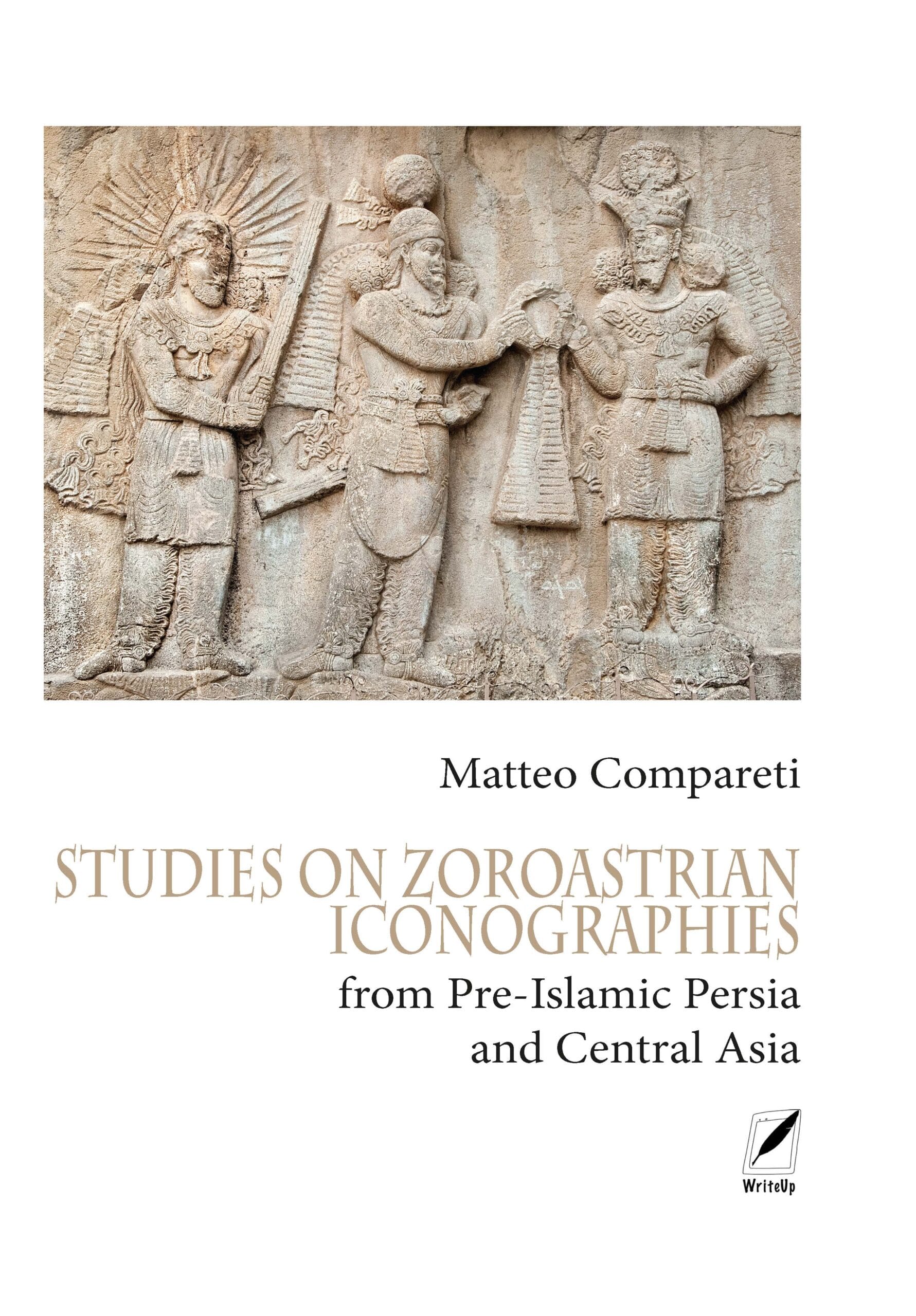
    Compareti, Matteo. 2024. Studies on Zoroastrian Iconographies from Pre-Islamic Persia and Central Asia. Roma: WriteUp.

    Sogdiana was an Eastern Iranian land situated in the territories of modern Uzbekistan and Tajikistan. It never formed a significant political or military force although, between the 6th-9th centuries, Sogdians became the main actors in the caravan and maritime trade networks commonly called the “Silk Road”. Most of archaeological and artistic materials about Sogdians come from excavations in ex-Soviet Central Asia, especially the site of Penjikent (Tajikistan). Wall paintings from this important Sogdian site show a native polytheistic faith with Zoroastrian background, which is still puzzling experts of Iranian studies. During the centuries, local artists adopted external cultural elements that – once individuated – could help to shed light on unidentified deities of the Sogdian pantheon. Their comparison with Zoroastrian deities depicted in pre-Islamic Persian arts represents an invaluable instrument to improving our knowledge of this fascinating but still enigmatic field of studies.

  • The Afterlife of Avestan Manuscripts

    Gholami, Saloumeh. 2023. The afterlife of Avestan manuscripts: Colophons and marginal notes. Wiesbaden: Reichert Verlag.

    The book is also available as open access e-book.

    This study investigates the role of paratext in Zoroastrian scribal tradition, with a focus on the Avesta manuscripts. It examines how paratexts, such as colophons and marginal notes, contribute to organizing and interpreting the content of these manuscripts. These elements not only structure the knowledge but also reflect the roles and activities of individuals involved in the manuscript’s lifecycle, from creation to reception. Additionally, the study explores how paratexts facilitate access to the main text, acting as a bridge that documents the history of each manuscript, its actors, and interaction with society. The analysis includes a diverse range of colophons and marginal notes, examining their structure, content, and relationship to their respective manuscripts.

    Short summary
  • Topographies of Rhetoric

    Yuhan Sohrab-Dinshaw Vevaina, University of Oxford, will deliver four public lectures at the École Pratique des Hautes Études:

    Topographies of Rhetoric and Moral Reasoning in Sasanian and Post-Sasanian Zoroastrianism

    (more…)