Category: Books

  • The Sanskrit Version of Yasna

    Palladino, Martina. 2025. The Sanskrit Version of Yasna 1–8. A Critical Edition with Commentary and Glossaries (Corpus Avesticum / Handbuch der Orientalistik 32/5). Leiden: Brill.

    This book contributes to the Multimedia Yasna (MUYA) Project, led by Prof. Almut Hintze of SOAS, by presenting an edition of the first eight chapters of the Sanskrit Yasna. This new edition is accompanied by an English translation and two glossaries.
    This study aims to provide a framework for Parsi literary production in the Indian context and, at the same time, to relate the Sanskrit text to its Avestan and Pahlavi versions. The special feature of this unique text is that it belongs to the Indian cultural environment while remaining part of the Zoroastrian tradition.

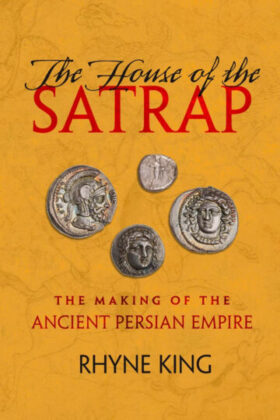
  • The House of the Satrap

    The House of the Satrap

    King, Rhyne. 2025. The House of the Satrap: The Making of the Ancient Persian Empire. Oakland: University of California Press.

    Starting in the sixth century BCE, the conquests of the Persian kings Cyrus, Cambyses, and Darius transformed the lives of humans on a continental scale, as their empire reached from the Iranian plateau to eastern Europe, Central Asia, and North Africa. Beyond the imperial center, the kings’ vast territory was ruled by royal representatives known as satraps, who managed the practicalities of running the empire. In this book, Rhyne King explores how the empire was governed by investigating how the satraps and the structures supporting them—their “houses”—operated across great distances. Examining satrapal houses in Egypt, Anatolia, Mesopotamia, and Central Asia, King demonstrates how these systems encouraged local self-interest and advancement even as they benefited the imperial whole. Ultimately, he argues, it was these Persian forms of transregional governance that were key in enabling the vast polity to endure for more than two centuries.

  • Die Aneignung und Umnutzung von Herrschaftsräumen am Beispiel der Squattersiedlung der südwestasiatischen Eisenzeit

    Die Aneignung und Umnutzung von Herrschaftsräumen am Beispiel der Squattersiedlung der südwestasiatischen Eisenzeit

    Cyrus, Georg . 2025. Die Aneignung und Umnutzung von Herrschaftsräumen am Beispiel der Squattersiedlung der südwestasiatischen Eisenzeit. Bicester: Archaeopress.

    Following the fall of the Neo-Assyrian Empire, former monumental sites in northern Mesopotamia and the Zagros Mountains became long-lasting squatter settlements. This study compares four such sites, revealing creative reuse of space and framing squatting as a distinct cultural phenomenon of the 6th–5th centuries BCE.

    In the 6th century BCE, with the collapse of the Neo-Assyrian Empire, a new form of cohabitation was established in many places in northern Mesopotamia and the neighbouring Zagros Mountains: squatter settlements. Once monumental structures seem to have lost their significance as elite sites and were now used for domestic purposes. This book analyses this form of cohabitation.

    In a qualitative comparison between the squatter settlements of the four sites Tell Sheikh Hamad, Nimrud, Godin Tepe and Nush-i Jan, this thesis identifies similarities and differences in the appropriation of monumental spaces. Lefebvre’s theory of space is used as a theoretical basis for understanding these appropriations. Methodologically, Hillier and Hanson’s space syntax analysis and Klinkenberg’s sequence-of-events approach are used.

    Ultimately, this analysis leads to the conclusion that squatter settlements were not simply temporary settlements that only existed for a few years, but rather established settlements that existed for centuries. It also turns out that the inhabitants of squatter settlements faced particular challenges with the decaying monumental structure, which they met with creativity and inventiveness. Squatter settlements therefore deserve their own consideration and should be seen as a cultural phenomenon of the 6th and 5th centuries in northern Mesopotamia and the central Zagros Mountains.

  • Shami, Kal-e Chendar

    Shami, Kal-e Chendar

    Messina, Vito & Jafar Mehr Kian (eds.). 2025. Shami, Kal-e Chendar: Research of the Iranian-Italian Joint Expedition in Khuzestan. Bicester: Archaeopress.

    This report details the Iranian-Italian Joint Expedition’s research (2012-2018) at Kal-e Chendar, Khuzestan. It reveals a multifunctional religious complex from the Hellenistic and Parthian periods (3rd century BCE to 2nd century CE), with interconnected religious, funerary, and social functions.

    This report publishes the results of the research conducted between 2012 and 2018 by the Iranian- Italian Joint Expedition in Khuzestan at Kal-e Chendar, in the valley of Shami, about 30 km north of present-day Izeh. The project aimed to shed new light on one of the most intriguing religious complexes of Hellenistic and Parthian Iran, located in highland Khuzestan, the heart of ancient Elymais. Identified thanks to the accidental discovery of statues (some fragmentary) in 1935, the site of Kal-e Chendar was briefly investigated by Sir Marc Aurel Stein, one of the most famous explorers of Inner Asia, and Bahman Karimi, Inspector of the Iranian Antiquities Service, early in 1936. It was subsequently to fall into oblivion for many decades despite the importance of the discoveries they made. Based on an interdisciplinary approach, the research project aimed to acquire new information on the materiality of the site and to systematically study its archaeological context, putting forward new interpretations of the function, chronology and meaning of the complex.

    Based on previous investigations and the results of this new research, it is clear that an important religious complex existed at Kal-e Chendar in the Hellenistic and Parthian periods, from about the 3rd century BCE to the 2nd century CE. The complex was multifunctional. Its religious dimension, although of paramount importance, was not the only characteristic of the site: monumental terraces, built to support sacred buildings now lost, alternate with a wide cemetery, implying that religious and funerary functions were here strictly interrelated. The complex also probably had social meaning.

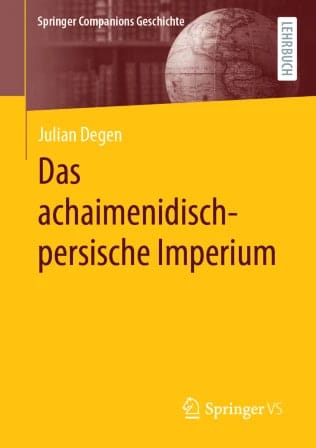
  • Das achaimenidisch-persische Imperium

    Das achaimenidisch-persische Imperium

    Degen, Julian (ed.). 2025. Das achaimenidisch-persische Imperium. Wiesbaden: Springer.

    Diese Einführung bietet einen systematischen Überblick über die Geschichte des achaimenidisch-persischen Imperiums, das weithin auch als „Perserreich“ bekannt ist. Dabei handelt es sich um die erste imperiale Formation der Antike, der es durch umfangreiche Eroberungen gelang, einen beeindruckenden Herrschaftsapparat zu errichten, der sich von Indien bis in nach Griechenland und von Äthiopien bis nach Zentralasien erstreckte. Dieses Imperium stellte die Bühne für zahlreiche schillernde Persönlichkeiten der Alten Welt dar, zu denen Kyros, Dareios, Xerxes, aber auch Alexander III. (der Große) zählen. Darüber hinaus setzte das Großreich Entwicklungen in Gang, die großen Einfluss auf die Welt Afro-Eurasiens ausübten und deren Dynamiken selbst in der Zeit nach seinem Niedergang bedeutsam waren. Insbesondere die Konflikte des Imperiums mit den Griechen fanden großen Nachhall in der antiken Geschichtsschreibung und ihre Präsentation stellt nach wie vor einen Orientierungspunkt des kollektiven Gedächtnisses moderner europäischer Gesellschaften dar. Aufgrund der enormen räumlichen Ausdehnung dieses Großreichs, das Herrschaft über eine Vielzahl an Kulturen ausübte, ist die Erforschung seiner Geschichte Gegenstand interdisziplinärer Forschungen. So sammelt diese Einführung Beiträge aus der Feder internationaler Spezialistinnen und Spezialisten aus unterschiedlichen Fachbereichen, die tiefgehende Einblicke in zahlreiche Aspekte der Geschichte des achaimenidisch-persischen Imperiums aus verschiedenen Perspektiven bieten.

  • Le Yasna Haptaŋhāiti

    Le Yasna Haptaŋhāiti

    Kellens, Jean. 2025. Le Yasna Haptaŋhāiti (Publications d’Etudes Indo-Iraniennes 2). Strasbourg: Université de Strasbourg.

    Inséré entre la première la deuxième Gâthâ, le Yasna Haptaŋhāiti, rédigé en vieil-avestique, occupe les chapitres 35 à 41 du Yasna. Ce texte fait lobjet dune traduction commentée dans le présent ouvrage.

    Résumé
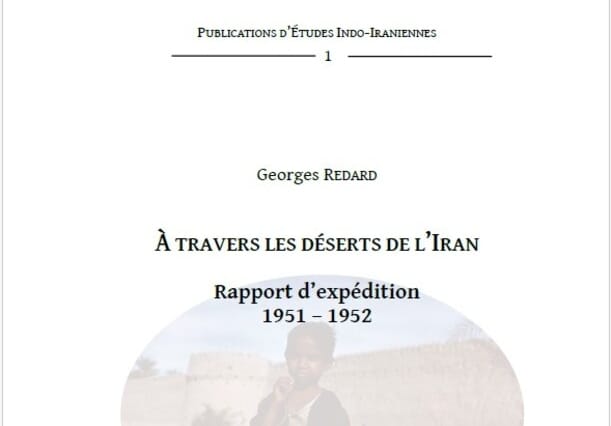
  • Across the deserts of Iran

    Across the deserts of Iran

    Céline Redard, Université de Strasbourg, has established a new series entitled Publications d’Etudes indo-iraniennes. The first book in the series has already been published and two more volumes are announced. This promises to be an exciting series. The books of the series will be open access.

    Redard, Georges. 2025. A travers les déserts de l’Iran. Rapport d’expédition 1951 – 1952 (Publications d’Etudes Indo-Iraniennes 1). Edidetd by Céline Redard. Strasbourg: Université de Strasbourg.

    Le présent ouvrage contient le récit de voyage rédigé par Georges Redard (1922-2005) lors de sa première mission en Iran, de fin 1951 à début 1952, en compagnie de Murray Barr et Richard Nelson Frye. Le lecteur les suivra ainsi à travers les déserts de l’Iran pendant 49 jours, et prendra connaissance de leurs rencontres et de leurs découvertes, mais aussi de leurs ennuis mécaniques ou techniques. Autant d’anecdotes qui lui permettront de s’immerger dans une autre époque, une autre culture et d’entreprendre un voyage scientifique à leurs côtés.

    Résumé

    Georges Redard (1922-2005) était un linguiste suisse, qui s’est notamment intéressé aux langues iraniennes anciennes ainsi que modernes. Il fut professeur à l’Université de Neuchâtel sur la chaire de Grammaire comparée, puis à l’Université de Berne sur la chaire de linguistique indo-européenne.

  • The Zoroastrian Manuscripts of the Matenadaran

    The Zoroastrian Manuscripts of the Matenadaran

    Andrés-Toledo, Miguel Ángel (ed.). 2025. The Zoroastrian manuscripts of the Matenadaran. Facsimile edition (Corpus Avesticum / Handbuch der Orientalistik 32/6). Leiden: Brill.

    Armenia was a stronghold of the Zoroastrian religion in antiquity and late antiquity. Of the rich Zoroastrian literature that was composed and transmitted in the region, no single text was extant there after long periods of cultural, political and religious changes.
    The three Zoroastrian manuscripts of this facsimile edition, containing precious copies of texts in the Avestan, Pahlavi and Zoroastrian New Persian languages, are the only exception. Stemming from Iran and now preserved at the Mesrop Mashtots Institute of Ancient Manuscripts (Matenadaran), they are heirs of an ancient Iranian faith that once flourished also in Armenia.

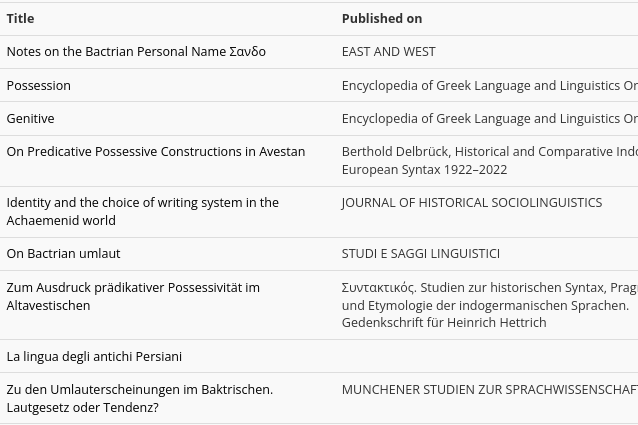
  • Recent publications by Maria Carmela Benvenuto

    Recent publications by Maria Carmela Benvenuto

    We would like to bring a number of recent publications by Maria Carmela Benvenuto and her collaborators to the attention of our readers. Her publications are listed on her departmental page, but also on her academia account.

  • The Arsacids of Rome

    The Arsacids of Rome

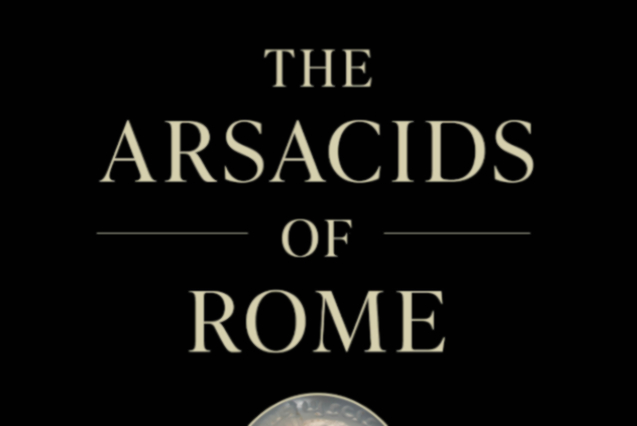
    Nabel, Jake. 2025. The Arsacids of Rome: Misunderstanding in Roman-Parthian relations. California: University of California Press.

    At the beginning of the common era, the two major imperial powers of the ancient Mediterranean and Near East were Rome and Parthia. In this book, Jake Nabel analyzes Roman-Parthian interstate politics by focusing on a group of princes from the Arsacid family—the ruling dynasty of Parthia—who were sent to live at the Roman court. Although Roman authors called these figures “hostages” and scholars have studied them as such, Nabel draws on Iranian and Armenian sources to argue that the Parthians would have seen them as the emperor’s foster children. These divergent perspectives allowed each empire to perceive itself as superior to the other, since the two sides interpreted the exchange of royal children through conflicting cultural frameworks. Moving beyond the paradigm of great powers in conflict, The Arsacids of Rome advances a new vision of interstate relations with misunderstanding at its center.

    A free ebook version of this title is available through Luminos, University of California Press’s Open Access publishing program. Visit www.luminosoa.org to learn more.