Category: Books

  • Iran and Persianate Culture in the Indian Ocean World

    Iran and Persianate Culture in the Indian Ocean World

    Peacock, Andrew (ed.). 2025. Iran and Persianate Culture in the Indian Ocean World. London: Bloomsbury.

    Most of the historiography of the Iranian world focuses on interactions and migrations between Iran, Central Asia and India. Nonetheless, this Iranian world was also closely connected to the maritime one of the Indian Ocean. While scholarship has drawn attention to diverse elements of these latter interactions, ranging from the claims to Shirazi descent of East African communities, to Persian elements in Malay literature, and Iranian communities of merchants in China, such studies have remained largely isolated from one another. The consensus of historiography on the Indian Ocean presents it as an ‘Arabic cosmopolis’, or, in earlier times, a Sanskrit one. The aim of this book is thus to bring together scholars working on disparate aspects of Persianate interactions with the Indian Ocean world from antiquity to modern times to provide a more rounded picture of both the history of the Persianate world, broadly conceived, and that of the Indian Ocean.

    The book brings together a collection of internationally renowned scholars from a variety of disciplines – including archaeology, history, literature, linguistics, art history – and covers interactions in Iran’s political and commercial relations with the Indian Ocean world in history, Persian-speaking communities in the Indian Ocean world, Persian(ate) elements in Indian Ocean languages and literatures, Persian texts dealing with the Indian Ocean, and connections in material culture.

    Table of Contents

    List of Figures and Tables
    List of Contributors
    Acknowledgements

    Introduction
    A.C.S. Peacock

    Chapter 1. The Sasanian Origin of Siraf?
    Seth M.N. Priestman
    Chapter 2. Mark Marking on Ceramic Transport Jars – Clues to Persianate Actors and Networks in the Indian Ocean World (8th through 10th Centuries AD)
    Elizabeth Lambourn
    Chapter 3. The Shirazis in East Africa, myth or reality?
    Mark Horton
    Chapter 4. Maritime relations between the Persian Gulf and China: An overview from the Song through the Ming periods (10th-17th centuries)
    Ralph Kauz
    Chapter 5. The Role of Iran in the Islamicisation of the Maldives
    Jost Gippert
    Chapter 6. Medieval Khurasan and the Indian Ocean World
    A.C.S. Peacock
    Chapter 7. From Devas to Muwakkils: Manifestations of Indic Gods in Persianate Works
    Maya Petrovich
    Chapter 8. Traditional Malay Conversion Narratives, Sufi Hagiography, and Persian Historiography: Crafting Political Legitimacy while “Centring the Periphery” in the Malay World
    Alexander Wain
    Chapter 9. The Jami? al-barr wa’l-ba’r: The place of ‘birds of paradise’ in the elaboration of Perso-Islamicate traditions in the eastern frontiers of Indonesia
    Raha Ebrahimi
    Chapter 10. Another Ship of Persians to Siam in the 17th Century: An Account of a Persian Shi?i Anthology in Patna, Dhaka and Burma
    Majid Daneshgar
    Chapter 11. Arabic-Persian Bilingualism and Persianate Identities in the Early Modern Western Indian Ocean: The Case of Mirza Muhammad Fayyaz
    James White
    Chapter 12. Unfinished Hyperboles! Adam’s Footprint in Sri Lanka and Wonder on the Edge of Modernity
    Vivek Gupta
    Chapter 13. Rejecting the Persianate Past: A Pioneering Urdu History of the Indian Ocean
    Nile Green
    Chapter 14. Royal Exile in the Indian Ocean: Reza Shah’s Sojourn in Mauritius
    H.E.Chehabi

  • Kingship and Empire under the Achaemenids, Alexander the Great and the Early Seleucids

    Kingship and Empire under the Achaemenids, Alexander the Great and the Early Seleucids

    Harrison, Stephen. 2025. Kingship and empire under the Achaemenids, Alexander the Great and the early Seleucids. Edinburgh: Edinburgh University Press.

    This book offers the first systematic, comparative analysis of the ideology of kingship and empire under the Achaemenids, Alexander the Great and the early Seleucids. It explores key issues thematically such as legitimation, representations of empire and royal space. Through this method, Stephen Harrison breaks traditional periodisation offering new insights into long-term trends. The book challenges existing narratives about the relationship between the Achaemenids and their successors.

    Rather than focusing on the mere facts of continuity and change, the study advocates for a more complex understanding of the Achaemenids’ impact on monarchical ideology under Alexander and the Seleucids. Harrison’s comparative approach brings the three empires into dialogue with one another and thus treats them all equally through this lens. The methodology highlights the uniqueness of particular strategies deployed by different rulers and isolate ideas which were distinctively ‘Achaemenid’, ‘Alexandrine’ or ‘Seleucid’ as opposed merely to identifying monarchical commonalities.

  • Manichaeism: Encounters with Death

    Manichaeism: Encounters with Death

    Towers, Susanna. 2025. Manichaeism: Encounters with death. Studies in the material, spiritual and parabolic body (Studia Traditionis Theologiae 61). Turnhout: Brepols Publishers.

    Born in Persian Mesopotamia in the year 232 CE, the self-proclaimed prophet Mani promulgated a dualist faith that rapidly spread throughout the Roman Empire, Central Asia and China. This monograph comprises a series of studies of the Manichaean conceptualization of death and the afterlife in the context of Manichaean soteriology, eschatology and anthropology. Material, documentary and liturgical evidence is analysed to enrich knowledge of Manichaean funeral ritual and mourning practice. The book explores the thematic symbolism of the corpse in Manichaean parabolic literature, offering fresh interpretations and exploring the influence of Buddhist teachings on the impermanence of the body, karma and metempsychosis.

    Summary
  • Reflections on the Tapestry of Family and Household in Ancient Iran

    Reflections on the Tapestry of Family and Household in Ancient Iran

    Jahangirfar, Milad (ed.). 2025. Reflections on the Tapestry of Family and Household in Ancient Iran (Studia Persica 6). Bologna: Persiani Editore.

    This volume offers a collection of ten articles focusing on various aspects of family and household in ancient Iran (ca. the 2nd millennium BCE to ca. the end of the 7th century CE). This book deals with aspects of the family in pre-Islamic Iran that are less explored or require renewed attention. The contributions draw upon a range of sources, including Old Elamite documents, Middle Elamite terracotta figurines, Sogdian wall paintings, Old Persian inscriptions, Achaemenid administrative tablets, and passages from the Avesta and Middle Persian texts. The inclusion of references to Greek, Latin, and Armenian writings, and passages from Ferdowsi’s Shahnameh enriches the discussion by bringing in alternative perspectives and accounts of relevant issues. Approaching the topic from a multidisciplinary perspective helps to create a more nuanced understanding of the role of family and household in ancient Iran.

    Contents
    – Introduction (Milad Jahangirfar)
    – Script and Witness as a Hereditary Vocation in the Old Elamite Period (Mohammad Amin Mirghaderi)
    – Household Religion in Context: Middle Elamite Terracotta Figurines and Their Judahite Counterparts (Francesco Del Bravo)
    – The Divine Couple Formed by Nana and Nabu/Tiš in Sogdian Art: A Powerful Amulet for the Protection of Children and Households (Matteo Compareti)
    – Some Reflections on the Concept of “Family” in the Gāthās (Mina Kambin)
    – “For the Increase of the House”: Children in Ancient Iran (Jenny Rose)
    – Some Remarks on the Family in pre-Islamic Iran according to the Ardā Wīrāz-nāmag (Mateusz M.P. Kłagisz)
    – Ancient Iranian Women at War: A Gender Role at Variance than the Greco-Roman Familial System? (Kaveh Farrokh)
    – Parthian Hostages in Rome: Keeping Alive Royal Family Members during the Parthian Kingdom (Berta González Saavedra and Juan Antonio Álvarez-Pedrosa Núñez)
    – The Institution of Zoroastrian Marriage xwēdōdah: Genesis and Typology (Pavel Basharin)
    – About the xwēdōdah Once Again (Katarzyna Maksymiuk and Joanna Szklarz)

  • District Twelve

    District Twelve

    Ferrario, Marco. 2025. District Twelve. Northeastern Central Asia From Cyrus to Antiochos: Local Histories of a World Empire (Ancient Iran Series, 19). Leiden: Brill.

    This book offers, at the same time, an imperial history of a region (Northeastern Central Asia under the Achaemenids) and the regional history of an Empire (how the Persians adapted their strategies of governmentality to a geographically challenging, ethnically diverse, and politically impervious space). Bringing together evidence from literary texts, archaeology, and ethnohistory, it crafts a new narrative of Central Asian history in which local actors in and outside the imperial territory are given as much, if not (at times) more agency than the King of Kings and his satraps in heralding Central Asia’s first Age of Empires.

  • The Zurkhāneh

    The Zurkhāneh

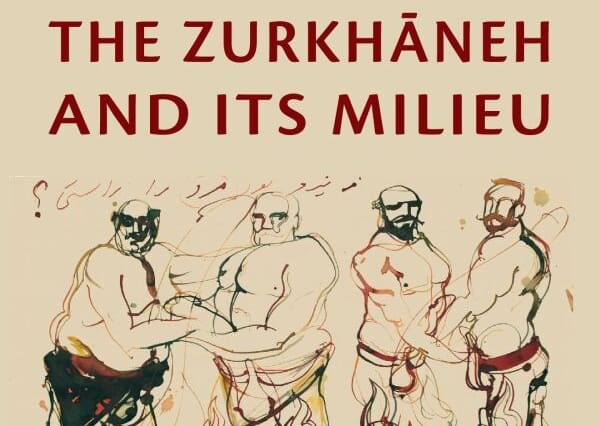
    Rochard, Philippe. 2025. The Zurkhāneh and its milieu: A study of traditional athletics in Iran (Ilex Series). Boston: Harvard University Press.

    The athletes known in Iran as pahlavāns and the domed structure, the zurkhāneh, where they congregate to practice ritualized martial arts, physical culture, and spirituality, are usually presented as the cornerstone of traditional Iranian masculine identity. However, this idealization does not do justice to the complex history of Iranian society.
    Philippe Rochard, who has observed the zurkhāneh world for the past thirty years and actually lived in it for over four years, sets out to reveal through his own experience and a reconsideration of the extant historiography the various identities—real or imagined—of the zurkhāneh, its role within ancient and contemporary Iranian society, and the intimate mechanisms of the male societies that frequent it, as well as the moral and social values—real or simply proclaimed—that the athletes embody

    Summary
  • Georges Dumézil’s tripartite theory

    Georges Dumézil’s tripartite theory

    Redard, Céline (ed.). 2025. ). L’Inde et l’Iran dans la théorie trifonctionnelle de Georges Dumézil (1898-1986) (Publications d’Etudes Indo-Iraniennes 3). Strasbourg: Université de Strasbourg.

    India and Iran occupy an important place within Georges Dumézil’s (1898-1986) tripartite theory. This book revisits Georges Dumézil’s treatment of ancient Iranian texts and Indian texts, the latter from the Vedas to the Mahābhārata.

    Résumé
  • Bactrian Documents IV

    Bactrian Documents IV

    Sims-Williams, Nicholas. 2025. Bactrian Documents IV: Documents from South of the Hindukush, I (Part II Inscriptions of the Seleucid and Parthian Periods and of Eastern Iran and Central Asia, Vol. VI Bactrian). London: Corpus Inscriptionum Iranicarum. With a contribution by Frantz Grenet.

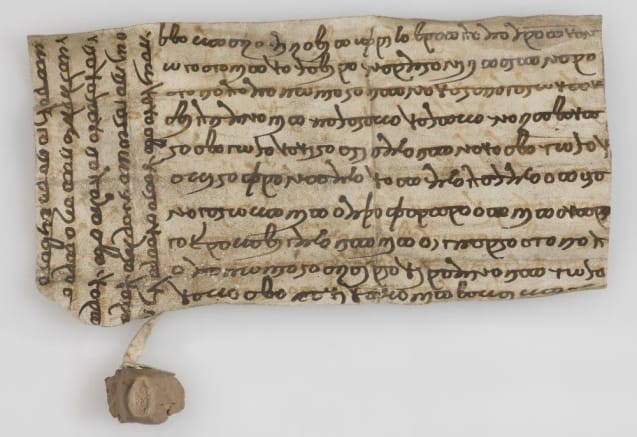
    Following on from the three volumes of Bactrian documents from Northern Afghanistan (BD1-3), the present volume primarily contains the edition of a collection of fourth-century letters written on birchbark in a place which cannot be located precisely but which was evidently somewhere to the south of the Hindukush, in what is now Southern Afghanistan or Pakistan. One eighth-century document written on parchment is also included on the grounds that it is also known to come from the south of Afghanistan , almost certainly from a place named Khesh between Bamiyan and Kabul.

    From the preface

    Readers of this blog will be familiar with Corpus Inscriptionum Iranicarum (CII) and the many volumes published in the series on inscriptions and documents in Iranian languages. The CII forms part of the academic infrastructure at SOAS, where it has its own page (linked above and here). A list of publications is provided below.

    (more…)
  • Festschrift in Honor of Elton L. Daniel

    Festschrift in Honor of Elton L. Daniel

    Ashtiany, Mohsen, Marisa McCrone & Mahnaz Moazami (eds.). 2025. Studies in Iranian history and culture: In honor of Elton L. Daniel (Iran Studies 27). Leiden: Brill.

    This Festschrift volume presents eleven essays on Iran in honor of Professor Elton L. Daniel, an eminent scholar of Iranian studies and former Editor-in-Chief of the Encyclopaedia Iranica, on the occasion of his 75th birthday. The diversity and wide range of topics and eras critically explored in this volume highlight the remarkable breadth of the honoree’s scholarship and research interests on the history and culture of Iran.

    From the summary with minor modifications.
  • Myth and History in Ancient Persia

    Myth and History in Ancient Persia

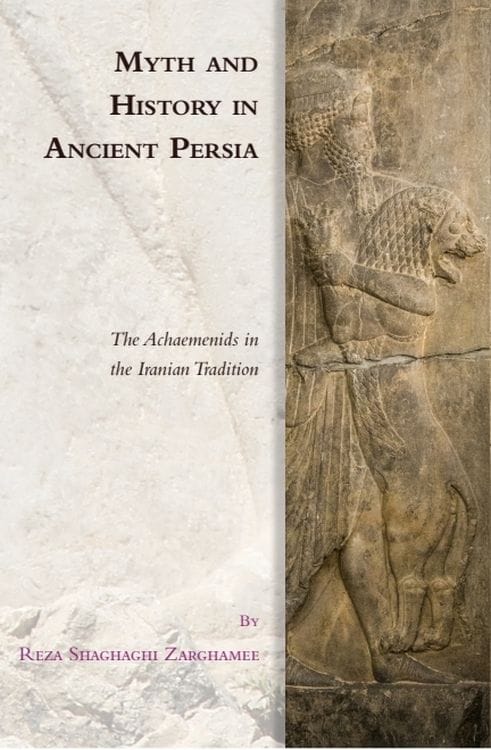
    Shaghaghi Zarghamee, Reza. 2025. Myth and History in Ancient Persia: The Achaemenids in the Iranian Tradition. Edinburgh: Edinburgh University Press.

    This book fills an important gap in Achaemenid studies by using traditional Iranian narratives, such as those found in the famous Shahnameh, or ‘Book of Kings’, of Ferdowsi, to analyse the Greco-Roman accounts of Median and Persian royalty. The study shows that the classical authors derived their accounts from Iranian traditions, grounded in age-old myths and legends. This analysis serves many purposes. It refines the extent to which the classical sources may be used in historical reconstructions and sheds new light on the literary methods of authors, such as Herodotus, Ctesias, and Xenophon. Finally, the book offers insights into one of the thorniest enigmas in Iranian historiography, the apparent disappearance of Illustrious rulers like Cyrus II, Darius I, and Xerxes I from native historical traditions. Standing at the crossroads of Iranian studies and Classics, this book is an indispensable source for scholars of ancient Iran, Greek historiography, and the Shahnameh.

    (more…)