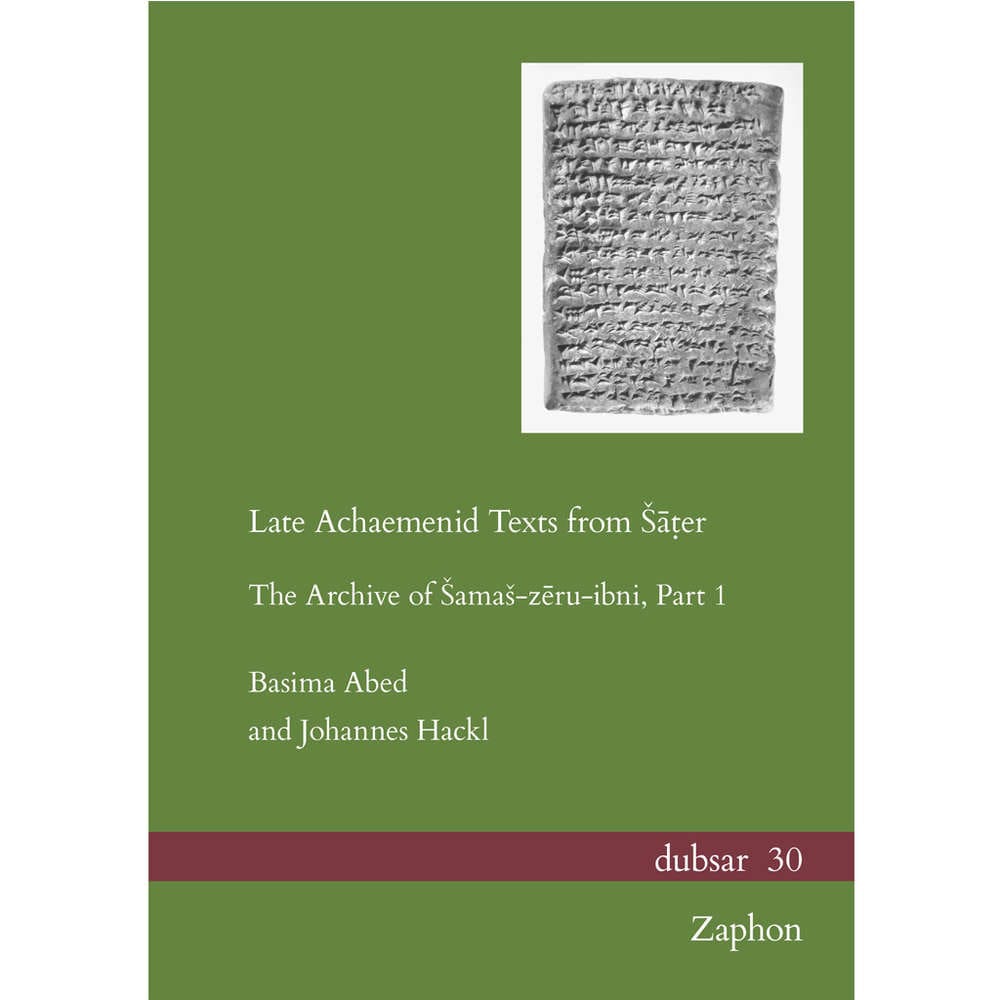
The 67 texts presented in this volume are part of a larger group of (Babylonian) Late Achaemenid legal documents from Šāṭer, a city that is believed to be located somewhere in the area northwest of Uruk up to the outskirts of Nippur. Together with a brief introduction and indices, it included transliterations, autographed copies and photographs of a group of texts that were confiscated from illicit excavators by the Iraqi Antiquity Authorities as part of a larger group of texts now housed in the Iraq Museum. The common element that ties these texts together is their identical archival and commercial context; they can be identified as certain components of the archive belonging to Šamaš-zēru-ibni, son of Ayyanaˀad, an agricultural entrepreneur who was active in and around the Southern Babylonian city Šāṭer during the second half of the fifth century BCE.
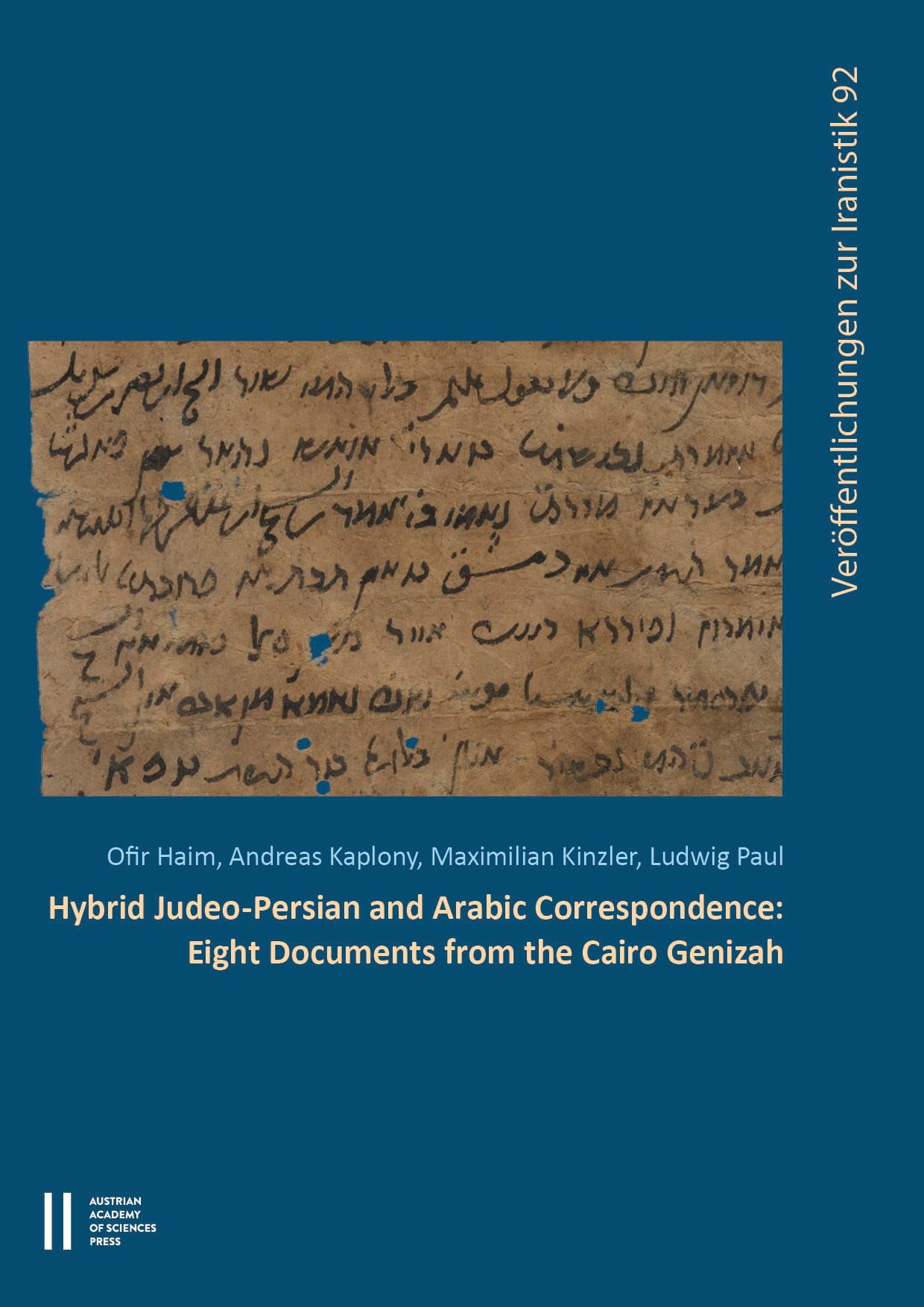
The more than 300,000 documents discovered in a storeroom of the Ben Ezra Synagogue in Old Cairo in the late 19th century, now housed in the collections in St. Petersburg, Cambridge, and Paris, are known as the Cairo Genizah. These documents, which span a wide array of subjects, are invaluable sources for understanding the history of medieval Judaism, as well as for the social and economic landscape of the Mediterranean from the 10th to the 13th centuries. Among them are thousands of private and commercial letters written in Arabic (in both Hebrew and Arabic scripts), alongside some 25 documents in Judeo-Persian—Persian written in Hebrew script. Due to the considerable challenges posed by their interpretation, only a small fraction of these texts has been published thus far. This volume presents editions of eight previously unpublished documents dated to around the turn of the millennium (991–1002 CE) and mentioning key places such as Baghdad and Basra. Included are two pages from a merchant’s notebook, written in both Jewish-Persian and Arabic, along with several letters. Of particular interest are two letters, one in Judeo-Persian and its near-literal Arabic translation, highlighting the fluidity between these two languages. The blending of Judeo-Persian and Arabic in all eight texts offers a compelling reason to publish them together. This linguistic fusion underscores the fact that the authors of these letters were part of a broad network of Jewish merchants, notably including the Tustarī and Ibn ʿAwkal families.
Aliyari Babolghani, Salman. 2024. The Great King’s word under AhuraMazdā’s protection: Trilingual Achaemenid royal inscriptions of Susa I (Dariosh Studies III/1) (Ancient Iranian Series 17). Leiden: Brill. This volume presents part of the author’s research on the Achaemenid Royal Inscriptions recovered in the ruins of the Achaemenid palaces in Susa, conducted within the framework of the DARIOSH-Louvre Project. It offers a new study of several fragmentary inscriptions in Old Persian, Achaemenid Elamite, and Achaemenid Babylonian, currently designated as DSe, DSt, DSb, DSl, DSa, DSk, DSi, DSp, D²Sb, DSj, A²Se, DSs, ‘Inc. Sb’, and others. The book provides a new edition of each inscription based on both published and unpublished fragments. Additionally, it introduces some new lexicons and cuneiform signs in the Old Persian language and script.
This volume gathers the papers presented at sessions 3, 7 and 8 from the conference Broadening Horizons 6, held at the Freie Universität Berlin, 24–28 June 2019, and is available in open access.
The second volume compiles papers presented in three enlightening sessions: Session 3 – Visual and Textual Forms of Communication; Session 7 – The Future of the Past. Archaeologists and Historians in Cultural Heritage Studies; and Session 8 – Produce, Consume, Repeat. History and Archaeology of Ancient Near Eastern Economies. Within this volume, the 20 papers traverse diverse topics spanning multiple periods, from the 5th millennium BCE to the Roman Empire, and encompass a wide array of geographical regions within the Near East.
Among other relevant contributions, the following papers deal with aspects of ancient Iranian history and culture:
Delphine Poinsot: Sexuation of animals’ bodies in the bullae from Qasr-I Abu Nasr
Olivia Ramble: Generations of Writing: The Secondary Inscriptions of Darius’ tacara at Persepolis
Takehiro Miki: Deciphering the Skills of the Prehistoric Painting Technique: Case Study of the Painted Pottery of the 5th Millennium BCE from Tall-e Bakun A (Fars province, Iran)
The East Romans of Byzantium and the Sasanian Persians competed as geopolitical rivals for over four centuries between 224 and 628 ad. Through a series of intractable conflicts, these two great empires would develop a dual hierarchy that sought to divide the known world between them. Despite competing claims to universal rule, mutual spheres of interest arose as both empires sought to create rules, norms, and standard practices of diplomatic behaviour to regulate their inter-imperial rivalry. Defined by contemporaries as the ‘Two Eyes’ of the Earth, this suzerain order aimed to hierarchically organize those considered ‘barbarians’. This period of late antiquity is rarely considered within the discipline of international relations. Through an English School approach, this work examines the diverse suzerain order of late antiquity as ‘barbarous’ nomadic tribes challenged the hierarchical ambitions of two rival empires who both claimed a unique role in the maintenance of world order.
Matloubkari, Esmaeil. 2024. Sasanian Coin Legends: A Linguistic Approach to Historical Analysis. Tehran: Negah-e Moaser.
Epigraphic sources and historical texts indicate that the political ideology of the Sasanians underwent significant transformations over time. If we consider Sasanian coins as the most important—and sometimes the only—expressions of Sasanian kingship ideology, then the linguistic study of coin legends becomes a key method for understanding the socio-political significance of these titles.
The titles inscribed on Sasanian coins during the 3rd and 4th centuries AD appear to have been rooted in native traditions, either imitated and reconstructed by the Sasanians or influenced by external traditions transmitted through the Parthians, Hellenistic states, and Kushans. The formalization of Zoroastrianism as the state religion in the 4th century AD led to Middle Persian becoming the sole official language, resulting in the gradual removal of non-native titles from Sasanian coinage. Nevertheless, such titles continued to exist in a localized form within the political sphere and the propaganda of the Sasanian government. Lexical analysis suggests that most of the titles and honorifics found on Sasanian coins originated from religious contexts, often adapted—with modifications—from Old or Middle Iranian texts. From the 5th to the 7th century, these titles increasingly reflected Zoroastrian religious traditions while also showing traces of the ancient Iranian bureaucratic system. The titulature found on Sasanian coins and inscriptions was a crucial instrument for legitimizing Sasanian kingship, and changes in these titles provide valuable insights into the evolution of political thought during the Sasanian era. Given the scarcity of contemporary Sasanian texts, coin legends remain among the few available sources that reference the “King of Kings,” the court, and the state. By examining the etymology of these terms in Old and Middle Iranian texts, historians can gain a deeper understanding of their meanings, thereby shedding light on the socio-political structures of the Sasanian period.
Shavarebi, Ehsan. 2025. A numismatic history of Barikot (Veröffentlichungen zur Numismatik 69). Verlag der österreichischen Akademie der Wissenschaften. With a contribution by Luca M. Olivieri.
This volume offers a ‘catalogue and analysis of the coin finds from the excavations at Bīr-koṭ-ghwaṇḍai (Barikot), Swāt, Pakistan (1984–2022)’.
The present volume explores the coins unearthed during the excavations at the ancient city of Barikot (Swāt Valley, northern Pakistan) between 1984 and 2022. The excavations of the Italian Archaeological Mission at Barikot have revealed numerous settlement phases from the prehistoric to the Islamic times. Of particular significance are over 500 coin finds, which are placed in their historical context in this volume to draw a clear picture of the monetary circulation in the Swāt Valley (Uḍḍiyāna) throughout antiquity and the early Islamic period. The chronological framework of the coin finds spans from the third century BCE to the twelfth century CE, i.e., from the Indian Maurya dynasty to the Ghaznavids. The majority of the coin finds are from the Kušān period (first to fourth century CE). Various historical, typological, metrological, and topographical aspects of the coinage and monetary circulation of each period are addressed in separate chapters. The finds from Barikot are also compared with those from other documented sites in Uḍḍiyāna, Gandhāra, and adjacent regions in the Indo-Iranian borderlands. What should be highlighted is the stratigraphic documentation of the find contexts, which, based on the radiocarbon analyses, makes it possible to bring the coins into relation with other types of archaeological artifacts. This subject is discussed in an archaeological contribution by the director of the excavations, Luca M. Olivieri.
Der vorliegende Band dokumentiert acht Schatzfunde spätkushanischer und kushano-sasanidischer Kupfermünzen aus unterschiedlichen Quellen. Neben der Vorstellung des Materials werden unterschiedliche Themen wie Prägeherren, Münzstätten, Metrologie und Beizeichen im Detail besprochen. Vor allem aber wird zum ersten Mal seit Robert Göbls Studien aus den Jahren 1984 und 1993 der Versuch unternommen, auf der Grundlage einer umfassenden Rekonstruktion des Prägesystems die kushano-sasanidischen AE-Münzen in den historischen Kontext der spätantiken Geschichte Ostirans einzuordnen, wobei auch die immer noch umstrittene Frage nach der Datierung des Jahres Eins des Kushankönigs Kanishka I. behandelt wird. Dies ist der zweite Band der Reihe „Fundmünzen aus Usbekistan“.
A while ago, I introduced two memoirs—one by Peter Brown and the other by Averil Cameron. Reflecting on the past and the origins of our discipline is as important as reading about the trajectories of our respected colleagues and teachers. We now have two volumes reflecting ‘lost’ social and academic histories that also relate to our discipline.
The tale of a legendary scholar, an unsolved murder, and the mysterious documents that may connect them
In early 1991, Ioan Culianu was on the precipice of a brilliant academic career. Culianu had fled his native Romania and established himself as a widely admired scholar at just forty-one years of age. He was teaching at the University of Chicago Divinity School where he was seen as the heir apparent to his mentor, Mircea Eliade, a fellow Romanian expatriate and the founding father of the field of religious studies, who had died a few years earlier.
But then Culianu began to receive threatening messages. As his fears grew, he asked a colleague to hold onto some papers for safekeeping. A week later, Culianu was in a Divinity School men’s room when someone fired a bullet into the back of his head, killing him instantly. The case was never solved, though the prevailing theory is that Culianu was targeted by the Romanian secret police as a result of critical articles he wrote after the fall of dictator Nicolae Ceausescu.
What was in those mysterious papers? And what connection might they have to Culianu’s death? The papers eventually passed into the hands of Bruce Lincoln, and their story is at the heart of this book. The documents were English translations of articles that Eliade had written in the 1930s, some of which voiced Eliade’s support for the Iron Guard, Romania’s virulently anti-Semitic mystical fascist movement. Culianu had sought to publish some of these articles but encountered fierce resistance from Eliade’s widow.
In this book, author Bruce Lincoln explores what the articles reveal about Eliade’s past, his subsequent efforts to conceal that past, his complex relations with Culianu, and the possible motives for Culianu’s shocking murder.
„Semitische Wissenschaften“ – Der Ausdruck geht zurück auf den Althistoriker Helmut Berve, der damit 1934 unzweideutig den Stellenwert der Fächer Ägyptologie und Altorientalistik in einer Diktion, die den Ungeist nationalsozialistischer Weltanschauung widerspiegelt, relativieren wollte, Herausgeber und Beiträger dieses Sammelbandes beleuchten die Entstehung und Wirkungsgeschichte des Begriffs kritisch. Die Auffassung von „semitischer“ Wissenschaft ist vielschichtig: Zum einen geht sie zurück auf eine lange Tradition zunächst sprachwissenschaftlicher und schließlich auch völkisch-rassenkundlicher Forschungsdiskurse, deren Ursprünge sich bereits in das 18. Jahrhundert zurückverfolgen lassen. Weiterhin offenbart sich in dem Ausdruck eine Zuschreibung an solche Wissenschaftler, die im Rahmen nationalsozialistischer Weltanschauung als „semitisch“, also jüdisch eingestuft wurden. Die „semitischen Wissenschaften“ bilden somit einen Gegenbegriff zu dem völkischen ‚arischen‘ Wissenschaftsverständnis Berves. Darin enthalten ist nicht nur eine Ablehnung oder Kritik des bis dahin in den Altertumswissenschaften gepflegten Positivismus, sondern auch eine Absage an eine „rationale“ Auseinandersetzung mit der Vergangenheit. Der Sammelband geht zurück auf einen vom 26. bis 28. November 2021 von Göttingen aus ‚digital gehosteten‘ Workshop von Vertretern unterschiedlichster Disziplinen, vorrangig – aber nicht ausschließlich – der altorientalischen Fächer und der Geschichtswissenschaft.