The Summer School in Oriental Languages is a unique opportunity to study languages and scripts that are often described as rare, even though they are spoken or have been spoken by millions of speakers, in the form of major and minor courses. This summer school offers top-level teaching and the most recent research findings in Oriental languages and literature, with ECTS credits awarded upon validation.
From the website
The Summer School of Oriental Languages is organised by the University of Lausanne and will be held at the Venice International University (Italy), from 10–19 July 2025.
For more information about the programme, registration, and ECTS requirements visit the website. The deadline for registration is 30 May 2025.
The primary translation for the ancient Greek verb ἐμπολιτεύω in several dictionaries is “to be a citizen, have civil rights.” That definition is untenable. The connotations of ἐμπολιτεύω for citizen status are usually indeterminate, but where they are clear, the verb has the opposite meaning and refers to non-citizens rather than citizens. This sense is crucial to the study of Greek citizenship in the Arsacid empire, because ἐμπολιτεύω appears twice in a key passage from Josephus on Greco-Babylonian relations in the poleis of Arsacid Mesopotamia. The verb’s dictionary definition has led some historians to the conclusion that non-Greeks were citizens of these poleis. Along with local evidence in Akkadian, a review of ἐμπολιτεύω‘s appearances in literature and epigraphy suggests the opposite.
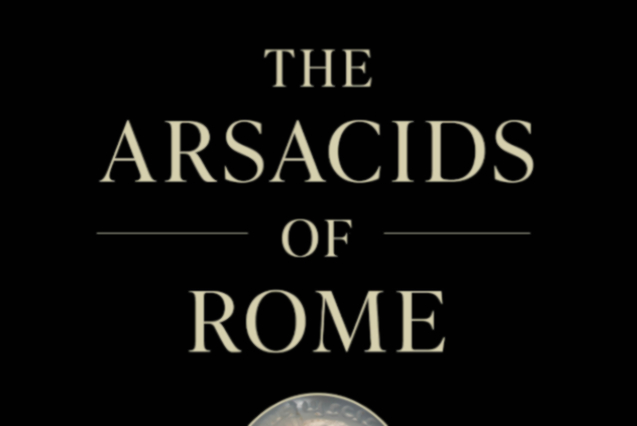
At the beginning of the common era, the two major imperial powers of the ancient Mediterranean and Near East were Rome and Parthia. In this book, Jake Nabel analyzes Roman-Parthian interstate politics by focusing on a group of princes from the Arsacid family—the ruling dynasty of Parthia—who were sent to live at the Roman court. Although Roman authors called these figures “hostages” and scholars have studied them as such, Nabel draws on Iranian and Armenian sources to argue that the Parthians would have seen them as the emperor’s foster children. These divergent perspectives allowed each empire to perceive itself as superior to the other, since the two sides interpreted the exchange of royal children through conflicting cultural frameworks. Moving beyond the paradigm of great powers in conflict, The Arsacids of Rome advances a new vision of interstate relations with misunderstanding at its center.
A free ebook version of this title is available through Luminos, University of California Press’s Open Access publishing program. Visit www.luminosoa.org to learn more.
Booking is required for this talk. To book a place, email info@indiran.org
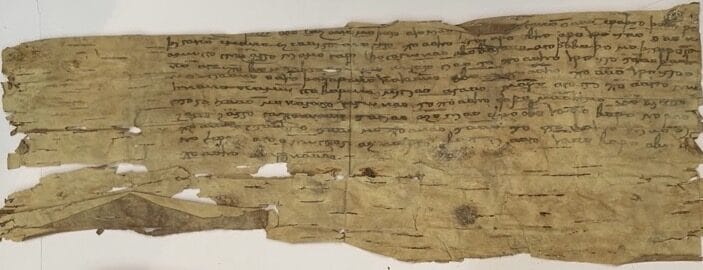
Bactria is the Greek name for the area around the city of Bactra, modern Balkh in northern Afghanistan. During most of the first millennium CE, the principal language of this region was Bactrian, a language related to modern Persian and Pashto but written in a local adaptation of the Greek alphabet. This language was almost unknown until the discovery over the past 30 years or so of a large body of Bactrian documents written on parchment, together with a few important inscriptions carved on stone. In this talk I will discuss some of the most recent discoveries, concentrating on what they contribute to our understanding of the history of the region. The earliest, an inscription of the Kushan king Vima Taktu discovered in Tajikistan in 2022, dates from the beginning of the 2nd century CE. Although very short, it has made possible the partial decipherment of an accompanying text in a previously undeciphered script and language. The latest, the inscription of Jaghori in southern Afghanistan, is dated in the mid-8th century and records a battle between a local and an Indian prince, possibly a prelude to the replacement of the dynasty of the ‘Turk Shahis’ by that of the ‘Hindu Shahis’. In between these two extremes comes a still unpublished collection of letters written on birchbark, which seems to be the archive of a local ruler who was a vassal of the Sasanian kings of Iran in the late 4th century.
Nicholas Sims-Williams is Emeritus Professor of Iranian and Central Asian Studies, SOAS University of London, and Chair of the Ancient India & Iran Trust.
We wish our followers, colleagues and friends a joyful Norouz 1404! As nature awakens with the arrival of spring, may this renewal bring you health, hope and happiness.
Thank you for your continued support and engagement—we truly appreciate it. May the spirit of Norouz inspire a bright and fulfilling year ahead!
The Sūdgar Nask of Dēnkard Book 9 is a commentary on the ‘Old Avesta’ of the 2nd millennium BCE produced in Pahlavi (Zoroastrian Middle Persian) in the Sasanian (224–651 CE) and early Islamic centuries. This commentary is a value-laden, ideologically motivated discourse that displays a rich panoply of tradition-constituted forms of allegoresis. It mobilizes complex forms of citation, allusion, and intertextuality from the inherited Avestan world of myth and ritual in order to engage with and react to the profound changes occurring in Iranian society. Despite its value and importance for developing our nascent understanding of Zoroastrian hermeneutics and the self-conception of the Zoroastrian priesthood in Late Antiquity, this primary source has attracted scant scholarly attention due to the extreme difficulty of its subject matter and the lack of a reliable translation. This 2-volume work represents the first critical edition, translation, and commentary of this formidable text which will contribute to the philological, theological, and historiographical study of Zoroastrianism in a pivotal moment in its rich and illustrious history. Reading the Sūdgar Nask is a hermeneutic process of traversing texts, genres, and rituals in both the Avestan and Pahlavi corpora, thus activating nodes in a web or network of textual and meta-textual relations that establish new forms of allegoreses or meaning making. It is argued that this entire hermeneutical complex of weaving a ‘new’ text composed of implicit proof text and explicit commentary renews, extends, and, ultimately, makes tradition.
This project website was brought to our attention by its curator, Keelan Overton. While it falls outside the scope of our work, we present it here for its innovative approach and valuable contributions to the field. We encourage you to explore the bilingual website to discover its diverse range of content. ~AZ
The Emamzadeh Yahya shrine complex is simultaneously the sacred tomb of Emamzadeh Yahya (d. 869–70), a destination for ziyarat (pious visitation), an architectural monument of the Ilkhanid period (1256–1353), the main community center and cemetery of the Kohneh Gel neighborhood, a cultural heritage site, and the source of luster tiles displayed in around fifty museums worldwide. In this exhibition, which is also an exhibition catalog and an academic edited volume, we trace the complex’s many looks, functions, users, and stories over seven hundred years. Through our detailed study of one site, we offer a general exploration of Persian art and Iranian culture from the medieval period to the present.
We invite you to explore the exhibition’s Six Thematic Galleries and read the Introduction by curator Keelan Overton.
Melvyn Bragg and guests explore the history and reputation of the Persian ruler Cyrus the Great. Cyrus the Second of Persia as he was known then was born in the sixth century BCE in Persis which is now in Iran. He was the founder of the first Persian Empire, the largest empire at that point in history, spanning more than two million square miles.
His story was told by the Greek historians Herodotus and Xenophon, and in the Hebrew bible he is praised for freeing the Jewish captives in Babylon.
But the historical facts are intertwined with fiction.
Cyrus proclaimed himself ‘king of the four corners of the world’ in the famous Cyrus Cylinder, one of the most admired objects in the British Museum. It’s been called by some the first bill of human rights, but that’s a label which has been disputed by most scholars today.
With Lindsay Allen, Mateen Arghandehpour, and Lynette Mitchell.
Although there has been renewed interest in the Persian period in biblical scholarship, the profound impact of the ancient Iranian world on the biblical books of Esther and Daniel has often been taken for granted. From their dynamic portraits of foreign kings and Jewish communities in the imperial court to their use of Iranian institutions and literary traditions, it is impossible to disentangle the books of Esther and Daniel from their ancient Iranian contexts. This conference foregrounds the influence of the ancient Iranian world on Esther and Daniel and its lasting impact on ancient Jewish communities.
In organizing this conference, we hope to offer a truly interdisciplinary analysis of Esther, Daniel and ancient Iranian Studies by inviting speakers specializing in subjects related to Second Temple Judaism, Hebrew Bible, and the Achaemenid Empire. Topics explored at the conference include Jewish constructions of the diaspora and Persian court, Achaemenid religions, Aramaic scribalism, and imperial ideology and hybridity.
As we mark a decade of sharing bibliographic updates and scholarly announcements, we want to extend our heartfelt thanks to our colleagues, readers and supporters. What began as a small initiative has grown into a platform reaching around 1,200 readers per week. Your engagement, encouragement, and feedback have been invaluable in shaping and sustaining this project. We deeply appreciate your continued interest and look forward to many more years of collaboration, discovery, and shared enthusiasm for Iranian Studies.
❧❧❧
Sometime in 2012, I began experimenting with posting bibliographic announcements on what was then called Twitter. I made several attempts, but Twitter’s character limit prevented me from posting full bibliographic information. Initially, I was hesitant to connect the Twitter account to a website, but Ursula Sims-Williams encouraged me to do so.
I rejoined Twitter in 2013 and made my first announcement on 7 November 2013, which was linked and preserved on my personal website. I continued this until 10 May 2015, as the general response was positive. It was then that I approached Shervin Farridnejad and Yazdan Safaee with the idea of collaborating on a new website to announce new publications related to Iranian Studies.
In everything I do, I prioritise simplicity, but I also wanted an open and collaborative approach. With this in mind, I proposed limiting our work to announcing new publications and events without adding further commentaries. My goal was to ensure that the new site remained active for as long as possible.
Although I write most of the public announcements related to BiblioIranica and manage the website, our achievements are the result of the open and friendly collaboration that the three of us have maintained over the years. The past decade—and the one ahead—owe much to Shervin and Yazdan’s dedication, endurance, and contributions. I could not be more grateful to them.
We had to leave Twitter—now X—after Jetpack discontinued its X plug-in. We are now active on our Bluesky, Facebook, and Mastodon accounts. Each announcement is also posted on our personal social media accounts. However, the most complete and uninterrupted collection remains the website itself.
New logo designed by Amir Mahdi Moslehi
As we approach a decade, I have slightly revised the website design and will be refining a few details. I am delighted to relaunch BiblioIranica with a beautiful logo, designed by my friend Amir Mahdi Moslehi—a talented calligrapher, font designer, musician, researcher, and, above all, an exceptional human being.
Amir Mahdi Moslehi is an Iranian type designer, calligrapher, and researcher based in Hamburg, Germany. He holds a Post-Master’s degree in Typographic Research from the Atelier National de Recherche Typographique (Nancy, France) and is currently pursuing a master’s in Manuscript Culture at the Centre for the Study of Manuscript Cultures (CSMC) in Hamburg. Recently, he became a PhD candidate at the CSMC, University of Hamburg.
His Arabic-script typefaces blend research with calligraphy and are distributed by Maryamsoft (Iran) and Rosetta Type Foundry (Czech Republic). His work has received multiple awards, including the Certificate of Typographic Excellence from the New York Type Directors Club and Granshan Type Design Prizes.