• Women in Cultic Functions in Late Achaemenid and Hellenistic Babylon

    Debourse, Céline. 2025. Women in Cultic Functions in Late Achaemenid and Hellenistic Babylon. In: Shawna Dolansky & Sarah Shectman (eds.), The Bloomsbury Handbook of Religion, Gender, and Sexuality in the Ancient Near East, 147-157. London: Bloomsbury.

    This chapter explores the roles of women in cultic functions in Late Achaemenid and Hellenistic Babylon, focusing on cuneiform evidence from temple contexts. These sources reveal their increasing involvement in sacred rituals and temple administration. Through analysis of titles, the study highlights both continuity and innovation in female religious roles.

  • District Twelve

    District Twelve

    Ferrario, Marco. 2025. District Twelve. Northeastern Central Asia From Cyrus to Antiochos: Local Histories of a World Empire (Ancient Iran Series, 19). Leiden: Brill.

    This book offers, at the same time, an imperial history of a region (Northeastern Central Asia under the Achaemenids) and the regional history of an Empire (how the Persians adapted their strategies of governmentality to a geographically challenging, ethnically diverse, and politically impervious space). Bringing together evidence from literary texts, archaeology, and ethnohistory, it crafts a new narrative of Central Asian history in which local actors in and outside the imperial territory are given as much, if not (at times) more agency than the King of Kings and his satraps in heralding Central Asia’s first Age of Empires.

  • Hunara

    Hunara: Journal of Ancient Iranian Arts and History, published by Casa Editrice Persiani in Bologna, Italy, is a peer-reviewed, Open Access journal, publishing scholarly articles under CC BY-NC-SA 4.0 license.

    Here is the ToC of the latest issue (3/1):

    • Patryk Skupniewicz: The Scene of Bear Hunt on the Sasanian Silver Plate from the Wyvern Collection. On Segmented Image-Building in Sasanian Art
    • Hovhannes Khorikyan: Cyrus the Great in Armenian Sources and Armenia
    • Maia Kapanadze: Characteristics of Georgian-Iranian Relations during the Achaemenid Period
    • Iulon Gagoshidze; David Gagoshidze: Persian-Achaemenid Bell-Shaped Column Bases from the South Caucasus: New Evidence
    • Jeremy Goldberg: A Kurigalzu II Reading of VS 24.91 and Early Middle Elamite History
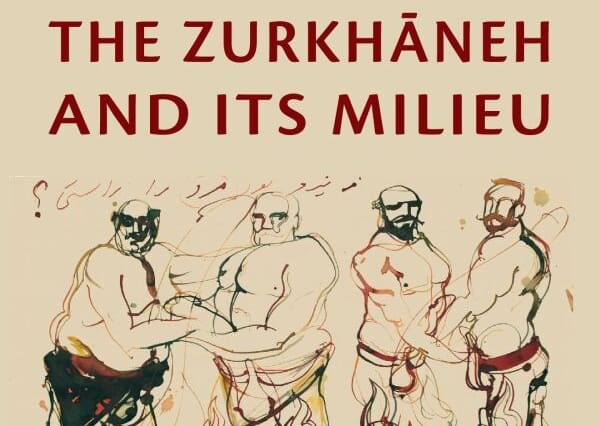
  • The Zurkhāneh

    The Zurkhāneh

    Rochard, Philippe. 2025. The Zurkhāneh and its milieu: A study of traditional athletics in Iran (Ilex Series). Boston: Harvard University Press.

    The athletes known in Iran as pahlavāns and the domed structure, the zurkhāneh, where they congregate to practice ritualized martial arts, physical culture, and spirituality, are usually presented as the cornerstone of traditional Iranian masculine identity. However, this idealization does not do justice to the complex history of Iranian society.
    Philippe Rochard, who has observed the zurkhāneh world for the past thirty years and actually lived in it for over four years, sets out to reveal through his own experience and a reconsideration of the extant historiography the various identities—real or imagined—of the zurkhāneh, its role within ancient and contemporary Iranian society, and the intimate mechanisms of the male societies that frequent it, as well as the moral and social values—real or simply proclaimed—that the athletes embody

    Summary
  • Miscellanea Epigraphica Susiana II

    Fattori, Marco. 2025. Miscellanea Epigraphica Susiana II: Addenda et corrigenda. Arta 2025.002.

    In this article I propose some corrections and additions to my previous contribution Miscellanea Epigraphica Susiana, made possible by the recent publication of a book dealing, among other things, with the same inscriptions (DSe, DSi, A2Se). In particular, I provide: a complete restoration of the final portion of the Elamite version of DSe highlighting some textual parallels found in the Meso-Elamite, Neo-Assyrian and Neo-Babylonian epigraphic tradition; an etymological discussion on the newly discovered OP word kabnu– “ruined, dilapidated”; and some improvements in the reading and interpretation of a new fragment of the Elamite version of A2Se.

  • Georges Dumézil’s tripartite theory

    Georges Dumézil’s tripartite theory

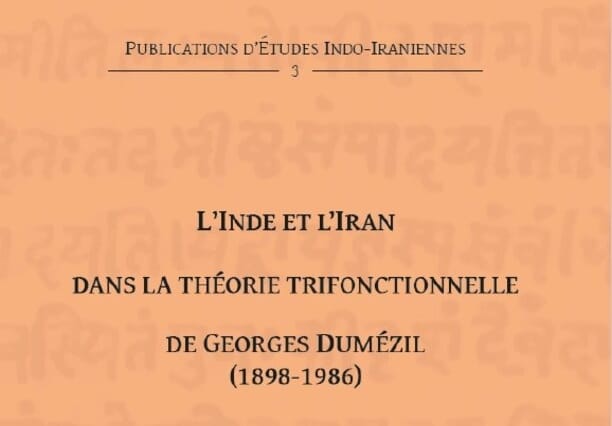
    Redard, Céline (ed.). 2025. ). L’Inde et l’Iran dans la théorie trifonctionnelle de Georges Dumézil (1898-1986) (Publications d’Etudes Indo-Iraniennes 3). Strasbourg: Université de Strasbourg.

    India and Iran occupy an important place within Georges Dumézil’s (1898-1986) tripartite theory. This book revisits Georges Dumézil’s treatment of ancient Iranian texts and Indian texts, the latter from the Vedas to the Mahābhārata.

    Résumé
  • Bactrian Documents IV

    Bactrian Documents IV

    Sims-Williams, Nicholas. 2025. Bactrian Documents IV: Documents from South of the Hindukush, I (Part II Inscriptions of the Seleucid and Parthian Periods and of Eastern Iran and Central Asia, Vol. VI Bactrian). London: Corpus Inscriptionum Iranicarum. With a contribution by Frantz Grenet.

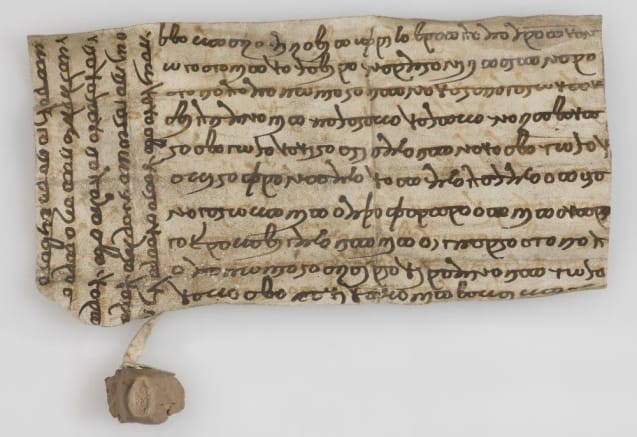
    Following on from the three volumes of Bactrian documents from Northern Afghanistan (BD1-3), the present volume primarily contains the edition of a collection of fourth-century letters written on birchbark in a place which cannot be located precisely but which was evidently somewhere to the south of the Hindukush, in what is now Southern Afghanistan or Pakistan. One eighth-century document written on parchment is also included on the grounds that it is also known to come from the south of Afghanistan , almost certainly from a place named Khesh between Bamiyan and Kabul.

    From the preface

    Readers of this blog will be familiar with Corpus Inscriptionum Iranicarum (CII) and the many volumes published in the series on inscriptions and documents in Iranian languages. The CII forms part of the academic infrastructure at SOAS, where it has its own page (linked above and here). A list of publications is provided below.

    (more…)
  • Sasanian Studies 3

    Sasanian Studies 3

    Farridnejad, Shervin & Touraj Daryaee (eds.). 2024. Sasanian Studies: Late antique Iranian world | Sasanidische Studien: Spätantike iranische Welt. Vol. 3. Wiesbaden: Harrassowitz Verlag.

    Sasanian Studies: Late Antique Iranian World is a refereed journal that publishes papers on any aspect of the Sasanian Empire and ist neighboring late antiquity civilizations. The journal welcomes essays on archaeology, art history, epigraphy, history, numismatics, religion and any other disciplines which focuse on the Sasanian world. This annual publication focuses especially on recent discoveries in the field, historiographical studies, as well as editions and translations of texts and inscriptions. We aim to facilitate dialogue and contact among scholars of Sasanian Studies around the world. The journal will publish papers mainly in English, but also in German, French, Italian and may also consider Persian and Arabic.

    (more…)
  • Festschrift in Honor of Elton L. Daniel

    Festschrift in Honor of Elton L. Daniel

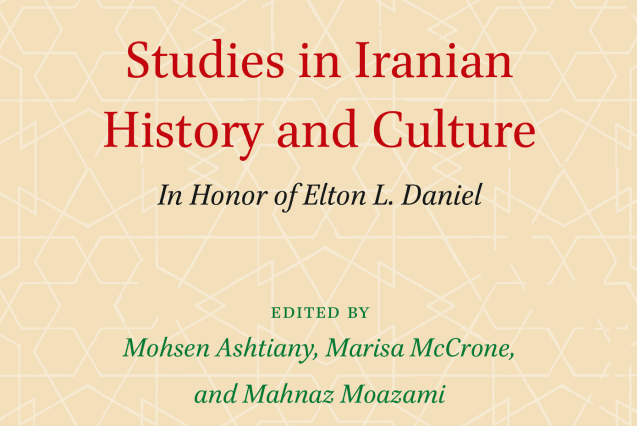
    Ashtiany, Mohsen, Marisa McCrone & Mahnaz Moazami (eds.). 2025. Studies in Iranian history and culture: In honor of Elton L. Daniel (Iran Studies 27). Leiden: Brill.

    This Festschrift volume presents eleven essays on Iran in honor of Professor Elton L. Daniel, an eminent scholar of Iranian studies and former Editor-in-Chief of the Encyclopaedia Iranica, on the occasion of his 75th birthday. The diversity and wide range of topics and eras critically explored in this volume highlight the remarkable breadth of the honoree’s scholarship and research interests on the history and culture of Iran.

    From the summary with minor modifications.
  • Indo-Iranian Journal 68, 2

    Indo-Iranian Journal 68, 2

    Indo-Iranian Journal volume 68, issue 2 (June 2025) has been published (h/t @yaleclassicslib.bsky.social‬). Two articles and two reviews relate to our work: