Category: Books

  • Reflections on the Tapestry of Family and Household in Ancient Iran

    Reflections on the Tapestry of Family and Household in Ancient Iran

    Jahangirfar, Milad (ed.). 2025. Reflections on the Tapestry of Family and Household in Ancient Iran (Studia Persica 6). Bologna: Persiani Editore.

    This volume offers a collection of ten articles focusing on various aspects of family and household in ancient Iran (ca. the 2nd millennium BCE to ca. the end of the 7th century CE). This book deals with aspects of the family in pre-Islamic Iran that are less explored or require renewed attention. The contributions draw upon a range of sources, including Old Elamite documents, Middle Elamite terracotta figurines, Sogdian wall paintings, Old Persian inscriptions, Achaemenid administrative tablets, and passages from the Avesta and Middle Persian texts. The inclusion of references to Greek, Latin, and Armenian writings, and passages from Ferdowsi’s Shahnameh enriches the discussion by bringing in alternative perspectives and accounts of relevant issues. Approaching the topic from a multidisciplinary perspective helps to create a more nuanced understanding of the role of family and household in ancient Iran.

    Contents
    – Introduction (Milad Jahangirfar)
    – Script and Witness as a Hereditary Vocation in the Old Elamite Period (Mohammad Amin Mirghaderi)
    – Household Religion in Context: Middle Elamite Terracotta Figurines and Their Judahite Counterparts (Francesco Del Bravo)
    – The Divine Couple Formed by Nana and Nabu/Tiš in Sogdian Art: A Powerful Amulet for the Protection of Children and Households (Matteo Compareti)
    – Some Reflections on the Concept of “Family” in the Gāthās (Mina Kambin)
    – “For the Increase of the House”: Children in Ancient Iran (Jenny Rose)
    – Some Remarks on the Family in pre-Islamic Iran according to the Ardā Wīrāz-nāmag (Mateusz M.P. Kłagisz)
    – Ancient Iranian Women at War: A Gender Role at Variance than the Greco-Roman Familial System? (Kaveh Farrokh)
    – Parthian Hostages in Rome: Keeping Alive Royal Family Members during the Parthian Kingdom (Berta González Saavedra and Juan Antonio Álvarez-Pedrosa Núñez)
    – The Institution of Zoroastrian Marriage xwēdōdah: Genesis and Typology (Pavel Basharin)
    – About the xwēdōdah Once Again (Katarzyna Maksymiuk and Joanna Szklarz)

  • District Twelve

    District Twelve

    Ferrario, Marco. 2025. District Twelve. Northeastern Central Asia From Cyrus to Antiochos: Local Histories of a World Empire (Ancient Iran Series, 19). Leiden: Brill.

    This book offers, at the same time, an imperial history of a region (Northeastern Central Asia under the Achaemenids) and the regional history of an Empire (how the Persians adapted their strategies of governmentality to a geographically challenging, ethnically diverse, and politically impervious space). Bringing together evidence from literary texts, archaeology, and ethnohistory, it crafts a new narrative of Central Asian history in which local actors in and outside the imperial territory are given as much, if not (at times) more agency than the King of Kings and his satraps in heralding Central Asia’s first Age of Empires.

  • The Zurkhāneh

    The Zurkhāneh

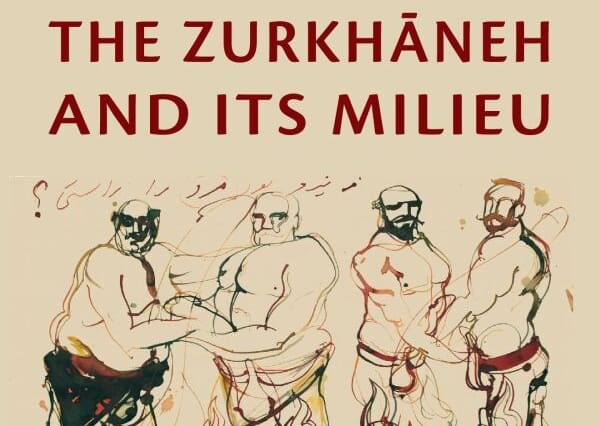
    Rochard, Philippe. 2025. The Zurkhāneh and its milieu: A study of traditional athletics in Iran (Ilex Series). Boston: Harvard University Press.

    The athletes known in Iran as pahlavāns and the domed structure, the zurkhāneh, where they congregate to practice ritualized martial arts, physical culture, and spirituality, are usually presented as the cornerstone of traditional Iranian masculine identity. However, this idealization does not do justice to the complex history of Iranian society.
    Philippe Rochard, who has observed the zurkhāneh world for the past thirty years and actually lived in it for over four years, sets out to reveal through his own experience and a reconsideration of the extant historiography the various identities—real or imagined—of the zurkhāneh, its role within ancient and contemporary Iranian society, and the intimate mechanisms of the male societies that frequent it, as well as the moral and social values—real or simply proclaimed—that the athletes embody

    Summary
  • Georges Dumézil’s tripartite theory

    Georges Dumézil’s tripartite theory

    Redard, Céline (ed.). 2025. ). L’Inde et l’Iran dans la théorie trifonctionnelle de Georges Dumézil (1898-1986) (Publications d’Etudes Indo-Iraniennes 3). Strasbourg: Université de Strasbourg.

    India and Iran occupy an important place within Georges Dumézil’s (1898-1986) tripartite theory. This book revisits Georges Dumézil’s treatment of ancient Iranian texts and Indian texts, the latter from the Vedas to the Mahābhārata.

    Résumé
  • Bactrian Documents IV

    Bactrian Documents IV

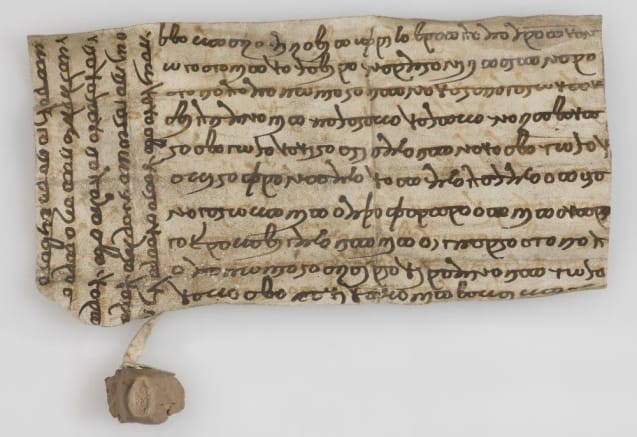
    Sims-Williams, Nicholas. 2025. Bactrian Documents IV: Documents from South of the Hindukush, I (Part II Inscriptions of the Seleucid and Parthian Periods and of Eastern Iran and Central Asia, Vol. VI Bactrian). London: Corpus Inscriptionum Iranicarum. With a contribution by Frantz Grenet.

    Following on from the three volumes of Bactrian documents from Northern Afghanistan (BD1-3), the present volume primarily contains the edition of a collection of fourth-century letters written on birchbark in a place which cannot be located precisely but which was evidently somewhere to the south of the Hindukush, in what is now Southern Afghanistan or Pakistan. One eighth-century document written on parchment is also included on the grounds that it is also known to come from the south of Afghanistan , almost certainly from a place named Khesh between Bamiyan and Kabul.

    From the preface

    Readers of this blog will be familiar with Corpus Inscriptionum Iranicarum (CII) and the many volumes published in the series on inscriptions and documents in Iranian languages. The CII forms part of the academic infrastructure at SOAS, where it has its own page (linked above and here). A list of publications is provided below.

    (more…)
  • Festschrift in Honor of Elton L. Daniel

    Festschrift in Honor of Elton L. Daniel

    Ashtiany, Mohsen, Marisa McCrone & Mahnaz Moazami (eds.). 2025. Studies in Iranian history and culture: In honor of Elton L. Daniel (Iran Studies 27). Leiden: Brill.

    This Festschrift volume presents eleven essays on Iran in honor of Professor Elton L. Daniel, an eminent scholar of Iranian studies and former Editor-in-Chief of the Encyclopaedia Iranica, on the occasion of his 75th birthday. The diversity and wide range of topics and eras critically explored in this volume highlight the remarkable breadth of the honoree’s scholarship and research interests on the history and culture of Iran.

    From the summary with minor modifications.
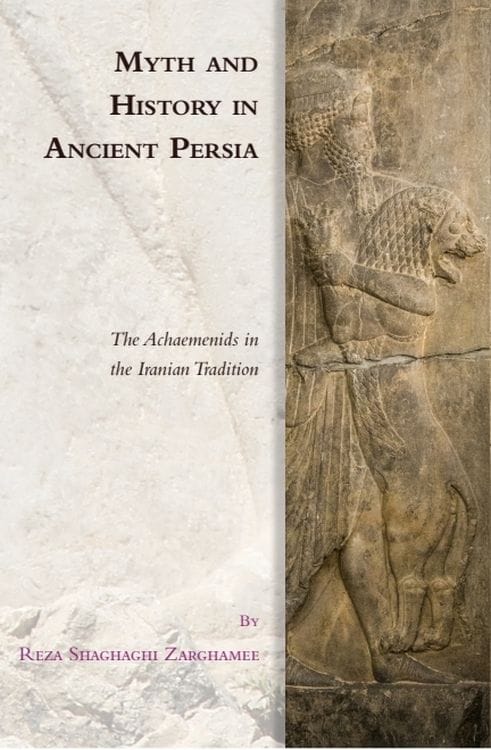
  • Myth and History in Ancient Persia

    Myth and History in Ancient Persia

    Shaghaghi Zarghamee, Reza. 2025. Myth and History in Ancient Persia: The Achaemenids in the Iranian Tradition. Edinburgh: Edinburgh University Press.

    This book fills an important gap in Achaemenid studies by using traditional Iranian narratives, such as those found in the famous Shahnameh, or ‘Book of Kings’, of Ferdowsi, to analyse the Greco-Roman accounts of Median and Persian royalty. The study shows that the classical authors derived their accounts from Iranian traditions, grounded in age-old myths and legends. This analysis serves many purposes. It refines the extent to which the classical sources may be used in historical reconstructions and sheds new light on the literary methods of authors, such as Herodotus, Ctesias, and Xenophon. Finally, the book offers insights into one of the thorniest enigmas in Iranian historiography, the apparent disappearance of Illustrious rulers like Cyrus II, Darius I, and Xerxes I from native historical traditions. Standing at the crossroads of Iranian studies and Classics, this book is an indispensable source for scholars of ancient Iran, Greek historiography, and the Shahnameh.

    (more…)
  • The Sanskrit Version of Yasna

    Palladino, Martina. 2025. The Sanskrit Version of Yasna 1–8. A Critical Edition with Commentary and Glossaries (Corpus Avesticum / Handbuch der Orientalistik 32/5). Leiden: Brill.

    This book contributes to the Multimedia Yasna (MUYA) Project, led by Prof. Almut Hintze of SOAS, by presenting an edition of the first eight chapters of the Sanskrit Yasna. This new edition is accompanied by an English translation and two glossaries.
    This study aims to provide a framework for Parsi literary production in the Indian context and, at the same time, to relate the Sanskrit text to its Avestan and Pahlavi versions. The special feature of this unique text is that it belongs to the Indian cultural environment while remaining part of the Zoroastrian tradition.

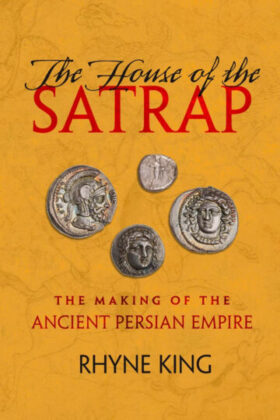
  • The House of the Satrap

    The House of the Satrap

    King, Rhyne. 2025. The House of the Satrap: The Making of the Ancient Persian Empire. Oakland: University of California Press.

    Starting in the sixth century BCE, the conquests of the Persian kings Cyrus, Cambyses, and Darius transformed the lives of humans on a continental scale, as their empire reached from the Iranian plateau to eastern Europe, Central Asia, and North Africa. Beyond the imperial center, the kings’ vast territory was ruled by royal representatives known as satraps, who managed the practicalities of running the empire. In this book, Rhyne King explores how the empire was governed by investigating how the satraps and the structures supporting them—their “houses”—operated across great distances. Examining satrapal houses in Egypt, Anatolia, Mesopotamia, and Central Asia, King demonstrates how these systems encouraged local self-interest and advancement even as they benefited the imperial whole. Ultimately, he argues, it was these Persian forms of transregional governance that were key in enabling the vast polity to endure for more than two centuries.

  • Die Aneignung und Umnutzung von Herrschaftsräumen am Beispiel der Squattersiedlung der südwestasiatischen Eisenzeit

    Die Aneignung und Umnutzung von Herrschaftsräumen am Beispiel der Squattersiedlung der südwestasiatischen Eisenzeit

    Cyrus, Georg . 2025. Die Aneignung und Umnutzung von Herrschaftsräumen am Beispiel der Squattersiedlung der südwestasiatischen Eisenzeit. Bicester: Archaeopress.

    Following the fall of the Neo-Assyrian Empire, former monumental sites in northern Mesopotamia and the Zagros Mountains became long-lasting squatter settlements. This study compares four such sites, revealing creative reuse of space and framing squatting as a distinct cultural phenomenon of the 6th–5th centuries BCE.

    In the 6th century BCE, with the collapse of the Neo-Assyrian Empire, a new form of cohabitation was established in many places in northern Mesopotamia and the neighbouring Zagros Mountains: squatter settlements. Once monumental structures seem to have lost their significance as elite sites and were now used for domestic purposes. This book analyses this form of cohabitation.

    In a qualitative comparison between the squatter settlements of the four sites Tell Sheikh Hamad, Nimrud, Godin Tepe and Nush-i Jan, this thesis identifies similarities and differences in the appropriation of monumental spaces. Lefebvre’s theory of space is used as a theoretical basis for understanding these appropriations. Methodologically, Hillier and Hanson’s space syntax analysis and Klinkenberg’s sequence-of-events approach are used.

    Ultimately, this analysis leads to the conclusion that squatter settlements were not simply temporary settlements that only existed for a few years, but rather established settlements that existed for centuries. It also turns out that the inhabitants of squatter settlements faced particular challenges with the decaying monumental structure, which they met with creativity and inventiveness. Squatter settlements therefore deserve their own consideration and should be seen as a cultural phenomenon of the 6th and 5th centuries in northern Mesopotamia and the central Zagros Mountains.