Author: Shervin Farridnejad

  • War in the Ancient Iranian Empires

    Hyland, John O. & Khodadad Rezakhani (eds.). 2024. Brill’s companion to war in the ancient Iranian empires (Brill’s Companions to Classical Studies: Warfare in the Ancient Mediterranean World 9). Leiden: Brill.

    Brill’s Companion to War in the Ancient Iranian Empires examines military structures and methods from the Elamite period through the Achaemenid, Seleucid, Arsacid, and Sasanian empires. War played a critical role in Iranian state formation and dynastic transitions, imperial ideologies and administration, and relations with neighbouring states and peoples from Central Asia to the Mediterranean. Twenty chapters by leading experts offer fresh approaches to the study of ancient Iranian armies, strategy, diplomacy, and battlefield methods, and contextualise famous conflicts with Greek and Roman opponents.

    Table of Contents

    (more…)
  • Zoroastrian Apocalypticism in The Maʿnī-yi Vahman Yasht

    Zoroastrian Apocalypticism in The Maʿnī-yi Vahman Yasht

    Alimoradi, Pooriya. 2024. “The wolf era ends, and the sheep era starts”: Zoroastrian apocalypticism in the Maʿnī-yi Vahman Yasht. Leiden: Brill.

    This book studies, for the first time, the Maʿnī-yi Vahman Yasht , the New Persian version of the Zand ī Wahman Yašt , the most important Zoroastrian text in apocalyptic genre. Through offering a critical edition, translation, and commentary, Alimoradi argues that the MVY is not a translation of the extant Pahlavi ZWY and is derived from another recension of apocalyptic materials in Pahlavi. He also offers suggestions in identifying several unspecified characters and events referred to in the text whose identities have been debated for decades. The book is relevant to those interested in Zoroastrianism, Iranian apocalyptic traditions, and anyone studying the Arab conquests in Western and Central Asia in 6ᵗʰ to 9ᵗʰ c. CE.

  • Varia Manichaica

    Varia Manichaica

    Morano, Enrico & Samuel N. C. Lieu (eds.). 2024. Varia Manichaica (Corpus Fontium Manichaeorum. Analecta Manichaica 3). Turnhout: Brepols.

    This volume brings together the works of some of the best known and most established scholars in Gnostic and Manichaean studies, Iranologists and art historians. It contains two important and indispensable catalogues of Turfan texts and also studies covering topics such as cosmogony, hymnology and manuscript illumination. A number of Turfan texts in Sogdian and Uygur are published here for the first time.

    Table of Contents

    • Sergio Basso: “Manichaean fragments related to the ‘Barlaam and Ioasaph saga’”
    • Adam BenkatoA Fragment of an Iranian Manichaean ‘Oral Tradition’
    • Fernando Bermejo-RubioMani as a paradigm of the Manichaean Church in the Cologne Mani Codex
    • Şehnaz Biçer and Betül ÖzbayThe Lotus illustration in a Manichaean manuscript
    • Iris Colditz: Strategies for success. Manichaeism under the early Sasanians
    • Desmond Durkin-MeisterernstAn update of Boyce’s Catalogue of Manichaean Middle Persian and Parthian 
    • Eduard IricinschiHow Do Wisdom, Law, and Revelation a Religion Make? Appropriation and Displacement in the ‘Chapters of the Wisdom of My Lord Mani’
    • Samuel N.C. LieuA catalogue of the Uygur Manichaean texts 
    • Enrico MoranoUygur in the Manichaean Sogdian texts in Manichaean script from the Berlin Turfan Collection 
    • Nicholas Sims-WilliamsThe “seven adversities” in a Manichaean Sogdian hymn
    • Michel TardieuLa métaphore de l’auberge
    • Peter Zieme: “Worte für die Seele”. Altuigurische manichäische Fragmente with an appendix by Yutaka Yoshida
  • Zoroastrian Iconographies from Pre-Islamic Persia and Central Asia

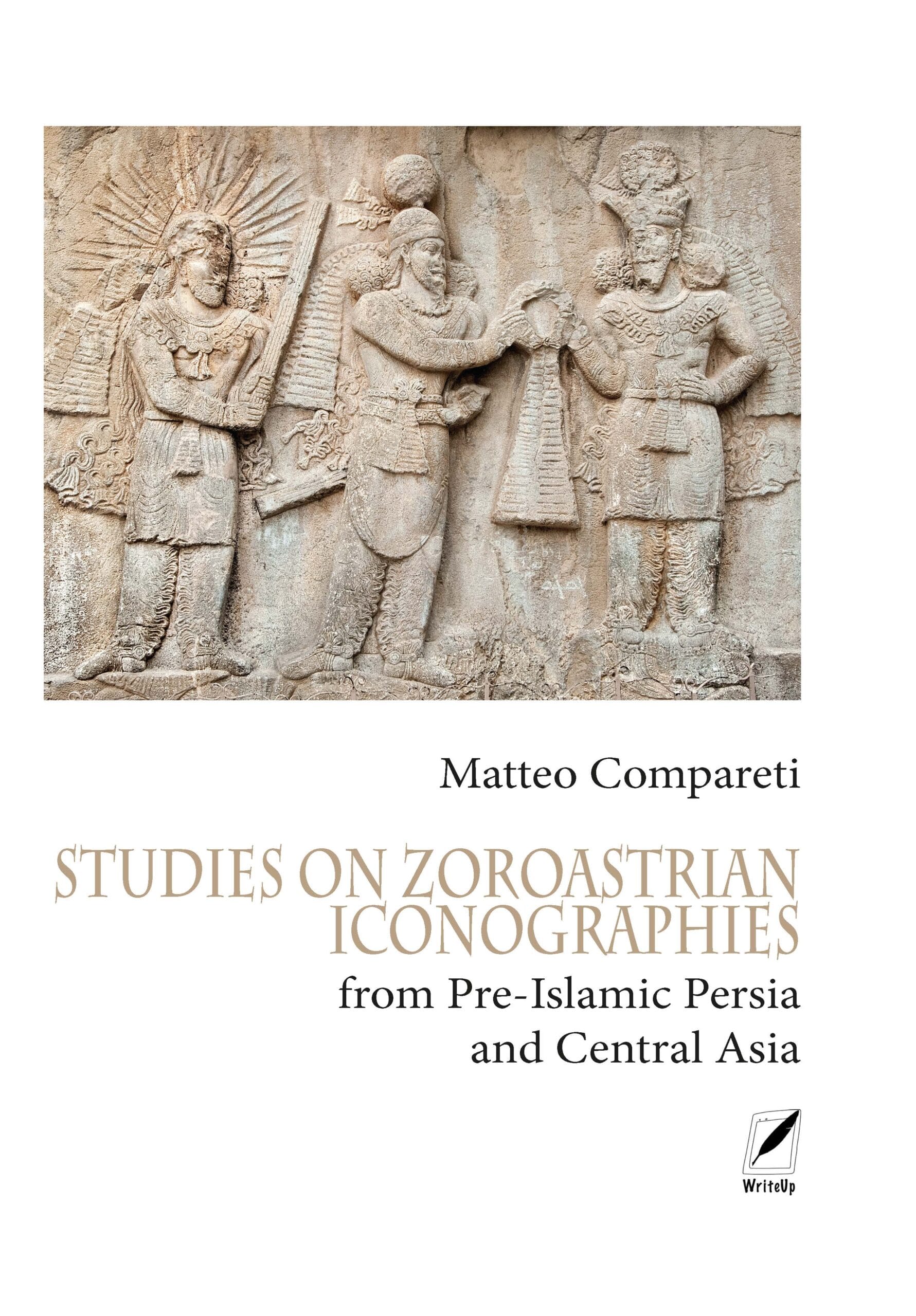
    Compareti, Matteo. 2024. Studies on Zoroastrian Iconographies from Pre-Islamic Persia and Central Asia. Roma: WriteUp.

    Sogdiana was an Eastern Iranian land situated in the territories of modern Uzbekistan and Tajikistan. It never formed a significant political or military force although, between the 6th-9th centuries, Sogdians became the main actors in the caravan and maritime trade networks commonly called the “Silk Road”. Most of archaeological and artistic materials about Sogdians come from excavations in ex-Soviet Central Asia, especially the site of Penjikent (Tajikistan). Wall paintings from this important Sogdian site show a native polytheistic faith with Zoroastrian background, which is still puzzling experts of Iranian studies. During the centuries, local artists adopted external cultural elements that – once individuated – could help to shed light on unidentified deities of the Sogdian pantheon. Their comparison with Zoroastrian deities depicted in pre-Islamic Persian arts represents an invaluable instrument to improving our knowledge of this fascinating but still enigmatic field of studies.

  • An Armenian Futūh Narrative

    La Porta, Sergio & Alison M. Vacca. 2023. An Armenian Futūh Narrative: Łewond’s Eighth-Century History of the Caliphate (Late Antique and Medieval Islamic near East 4). Chicago: Institute for the Study of Ancient Cultures of the University of Chicago.

    The History of the Armenian priest Łewond is an important source for the history of early Islamic rule and the only contemporary chronicle of second/eighth-century caliphal rule in Armenia. This volume presents a diplomatic edition and new English translation of Łewond’s text, which describes events that took place during the century and a half following the Prophet Muḥammad’s death in AH 11/632 CE. The authors address Łewond’s account as a work of caliphal history, written in Armenian, from within the Caliphate. As such, this book provides a critical reading of the Caliphate from one of its most significant provinces. Reading notes clarify many aspects of the period covered to make the text understandable to students and specialists alike. Extensive commentary elucidates Łewond’s narrative objectives and situates his History in a broader Near Eastern historiographical context by bringing the text into new conversations with a constellation of Arabic, Greek, and Syriac works that cover the same period. The book thus stresses the multiplicity of voices operating in the Caliphate in this pivotal period of Near Eastern history.

  • Festschrift Pierfrancesco Callieri

    Colliva, Luca, Anna Filigenzi & Luca Maria Olivieri (eds.). 2023. Le forme della città: Iran, Gandhāra e Asia Centrale. Scritti offerti a Pierfrancesco Callieri in occasione del suo 65° compleanno (Serie Orientale Roma, Nuova Serie 34). Roma: ISMEO – Ass. Internazionale di Studi sul Mediterraneo e l’Oriente.

    This Festschrift volume is dedicated to Pierfrancesco Callieri, honoring their distinguished contributions to the fields of Iranian Studies. This collection brings together an array of essays by eminent scholars, covering a wide range of topics that reflect the depth and breadth of Callieri’s academic impact. From historical analyses and cultural studies to religious and linguistic explorations and archaeological insights, each contribution not only celebrates Callieri’s legacy but also advances our understanding of these richly diverse regions.

    (more…)
  • Sasanian Administrations and Officials

    Gyselen, Rika (ed.). 2024. Administrations et préposés d’époque sassanide. Nouvelles données à la mémoire de Philippe Gignoux (Cahiers de Studica Iranica 66). Paris: Association pour l’Avancement des études iraniennes.

    This volume brings together studies based on primary sources, often unpublished, which highlight important aspects of the administration of the Sasanian Empire. Some complete our knowledge on the territorial establishment of the various administrations and of the mints, others deal with the actors of these institutions such as the magi and the scribes. The sources used are mainly seals and seal impressions on clay bullae.

    Summary
    (more…)
  • Studies in Iranian Philology

    Barbera, Gerardo, Matteo De Chiara, Alessandro Del Tomba, Bhikkhunī Dhammadinnā, Federico Dragoni & Paola Orsatti (eds.). 2024. Siddham. Studies in Iranian philology in honour of Mauro Maggi. Wiesbaden: Ludwig Reichert Verlag.

    This volume is a tribute to Mauro Maggi, celebrating his distinguished career and significant contributions in the fields of Iranian, Indo-Aryan, and Central Asian philology and linguistics. It features a diverse collection of papers presented by colleagues, former students, and friends, reflecting the broad spectrum of Mauro Maggi’s research interests. This collection not only honours Mauro Maggi’s extensive scholarly contributions but also serves as a valuable resource for researchers in Iranian, Indo-Aryan, and Central Asian studies. It will be of interest and value to scholars of Iranian philology and linguistics, as well as those in Indo-European linguistics, Central Asian philology, and Buddhist literature. Through this comprehensive tribute, the volume underscores the lasting impact of Mauro Maggi’s work and his enduring legacy in the field.

    Description
    (more…)
  • Transversal Studies on the Reigns of Yazdgird I and Wahrām V

    Jullien, Christelle (ed.). 2023. Discourse, power issues, and images. Transversal studies on the reigns of Yazdgird I and Wahrām V (Late Antique History and Religion). Leuven: Peeters.

    What images of Yazdgird I (399-420) and Wahrām V (420-438) have been transmitted in the sources from and outside the Persian empire? Those nearly forty years saw a rich and complex relationship develop between Persia and its neighbours, paving the way for the Sasanians to extend their influence beyond the borders. At the beginning of the fifth century, while exchanges and relations of subordination were being reconfigured in the Middle East, the religious communities of the Sasanian empire (Babylonian Jewry, diverse Christian communities, Manichaeans, etc.) created the conditions for a new relationship with power. These two great sovereigns were emblematic and inspired contrasting portrayals – either controversial or idealised – that integrate narrative models sometimes borrowed from other cultures. A major aim of this book is to bring together the up-to-date knowledge about this topic through a comprehensive enquiry and comparison of contemporaneous and later materials.

    Table of Contents

    • Geoffrey Greatrex and George Amanatidis-Saadé: “Les relations romano-perses sous Yazdgird Ier et Wahrām V”
    • Giusto Traina: “Yazdgird I, Wahrām V, and the End of Greater Armenia: A Note on the Armenian Sources”
    • Rika Gyselen: “Entre tradition et innovation : temoignages materiels de l’epoque de Yazdgird Ier et de Wahrām V”
    • Touraj Daryaee: “The Two Kings of Erānsahr: Yazdgird I ‘The Sinner’ and Wahrām V ‘The Onager’ in the Xwadāy-nāmag Tradition”
    • Geoffrey Herman: “Tue Jews of Babylonia during the Reigns of Kings Yazdgird I and Wahrām V”
    • Scott McDonough: “A Tale of Two Isaacs: Christians and the Crown in Fifth Century Erānsahr”
    • Christelle Jullien: “Les affaires de pyrees sous Yazdgird I. Motif hagiographique et modèles littéraires”
    • Marie-Joseph Pierre and Chiemi Nakano: “Le synode de 410, avant et apres”
    • Philip Wood: “Rewriting History: Yazdgird I, Wahrām V and the Chronicle of Seert
  • Architecture and Archaeology of the Achaemenid Empire

    Dan, Roberto. 2023. Studies on the architecture and archaeology of the Achaemenid Empire. Dynamics of interaction and transmission between centre and periphery. Roma: ISMEO – The International Association for Mediterranean and Oriental Studies.

    The relations between the centre and periphery of the Achaemenid Empire have been, for several years, the focus of numerous in-depth studies. The characteristics of this World Empire, which was a new phenomenon in the ancient Near East, have stimulated this scholarly research, based on written sources, as well as archaeological and cultural evidence. Quite often, the goal of these studies was to assess the impact of the empire’s core? A concept whose cultural outline warrants precise definition?within the regions under its control. For several decades, the basic question on the matter put forward by Roger Moorey (Cemeteries of the First Millennium B.C. at Deve Höyük, 1980: 128), who challenged the significance of the material traces of Persian domination (considered too flimsy), was echoed by many historians, who indeed have asked whether there “ever was a Persian empire.” That question was raised by Amélie Kuhrt and Heleen Sancisi-Weerdenburg in the introduction of a book whose title was, relevantly, Centre and Periphery (Achaemenid History, IV, 1990).

    (more…)