Author: Arash Zeini

  • The Central Asian world

    Féaux de la Croix, Jeanne & Madeleine Reeves (eds.). 2023. The Central Asian world (The Routledge Worlds). London & New York: Routledge.

    This landmark book provides a comprehensive anthropological introduction to contemporary Central Asia. Established and emerging scholars of the region critically interrogate the idea of a ‘Central Asian World’ at the intersection of post-Soviet, Persianate, East and South Asian worlds. Encompassing chapters on life between Afghanistan and Kazakhstan, Turkmenistan and Xinjiang, this volume situates the social, political, economic, ecological and ritual diversity of Central Asia in historical context. The book ethnographically explores key areas such as the growth of Islamic finance, the remaking of urban and sacred spaces, as well as decolonising and queering approaches to Central Asia. The volume’s discussion of More-than-Human Worlds, Everyday Economies, Material Culture, Migration and Statehood engages core analytical concerns such as globalisation, inequality and postcolonialism. Far more than a survey of a ‘world region’, the volume illuminates how people in Central Asia make a life at the intersection of diverse cross-cutting currents and flows of knowledge. In so doing, it stakes out the contribution of an anthropology of and from Central Asia to broader debates within contemporary anthropology.

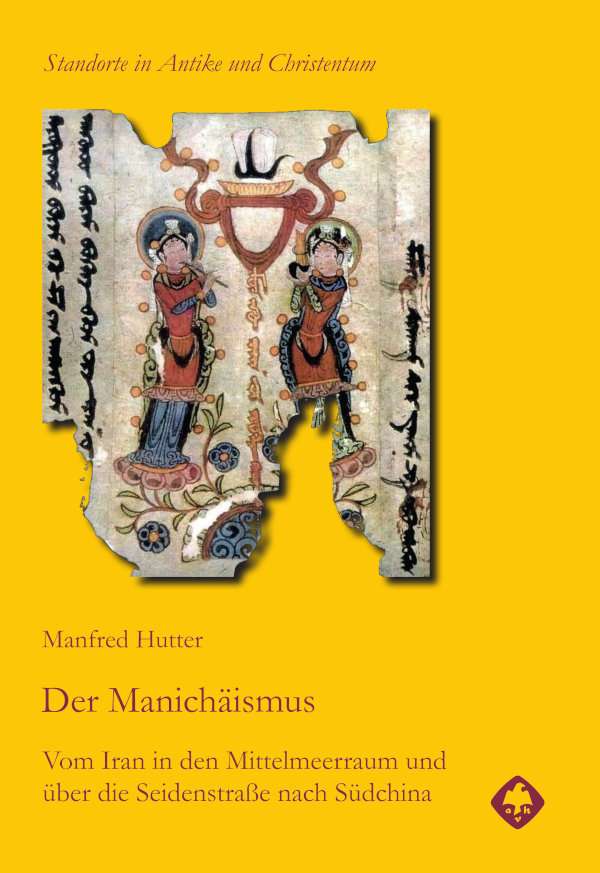
  • Der Manichäismus

    Hutter, Manfred. 2023. Der Manichäismus. Vom Iran in den Mittelmeerraum und über die Seidenstraße nach Südchina. Anton Hiersemann Verlag.

    Das erste umfassende deutschsprachige Handbuch der unterschiedlichen religionsgeschichtlichen Ausformungen des Manichäismus seit 1961.

    Der in der Mitte des 3. Jahrhunderts u.Z. entstandene Manichäismus war die erste „weltweit“ verbreitete Religion. Mani (216-277) präsentierte seine aus biblisch-gnostischen und iranisch-zoroastrischen Vorstellungen schrittweise entwickelte Lehre als den älteren Religionen überlegen, um die Lehre Jesu im Westen, Zarathustras im Iran und Buddhas in Indien abzulösen. Dieser Überlegenheitsanspruch wurde jeweils lokal spezifiziert, was von christlichen Theologen, zoroastrischen Priestern und chinesischen buddhistischen Gelehrten nicht unkommentiert blieb. Dadurch lässt sich diese Religion durch religionsinterne Quellen sowie externe Fremdbeschreibungen facettenreich rekonstruieren.

  • Three Persian Martyr Acts

    Harvey, Susan Ashbrook, Reyhan Durmaz, Michael L. Payne, Daniel Picus & Noah Tetenbaum. 2023. Three Persian martyr acts (Persian Martyr Acts in Syriac: Text and Translation 9). Piscataway, NJ: Gorgias Press.

    This volume brings together the texts and translations for three Syriac martyr acts, set in Sasanian Persia during the reign of Shapur II (309-379 CE). These texts offer compelling witness to the challenges of a community’s need to honor memory and experience, and evidence towards the formation and sustenance of Christian identity in the midst of Persian society and culture.

  • Babylonian Jews and Sasanian Imperialism

    Gross, Simcha. 2024. Babylonian Jews and Sasanian imperialism in late antiquity. Cambridge: Cambridge University Press.

    The new publication date for this book is now February 2024.

    From the image offered by the Babylonian Talmud, Jewish elites were deeply embedded within the Sasanian Empire (224-651 CE). The Talmud is replete with stories and discussions that feature Sasanian kings, Zoroastrian magi, fire temples, imperial administrators, Sasanian laws, Persian customs, and more quotidian details of Jewish life. Yet, in the scholarly literature on the Babylonian Talmud and the Jews of Babylonia , the Sasanian Empire has served as a backdrop to a decidedly parochial Jewish story, having little if any direct impact on Babylonian Jewish life and especially the rabbis. Babylonian Jews and Sasanian Imperialism in Late Antiquity advances a radically different understanding of Babylonian Jewish history and Sasanian rule. Building upon recent scholarship, Simcha Gross portrays a more immanent model of Sasanian rule, within and against which Jews invariably positioned and defined themselves. Babylonian Jews realized their traditions, teachings, and social position within the political, social, religious, and cultural conditions generated by Sasanian rule.

  • On Middle Persian hassār and hassārīh

    Fattori, Marco. 2023. A note on Pahlavi lexicography: Middle Persian hassār, hassārīh. Bulletin of the School of Oriental and African Studies. 1–12.

    This article deals with the identification and interpretation of two rare Middle Persian words. Firstly, some attestations of the as yet unrecognized word <hs’lyh> hassārīh are discussed, showing that it means “direction”. Then, a semantic analysis of its underived counterpart hassār is carried out, as a basis for an etymological proposal. Finally, it is argued that hassār descends from Old Persian *haçā-sāra- “(having the head) in the same direction”, and a possible reconstruction of the semantic development of the word is provided.

    Article’s abstract
  • ‘The Coals Which Were His Guardians…’:

    Vevaina, Yuhan Sohrab-Dinshaw. 2022. ‘The coals which were his guardians…’: The hermeneutics of Heraclius’ Persian campaign and a faint trace of the ‘Last Great War’ in Zoroastrian literature. In Phil Booth & Mary Whitby (eds.), Mélanges: James Howard-Johnston (Travaux et mémoires 26), 467–490. Paris: Association des Amis du centre d’histoire et civilisation de Byzance.

    We had previously announced the volume. This article is now available from the author’s academia page.

  • The 9th Ratanbai Katrak Lectures

    Prof. Dr. Alberto Cantera (Freie Universität Berlin) will deliver the final three Ratanbai Katrak Lectures this autumn in Oxford.

    These lectures are convened by Prof. Yuhan Sohrab-Dinshaw Vevaina for the Faculty of Asian and Middle Eastern Studies.

    The talks will also be on Zoom.

    (more…)
  • Zoroastrian Conversations

    Prof. Yuhan Vevaina will be hosting the 3rd ‘Zoroastrian Conversations’ with Dr. Céline Redard, Lecturer for the Institute of History of Religions at the University of Strasbourg, France.

    Saturday, 07 October 2023; 12 Noon Eastern time; 9 AM Pacific time; and 5pm UK time.

    Zoom Info: https://fezana.org/conversations/

  • Sasanian and Islamic Settlement and Ceramics in Southern Iran

    Priestman, Seth M. N. & Derek Kennet. 2023. Sasanian and Islamic settlement and ceramics in Southern Iran (4th to 17th century AD): The Williamson Collection Project (British Institute of Persian Studies Archaeological Monograph Series 8). Oxford: Oxbow Books.

    This monograph comprises the final publication of a study supported by the British Institute of Persian Studies and undertaken by Seth Priestman and Derek Kennet at the University of Durham. The work presents and analyses an assemblage of just under 17,000 sherds of pottery and associated paper archives resulting from one of the largest and most comprehensive surveys ever undertaken on the historic archaeology of southern Iran. The survey was undertaken by Andrew George Williamson (1945–1975), a doctoral student at Oxford University between 1968 and 1971, at a time of great progress and rapid advance in the archaeological exploration of Iran.

    The monograph provides new archaeological evidence on the long-term development of settlement in Southern Iran, in particular the coastal region, from the Sasanian period to around the 17th century. The work provides new insights into regional settlement patterns and changing ceramic distribution, trade and use. A large amount of primary data is presented covering an extensive area from Minab to Bushehr along the coast and inland as far as Sirjan. This includes information on a number of previously undocumented archaeological sites, as well as a detailed description and analysis of the ceramic finds, which underpin the settlement evidence and provide a wider source of reference.

    By collecting carefully controlled archaeological evidence related to the size, distribution and period of occupation of urban and rural settlements distributed across southern Iran, Williamson aimed to reconstruct the broader historical development of the region. Due to his early death the work was never completed. The key aims of the authors of this volume were to do justice to Williamson’s remarkable vision and efforts on the one hand, and at the same time to bring this important new evidence to ongoing discussions about the development of southern Iran through the Sasanian and Islamic periods.

    From the Oxbow website
  • Notes on the Xorde Avesta V

    König, Götz. 2023. Notizen zum Xorde Avesta V: Das Avesta-Pahlavi Ms. T12 betrachtet im Rahmen der historischen Veränderungen des Xorde Avesta. Berkeley Working Papers in Middle Iranian Philology 1(2). 1–32.

    Das „Xorde Avesta“ ist eine (in Handschriften und Drucken überlieferte) Sammlung von (größtenteils) kürzeren liturgischen Texten in avestischer Sprache (sowie in persischen und in indischen Sprachen) auf der Grundlage einer sie charakterisierenden, allgemein verbindlichen Struktur folgt. Diese Struktur zeigt typische Variationsmuster gemäß Klasse, Zeit und Ort der Handschrift. Im Rahmen von allgemeiner Struktur und partikularem Muster finden sich wiederum individuelle Differenzen in Material und in dessen Anordnung, die dafür verantwortlich sind, daß Xorde Avesta Handschriften fast immer Unikate sind (und vermutlich darum auch niemals im Rahmen der Hypothese der ‘Stammhandschriften’ diskutiert wurden). Die Hs. T12 aus der Mitte des 16. Jh. gehört zu jenen Handschriften des Xorde Avesta, die für unsere Rekonstruktion der Geschichte einer bestimmten Handschriftenklasse eine herausragende Position besitzen. Sie bildet zudem eine Schnittstelle von frühem iranischen Xorde Avesta (in Pahlavi) und der indischen Tradition, in die die Handschrift (wieder?) eingeführt wird.

    Abstract