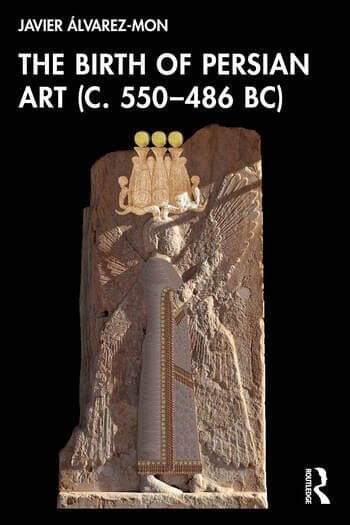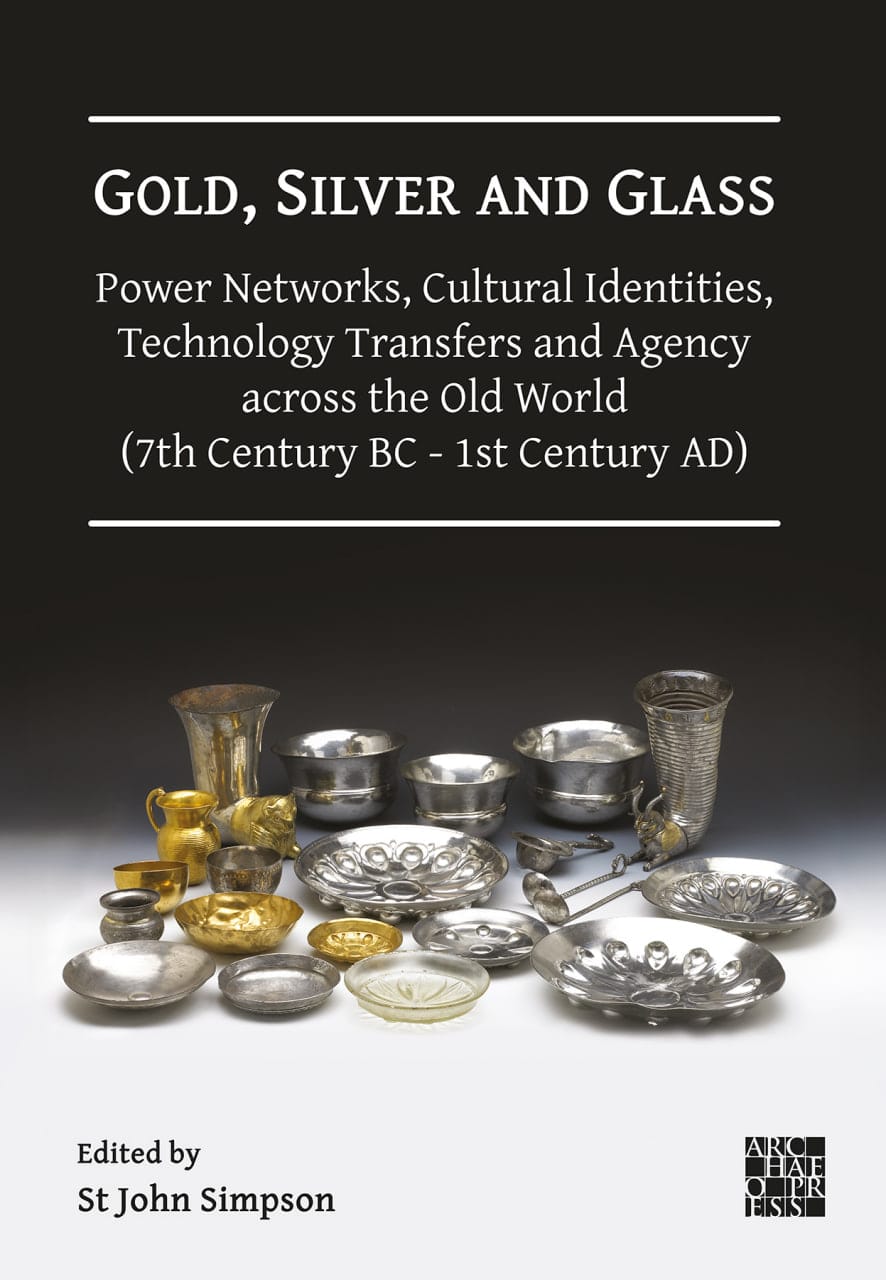
We have been following the news of the protests in Iran with growing concern and deep distress. We acknowledge the profound suffering unfolding across the country and recognise the courage of our sisters and brothers who are fighting for their freedom. Like so many Iranians living outside Iran, we fear for our loved ones and for all those exposed to violence and brutality. We wish everyone strength, courage, and hope in this struggle, and we stand in solidarity with our people.

Achaemenid royal women in Egypt
Kaczanowicz, Marta. 2025. Invisible figures: Achaemenid royal women in Egypt. Old World: Journal of Ancient Africa and Eurasia. Brill 5(2). 1–19.
This contribution aims to reexamine the frequently stated assertion that Achaemenid royal women were not involved in Egypt and its affairs during the periods of Persian rule on the Nile. The evidence is considered against the Persian concept of queenship rather than focusing solely on the Egyptian perspective on the role of royal women within the ideology of power. It is proposed that, instead of reflecting a lack of interest by the Achaemenids in cultivating Egyptian traditions in this regard, the existing corpus of sources, small though it may be, is a result of a combination of selective preservation of evidence and contemporary perceptions of the position and prerogatives of the royal women in the Persian court.
Abstract
Memory, politics, and religion in the reign of Xusrō II
Baca-Winters, Keenan. 2025. A most vicious game: Memory, politics, and religion in the reign of Xusrō II. Hunara: Journal of Ancient Iranian Arts and History 3(2). 25–53.
This paper examines the complex relationship between Xusrō II and the Christians of Ērānšahr (the Sāsānian Kingdom). By the time he assumed power, Ērānšahr had a significant population of Christians who belonged to distinct churches. Despite Xusrō II’s efforts to position himself as a patron of Christianity and his engagement with its practices, he faced hostility from certain Christian writers. This tension stemmed from the inherent challenges of balancing the interests and doctrinal differences of various Christian sects within the kingdom. The Church of the East in particular perceived Xusrō II’s decisions, while often pragmatic, as threats to its power and influence. The historical memory of past persecutions and the martyrdom tradition within Ērānšahr further fueled negative portrayals of Xusrō II in Christian texts. Ultimately, the interplay of religious rivalries, political maneuvering, and the weight of historical memory shaped the complicated and often contentious relationship between Xusrō II and the Christians he ruled.
Abstract
Scent, Colour and Glitter in the Ancient World
Soudavar Farmanfarmaian, Fatema. 2025. Scent, colour and glitter in the ancient world: A comparative history of aromatics, cosmetics and adornment, from the Mediterranean to the China Seas. London: I.B. Tauris.
Aromatics, cosmetics and personal adornment have had a major role in the evolution of human society, particularly in the cradles of civilization between the Nile and the Indus.
Description
Far from being concerned with the frivolities of vain pursuits, their study touches on religion, cosmology, rituals and magic, life and the afterlife, sexuality and procreation, artistic expression, technology, craftsmanship, aesthetics, administrative structures, long-distance trade and cross-cultural exchanges – in sum, all the essentials that underpin human civilization.
This richly illustrated book provides a history of luxury items from the Neolithic period to late Antiquity. Egyptian and Mesopotamian cosmetics are discussed first, along with the vast region between the Nile and the Indus, with the Iranian plateau at its core. Through the latter, the book ventures westwards to the Greco-Roman world and eastwards to the Indian subcontinent and China. The differing focus of each chapter gives a fuller picture of the global role of aromatics, cosmetics and jewellery within a broader civilizational framework that includes archaeological discoveries that have come to light in the last six decades.
Le livre de Yōišta Friiāna
Pirart, Éric. 2025. Le livre de Yōišta Friiāna. Introduction, édition, traduction et commentaire (Publications d’Études Indo-Iraniennes 5). Strasbourg: Université de Strasbourg.
Yōišta Friiāna est un héros mythologique présent dans toutes les strates de la littérature zoroastrienne ancienne et médiévale, l’archaïque Uštauuaitī Gāθā, deux Yašt de l’Avesta récent, le Dēnkard et d’autres livres pehlevis. Sa confrontation avec un démon, contée dans le petit livre pehlevi qui porte son nom, rappelle fortement le mythe grec d’Œdipe et de la Sphinx.
Résumé
The lives and legacies of Bōrān and Āzarmīgduxt
Baca-Winters, Keenan. 2025. To walk in royal ways: The lives and legacies of Bōrān and Āzarmīgduxt. Old World: Journal of Ancient Africa and Eurasia. Brill 5(2). 1–33.
Amid the political turmoil and external threats that marked the final years of Ērānšahr, also known as the Sāsānian Empire, two sisters, Bōrān and Āzarmīgduxt, ascended the throne. While previous scholars have briefly touched upon these women, this paper examines the entire zeitgeist of their reigns, shedding light on their personalities, decisions, and the challenges they faced in a politically crumbling empire. By analyzing their responses to the broader political landscape of an Ērānšahr beset by civil war, a recent defeat by the Romans in the war of the seventh century CE, and the Islamic invasion, this paper reveals the complexities of Bōrān and Āzarmīgduxt’s leadership and their unwavering determination to navigate the tumultuous currents of their time. Through an exploration of primary sources, this paper offers a richer, more personal understanding of Bōrān and Āzarmīgduxt and their resilience in the fall of an empire established by their forefathers.
AbstractOn the Teispid-Achaemenid Dynastic Divide
Zarghamee, Reza. 2025. A contribution to the discourse regarding a Teispid-Achaemenid dynastic divide. The Ancient History Bulletin 39(3/4). 86–124.
Editorial remark: Unfortunately, we are unable link to the individual articles, published by the bulletin. which seems to be due to the green open access policy the journal follows.
This paper evaluates the recent scholarly trend of characterizing Cyrus II and Darius I as belonging to two distinct dynasties: the former being a Teispid and the latter an Achaemenid. In the process, it seeks to address important methodological questions pertaining to the use of primary source material, such as the Cyrus Cylinder, Bisutun Inscription, and Herodotus. The ideologically charged Bisutun Inscription is of particular relevance, and comparative data is marshaled to show that, despite the obvious advantages to Darius of linking himself to Cyrus, neither the text itself nor the alleged circumstances of Darius’ accession compel a conclusion that he lied on the point of his claimed dynastic connection to Cyrus. In addressing the inconsistencies and difficulties in the arguments for a dynastic divide, the paper also addresses related theories that portray Cyrus II as an Elamite (as opposed to a Persian or Iranian) ruler or, alternatively, as a Persian or Iranian ruler with strong Elamite affinities. As part of its overall argumentation, the paper evaluates overlooked aspects of the terminology used in the Cyrus Cylinder, the limitations of David Stronach’s foundational arguments for Darius’ single authorship of the Pasargadae inscriptions, and onomastic evidence regarding members of the Achaemenid family mentioned by Herodotus. Without denying the hazards of accepting the Bisutun narrative uncritically or that much about the early history of the Persians (including the subject of this article) cannot be proved, this paper strives to show that the two-dynasty theory seems less likely when one takes a holistic view of the evidence and, as such, should not constitute the presumptive model for characterizing the history of the first Persian Empire.
Abstract
Dabir (vol. 12)
Volume 12 of Dabir (2025) is now available both online and in print, featuring two issues:
- Salman Aliyari Babolghani: The Imperfect with the t-Type Prefix in New Iranian and Its Connection to the Old Iranian Augmented Imperfect Optative
- Majid Daneshgar: Reading Ismāʿīlī Islam in Aceh: Shāh Shams Sabziwārī’s Poems Copied in the 15th-Century Indonesia
- Meysam Mohammadi: Middle Persian, Early New Persian and Fahlawī Quotations in Tārīx-e Qom
- Salman Aliyari Babolghani: The Verb ‘to Become’ and Its Significance in Western Iranian Historical Dialectology: the Case of Persian and Lori
- Majid Daneshgar: An Unknown Malay-Javanese Booklet Belonging to Thomas Erpenius: Early Days of the Shaṭṭārī Prayers in Indonesia
- Pouria Shokri and Ahmad Salehi Kakhki: The Morphology and Classification of Tiles from the Ilkhanid Era until the Timurid Invasion, with Emphasis on Techniques, Forms, and Glazes
- Hossein Sheikh: Review of Zamāna wa Zindagi-ye wa Kārnāma-ye Mollā Huseyin Wāˁiz-i Kāšifi, written by Mostafa Gohari-ye Fakhrabad
- Sun Wujun[孫 武軍] and Chen Fan[陳 帆]: Review of Zhonggu Xianjiao Dongchuan Jiqi Huahua Yanjiu 中古祆教東傳及其華化研究 [Studies on the Spread of Zoroastrianism in Medieval China], written by Zhang, Xiaogui [張小貴]

Anabasis, vols. 14-15
Volumes 14-15 (2023-2024) of Anabasis. Studia Classica et Orientalia, edited by Marek Jan Olbrycht, is out now. Several papers and reviews of the issue relate to ancient Iran:
- Michał Podrazik: Cyrus the Younger in Syria and Mesopotamia, Abrokomas, and the Great King’s Defensive Strategy (401 BC)
- Heckel: Alexander and the Amazon Queen
- Harry Falk: Zariaspa and the “Kunduz” Hoards
- Karlheinz Kessler: More about Nwt/Nōd and Adiabene
- Andreas Luther: Artabanos und die Meder
- Marek Jan Olbrycht: Parthian Weapons and Military Equipment: Some Remarks
- Review Articles / Reviews:
- Marek Jan Olbrycht: Recent Perspectives on Parthian History: Research Approaches and Methodological Concerns
- Jeffrey D. Lerner: Seleucid History: New Perspectives and Current Challenges
- Sabine Müller: [Review of] Marek Jan Olbrycht, Early Arsakid Parthia (ca. 250-165 B.C.) At the Crossroads of Iranian, Hellenistic, and Central Asian History, Leiden / Boston: Brill 2021 (Mnemosyne Supplements 440)
- Lang Xu: [Review of] Juping Yang (ed.), Ancient Civilizations and the Silk Road, Beijing: China Social Science Press, 2021
The Late Babylonian worship scene at Persepolis
Garrison, Mark B. 2025. The Late Babylonian worship scene at Persepolis. In: Benjamin Sass & Laura Battini (eds.), Mortals, Deities and Divine Symbols: Rethinking Ancient Images from the Levant to Mesopotamia. Studies Offered to Tallay Ornan (Archaeopress Ancient Near Eastern Archaeology 12), 477-536. Bicester: Archaeopress.
This analysis concerns several types of worship scenes found in the glyptic imagery preserved as impressions on clay administrative tablets from Persepolis. This important body of data is known today as the Persepolis Fortification Archive, dating to the middle-late years of the reign of Darius I (ruled 522/521–486 BCE). The principal scene, a worshipper who stands before divine symbols that rest on pillared pedestals, here called the Late Babylonian worship scene, is well-known, often characterized as the most distinctive of the glyptic landscape in the Late Babylonian period. At Persepolis, the Late Babylonian worship scene occurs on a large number of seals and exhibits a rich iconographic repertoire; indeed, the evidence from Persepolis is as numerous and varied as from any Babylonian archive. The seals from Persepolis raise numerous issues regarding the chronology and iconographic and stylistic development of the scene in the Late Babylonian archives. These Persepolitan seals present a particularly interesting case study in the complexities of cultural interaction between Iran and Babylonia in the middle of the 1st millennium BCE.