• Zoroastrian Manuscripts in Russia

    The article introduces unique Persian manuscripts in the collection of the IOM, RAS specially devoted to Zoroastrian matters. In short Zoroastrian scriptures composed in New Persian during the 12th–17th centuries, were not literal translations from the Pahlavi, but free interpretations of the old sources, adapted to the changing circumstances of life.

    The artcile is available to download here.

    Aly Ivanovich Kolesnikov is Leading Researcher at the Institute of Oriental Manuscripts, Russian Academy of Sciences.

  • Memorial Volume for Chahryar Adle

    bokhara 107

    Bukhara, No. 107 (Memorial Volume for Chahryar Adle). Tehran. 2015.- Via Ehsan Shavarebi.

    The 107th issue of Bukhara Magazine (July-August 2015) is dedicated to the memory of the late Professor Chahryar Adle (1944-2015). Chahryar Adle, Iranian archaeologist specialised in art and architecture of Iran and Central Asia during the Islamic period, passed away in Paris on 21 June.
    This volume, edited by Ali Dehbashi, includes more than 50 papers in memory of the late Prof. Adle, by such scholars as Firouz Bagherzadeh, Mahmoud Mousavi, Rémy Boucharlat, Carlo G. Cereti, Marie-Christine David, Hekmatollah Mollasalehi, Ehsan Eshraghi, Rajab-Ali Labbaf-Khaniki, Ali Mousavi, Mehrdad Malekzadeh, Nader Nasiri-Moghaddam, Shahram Zare, Mohammad Taghi Ataee, Ehsan Shavarebi, etc. Also several papers and interviews of Prof. Adle are republished in this volume.
    The volume is in Persian and consists of 513 pages.

  • Pahlavi Epistolary Formulae

    Chunakova, Olga Mikhailovna. 2015. Pahlavi Epistolary Formulae. Written Monuments of the Orient 1(1). 32–37.

    The paper focuses on the Pahlavi text dealing with the correct way to write letters published in: JAMASP-ASANA (ed.) 1913, 132–140. The text contains a series of formulae to be used in letters to various persons. The reading and interpretation of the formulae were translated differently by previous scholars. The key to the understanding of these formulae is the opposition of two terms—xwadāy and bandag—meaning the addressee and the sender of a letter. The constructions with an attribute compound and its synonym, and a determinative compound and its synonym following these two terms refer to the addressee and the sender respectively.

    The artcile is available to download here.

    Olga Mikhailovna Chunakova is Head of the Section of Middle Eastern Studies at the Institute of Oriental Manuscripts, Russian Academy of Sciences.

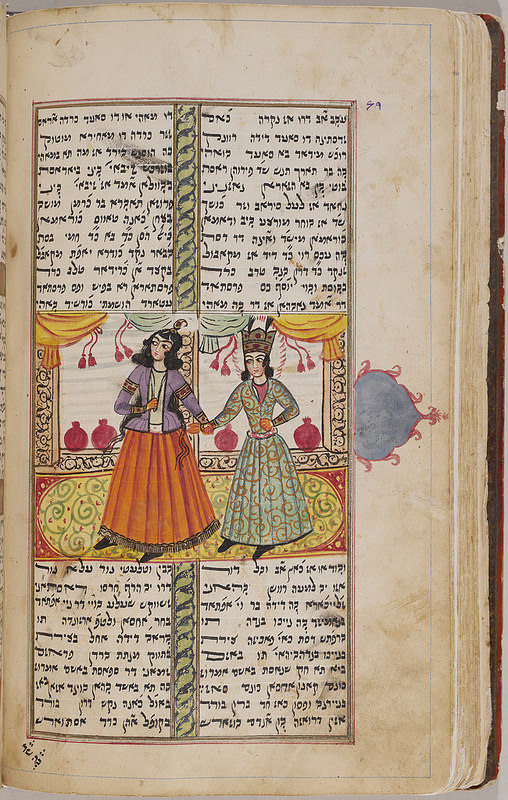
  • On Judeo-Persian 2

    McCollum, Adam. 2015. On Judeo-Persian language and literature. Part Two: Texts and Bibliography. Ancient Jew Review.

    In a two-part series, Dr. Adam McCollum addresses the possibilities for the field of Judeo-Persian language and literature. Part One addresses the state of the field and Part Two includes a helpful bibliography and four text samples.

    You can find out more about Adam McCollum and his work over at his blog, hmmlorientalia, or at his highly recommended Twitter account: @adamcmccollum.

  • An Aramaic epigraph

    Azzoni, Annalisa & Matthew Stolper. 2015. From the Persepolis Fortification Archive Project, 5: The Aramaic Epigraph Ns(y)h on Elamite Persepolis Fortification Documents. Achaemenid Research on Texts and Archaeology (ARTA) 004. 1–88. – via Charles Jones.

    Persepolis Fortification tablets with cuneiform texts in Achaemenid Elamite sometimes also bear short texts in Aramaic script and language. The word ns(y)ḥ appears in more than a third of them, on documents produced in the latest attested stages of information handling that are represented by the excavated form of the Persepolis Fortification Archive. These notations, we propose, refer to a further stage, one that produced documents that are no longer extant.
  • Arabs before Islam

    Fisher, Greg (ed.). 2015. Arabs and empires before Islam. Oxford University Press.

    Arabs and Empires before Islam collates nearly 250 translated extracts from an extensive array of ancient sources which, from a variety of different perspectives, illuminate the history of the Arabs before the emergence of Islam. Drawn from a broad period between the eighth century BC and the Middle Ages, the sources include texts written in Greek, Latin, Syriac, Persian, and Arabic, inscriptions in a variety of languages and alphabets, and discussions of archaeological sites from across the Near East. More than 20 international experts from the fields of archaeology, classics and ancient history, linguistics and philology, epigraphy, and art history, provide detailed commentary and analysis on this diverse selection of material.

    About the author: Greg Fisher is Associate Professor in the College of the Humanities and the Department of History at Carleton University, Ottawa, Canada.

  • Continuity and Change in Late Antique Iran: An Economic View of the Sasanians

    Rezakhani, Khodadad. 2015. Continuity and Change in Late Antique Iran: An Economic View of the Sasanians. International Journal of the Society of Iranian Archaeologists. 1 (2), 95-108.

    Ancient economy has commonly been studied in the context of commerce and trade, less attention being paid to the production side of the economy. Additionally, artificial periodizations based on political change, including the division of Near Eastern history to the pre-Islam and Islamic periods, has prevented historians from considering issues such as economic growth in the long term. The present paper, focusing on the production side of the Sasanian economy, tries to establish certain principles and introduce possible criteria to study the economic history of the Sasanians. Regions of Khuzistan and Tokharistan/Bactria provide useful examples and comparisons for illustrating some of the points.

  • Ethnicity in the ancient world

    McInerney, Jeremy (ed.). 2014. A companion to ethnicity in the Ancient Mediterranean. Wiley-Blackwell.

    A Companion to Ethnicity in the Ancient Mediterranean presents a comprehensive collection of essays contributed by Classical Studies scholars that explore questions relating to ethnicity in the ancient Mediterranean world.

    • Covers topics of ethnicity in civilizations ranging from ancient Egypt and Israel, to Greece and Rome, and into Late Antiquity
    • Features cutting-edge research on ethnicity relating to Philistine, Etruscan, and Phoenician identities
    • Reveals the explicit relationships between ancient and modern ethnicities
    • Introduces an interpretation of ethnicity as an active component of social identity
    • Represents a fundamental questioning of formally accepted and fixed categories in the field

    This volume contains an article by Jennifer Gates-Foster  entitled Achaemenids, royal power, and Persian ethnicity.

  • Masterpieces of Persian Calligraphy

    The online anthology of Persian calligraphy falls slightly outside of the scope of Bibliographia Iranica, but is too delightful to be missed. Congratulations to Hamidreza Ghelichkhani, who curated and annotated the anthology in collaboration with Kambiz GhaneaBassiri.

    This anthology invites audiences to interact with select works of Iranian masters of calligraphy from the tenth to the twentieth century. These works were carefully chosen to represent the artistic canon that has shaped the world of calligraphy in contemporary Iran. Their influence has in many cases exceeded the national boundaries of modern Iran, and the earlier works helped spread Persianate culture throughout West Asia in the Middle Ages and the Early Modern era.

    Source: Home – Masterpieces of Persian Calligraphy

  • Rabbis, Sorcerers, Kings, and Priests: The Culture of the Talmud in Ancient Iran

    Mokhtarian, Jason Sion. 2015. Rabbis, Sorcerers, Kings, and Priests: The Culture of the Talmud in Ancient Iran. Berkeley. University of California Press.

    Rabbis, Sorcerers, Kings, and Priests examines the impact of the Persian Sasanian context on the Babylonian Talmud, perhaps the most important corpus in the Jewish sacred canon. What impact did the Persian Zoroastrian Empire, as both a real historical force and an imaginary interlocutor, have on rabbinic identity and authority as expressed in the Talmud? Drawing from the field of comparative religion, Jason Sion Mokhtarian addresses this question by bringing into mutual fruition Talmudic studies and ancient Iranology, two historically distinct disciplines. Whereas most research on the Talmud assumes that the rabbis were an insular group isolated from the cultural horizon outside their academies, this book contextualizes the rabbis and the Talmud within a broader sociocultural orbit by drawing from a wide range of sources from Sasanian Iran, including Middle Persian Zoroastrian literature, archaeological data such as seals and inscriptions, and the Aramaic magical bowl spells. Mokhtarian also includes a detailed examination of the Talmud’s dozens of texts that portray three Persian “others”: the Persians, the Sasanian kings, and the Zoroastrian priests. This book skillfully engages and demonstrates the rich penetration of Persian imperial society and culture on the jews

    TOC:

    -List of Abbreviations
    -Note on Translations, Transcriptions, and Manuscripts
    -Acknowledgments
    -Introduction
    -1. The Sources and Methods of Talmudic and Iranian Studies
    -2. Comparing Sasanian Religions
    -3. Rabbinic Portrayals of Persians as Others
    -4. Rabbis and Sasanian Kings in Dialogue
    -5. Rabbis and Zoroastrian Priests in Judicial Settings
    -6. Rabbis, Sorcerers, and Priests
    -Conclusion: Rabbis, Sorcerers, Kings, and Priests in Sasanian Iran
    -Notes
    -Bibliography
    -Index


    Jason Sion Mokhtarian is Assistant Professor of Jewish Studies at Indiana University, Bloomington.