Category: Books

  • Man, Landscape, and Society in Arsacid and Sasanian Iran

    Man, Landscape, and Society in Arsacid and Sasanian Iran

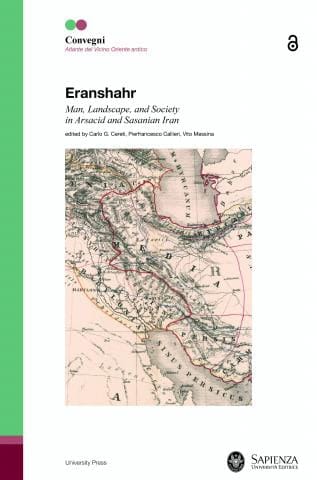
    Cereti, Carlo Giovanni, Pierfrancesco Callieri & Vito Messina (eds.). 2025. Eranshahr. Man, Landscape, and Society in Arsacid and Sasanian Iran (Collana Convegni 75). Rome: Sapienza Università Editrice.

    This fourth volume of the Atlas of the Ancient Near East (OCAVOA) collects 15 contributions by members of the three Units composing the PRIN 2017 ‘Eranshahr: Man Landscape and Society in Arsacid and Sasanian Iran. Texts, material culture, and society from Arsaces to Yazdegard III. Three case studies: Pars, Pahlaw and Khuzestan’ (2017PR34CS). These papers were presented during the conclusive workshop of the project, held in Ravenna on February 22-23, 2024. The project was conceived in 2017 and launched in 2018, representing a collaborative effort by a multidisciplinary team of scholars from Sapienza University of Rome, Alma Mater Studiorum University of Bologna, and Turin University, as well as several international partners. The project aimed to study the long millennium bridging two important transition periods in the history of western Asia, the first marking the passage from the Seleucid to the Arsacid era, the second being the fall of the Sasanian Empire and the rise of the Islamic Caliphate. In this framework, the book contains a set of archaeological, historical-geographical, and cultural studies on three ancient regions of western Iran during the Arsacid, Sasanian, and early Islamic periods, which combine into a coherent and innovative narration, shedding new light on the Iranian world in Antiquity, Late-Antiquity and the Early Middle Ages and opening the way for future investigations.

  • From Alexander to Kanishka

    From Alexander to Kanishka

    Bousdroukis, Apostolos. 2025. D’Alexandre à Kanishka : Interactions culturelles dans les fondations des successeurs d’Alexandre, du Proche-Orient à la vallée de l’Indus, aux époques hellénistique, romaine et arsacide : Volume I & Volume II (MDAFA 35). Athens: École française d’Athènes.

    From the Eastern Mediterranean to the Indus Valley, the successors of Alexander the Great founded, as early as the 4th century BCE, an impressive network of cities inspired by Macedonian urban models. Who were their inhabitants? How did these cities function and evolve within such diverse cultural contexts as the Near East, Mesopotamia, or Bactria? In this two-volume work, Apostolos Bousdroukis invites us to rediscover these foundations through a scholarly investigation grounded in the most recent archaeological evidence. Civic institutions, public monuments, sanctuaries, domestic architecture, and religious practices are all examined, not only in their local particularities but also in their capacity to absorb, transform, or blend Greek and indigenous traditions. Far from offering a simple urban history, this study sheds light on the complex interactions between Greek settlers and local populations — encompassing processes of adoption, adaptation, and cultural hybridization. It reveals how these cities became dynamic centers of exchange and cultural innovation, contributing to the shaping of new identities in a world undergoing profound transformation.

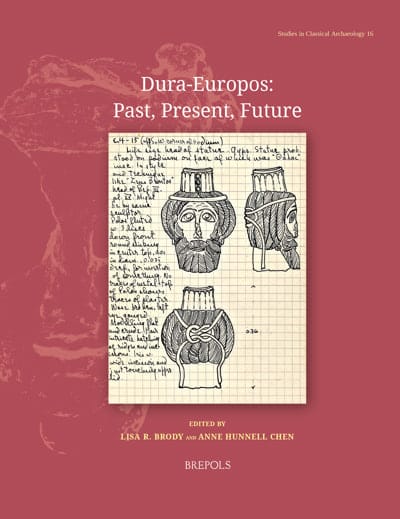
  • Dura-Europos: Past, Present, Future

    Dura-Europos: Past, Present, Future

    Brody, Lisa & Anne H. Chen (eds.). 2025. Dura-Europos: Past, Present, Future. Turnhout. Brepols.

    This volume brings together an international and interdisciplinary host of scholars to reflect on the complicated legacies of exploration at the archaeological site of Dura-Europos, situated on the western bank of the Euphrates River near modern Salihiyeh (Syria). A chance discovery after World War I kicked off a series of excavations that would span the next century and whose finds are today housed in collections worldwide, including the Yale University Art Gallery, the Louvre, and the National Museum in Damascus. Dura-Europos exemplifies a multiethnic frontier town at the crossroads of major trade routes. Its textual remains and remarkably-preserved Christian, Jewish, and polytheist religious sanctuaries provide key resources for the study of antiquity and attest to the cross-cultural interconnectivity that was demonstrably central to the ancient world but which has been too often obscured by Eurocentric historiographic traditions and siloed disciplinary divisions.

    Foreign-run, large-scale archaeological campaigns of the early twentieth century, like those at Dura-Europos, have created narratives of power and privilege that often exclude local communities. The significance of these imbalances is entangled with the destruction the site has experienced since the 2011 outbreak of conflict in Syria. As a step toward making knowledge descendant of early excavations more accessible, this volume includes Arabic summaries of each paper, following up on the simultaneous Arabic interpretation provided at the 2022 hybrid conference whose proceedings form the core of this publication. The papers address topics connected to essential themes in relation to Dura-Europos: long-distance trade relations and cross-border interactions in antiquity, including the exchange of technologies, people, and materials; Christianity, Judaism, and other religious practices, and their relations to one another; contemporary trafficking of looted artifacts; cultural heritage and the Islamic State; and the evolving role of museum collections, technologies, and archival materials for research.

  • Ahreman’s Ascent

    Ahreman’s Ascent

    Panaino, Antonio. 2025. Ahreman’s ascent and the direction of his primordial aggression. With an excursus about the cosmic egg (Publications d’Études Indo-Iraniennes 4). Strasbourg: Université de Strasbourg.

    This study analyses the problem of the trajectory taken by Ahreman during his aggression against the Good Creation. In the Pahlavi texts, this attack moves from the bottom of the universe to the top, passing throughout the intermediate void. This means that the heaven of the stars, pierced by the demonic army in the circumpolar area, was not spherical at that moment, and that the cosmos did not follow a homocentric model, or Ahreman, coming from the outer space, would have aggressed directly Ohrmazd, whose paradisiacal sphere would have been the most external one. Actually, the cosmos assumed a homocentric shape only after the aggression, and this shows that the Sasanian theologians mixed an earlier non spherical model with a later spherical one with contradictory results. Parallel problems emerge with reference to certain narrations concerning Ahreman’s expulsion from the lowest heaven, whose effects would have produced the transfer of the antagonist not out of the universe, but in a superior sphere. The present book discusses this and other uranographic problems in connection with the complex evolution of Zoroastrian cosmology since the Avestan period till the later phases, when the Mazdeans were living within a dominating Islamic cultural framework.

    Summary
  • An Old Khotanese Reader

    An Old Khotanese Reader

    Sims-Williams, Nicholas, with contributions by Jonathan A. Silk. 2025. An Old Khotanese Reader: The Tale of Bhadra (Beiträge zur Iranistik 53). Wiesbaden: Reichert.

    This reader contains the complete text of the Buddhist ‘Tale of Bhadra’, the second chapter of the Old Khotanese Book of Zambasta, accompanied by a translation, commentary and glossary. All morphological forms occurring in the text are identified in the glossary and in the introduction, which also includes a survey by Jonathan A. Silk of sources and parallels in other languages. The volume thus provides everything required to make this text accessible either to a student who has already worked through the ‘Introduction to Khotanese’ which forms the first part of R. E. Emmerick’s Handbook of Khotanese (BzI 51, 2024) or even to a complete beginner. It also contains substantial original material, particularly in the commentary and the etymological notes in the glossary, which will be of interest to specialists in Khotanese and in Iranian and Indo-European languages in general.

  • Zoroastrian Women

    Zoroastrian Women

    Niechciał, Paulina. 2025. Zoroastrian Women in the United States of America: Practicing Lived Zoroastrianism in a Diaspora (The Vastness of Culture). Kraków: Jagiellonian University Press.

    This book examines how ancient Zoroastrianism is practiced in the US diaspora and how it has evolved dynamically. As it developed in the patriarchal cultures of Iran and India, to move beyond the dominant male perspective, this book focuses on women. The lived religion approach demonstrates that Zoroastrianism in their everyday experiences is more than just a religion, but is a spiritual path, an ethnic tradition, and a cultural identity. Some women challenge old patterns, and Zoroastrianism in the diaspora turns out to be multifaceted and vibrant, despite the fear held by some community members that it may become extinct.

    Richly illustrated with the narratives of subsequent generations of Iranian and Parsi immigrants as well as photos, the book gives a taste of the diverse Zoroastrian life across the US. It not only broadens the picture of the ethnoreligious landscape in the country and expands interest in Zoroastrian studies, but also highlights the role of social practice theory in the study of religion, demonstrating how it may apply to qualitative field research, stimulating further discussion.

  • Studia Persica 23

    Studia Persica 23

    Afshin-Vafaie, Mohammad & Pejman Firoozbakhsh (eds.). 2024. Studia Persica in memory of Dr. Mahmoud Afshar Yazdi, volume 23. Tehran: Dr. Mahmoud Afshar Endowment Foundation.

    The volume contains several interesting papers on different aspects of Iranian Studies. Here is the table of contents:

    • S. ALIYARI BABOLGHANI: Old Persian <θ> /θ₁, θ₂/: Phonetic Value(s) and Phonological Development(s) into Middle Persian
    • D. DURAND-GUÉDY: The State of the Rum Saljuqs as Reflected in the Honorific Titles (alqāb) of its Servants: Edition and Commentary of the khiṭāb Section of Ms. Marʿashī 11136 (Qiṣṣa-yi salāṭīn)
    • A. A. KHOSRAVI: Pahlavi Inscriptions in the Name of Yazdgird III on Silk Textiles Found in China
    • D. STILO: The Category of Stative in Three Iranian Languages
    • A. A. TONOYAN & V. S. VOSKANIAN: Caucasian Persian (Tati): History of Study, Current State and Perspectives
    • S. AYDENLOO: A Reconsideration of the Infinitive čaftan and its Use in the Shahnameh
    • A. ARGHAVAN: Saʿdī’s Tomb and the Oldest Representations of the Čahāršanba-sūrī Festival in Shahnameh Manuscripts
    • I. AFSHAR: Bookbinding
    • M. AFSHIN-VAFAIE: Dodarz madōz: Concerning One of Ḫusraw Anōširwān’s Dicta
    • M. OMIDSALAR: Nibelungenlied as a Folk Epic and the Shahnameh as a Literary Epic
    • B. IMANI: Anwār al-Rawḍat wa Asrār al-Bayḍat: Similes of Sayf al-Dīn Isparanganī’s Lost Work, Rawḍat al-Quds wa Bayḍat al-Uns
    • H. BORJIAN: Persian Lexemes in the 14th-Century Rasulid Hexoglot
    • J. BASHARI: The Compendia of Asʿad b. Aḥmad Kātib, a Shirazi Sufi from the 15th Century CE
    • A. R. BAHARLOO & K. MOTAGHEDI: The Šikl-i Šāh Relief at Tanga-yi Band-i Burīda: The Last Qajar Rock-carving from the Time of Naser-al-Din Shah
    • S. SAJJADI: Zaryāb, the Creative Cultural Architect
    • Y. SAADAT: The Origin of the Philosophical Senses of Middle Persian Words ǰahišn and ǰadag and the Arabic Word ʿaraḍ
    • M. R. SHAFI’I KADKANI: Qazvin’s Public and Private Libraries from the beginning to the 13th Century CE
    • E. SHEYKH-OL-HOKAMAEE & P. AKBARI: The Mosque of the Šayḫ al-Islām Madrasa in Qazvin and its Endowment Document, dated 1903
    • A. A. SADEGHI: On Muṣāḥib’s Persian Encyclopedia
    • A. SAFARI AGH-GHALEH: The Background of the Wāq Figure in Iranian Art and its Relationship to the Wāq-Wāq and Zaqqūm Trees
    • A. TABIBZADEH: Šammarān or Hāmāwarān? A Toponym in Iranian Mythical and Historical Sources
    • M. ABDEAMIN & B. ABOUTORABIAN: Tehran Arg Mosque, Also Known as Masǧid-i Mādar-i Fatḥʿalī-Šāh
    • M. EMADI HAERI: Three Ascetic Verses from the 11th Century CE: Newly-found Verses by Abū al-Muẓaffar Tirmadī and Ḫwāǧa Imām-i Zāhid
    • P. FIROOZBAKHSH: The Persian Translation of al-Fātiḥa Attributed to Salmān-i Fārsī
    • A. R. QAEMMAQAMI & V. IDGAH TORGHABEHI: The Word, bīmār: A Study of its Etymology and Pronunciation
    • M. MOHAMMADI: On the Fahlavi Origin of the Wīs u Rāmīn
    • D. MONCHI-ZADEH: Die Fabelwesen (Persian translation by A. R. QAEMMAQAMI)
    • R. MOUSAVI TABARI: An Investigation of Two Persian Words: low and lāw
  • Iran and Persianate Culture in the Indian Ocean World

    Iran and Persianate Culture in the Indian Ocean World

    Peacock, Andrew (ed.). 2025. Iran and Persianate Culture in the Indian Ocean World. London: Bloomsbury.

    Most of the historiography of the Iranian world focuses on interactions and migrations between Iran, Central Asia and India. Nonetheless, this Iranian world was also closely connected to the maritime one of the Indian Ocean. While scholarship has drawn attention to diverse elements of these latter interactions, ranging from the claims to Shirazi descent of East African communities, to Persian elements in Malay literature, and Iranian communities of merchants in China, such studies have remained largely isolated from one another. The consensus of historiography on the Indian Ocean presents it as an ‘Arabic cosmopolis’, or, in earlier times, a Sanskrit one. The aim of this book is thus to bring together scholars working on disparate aspects of Persianate interactions with the Indian Ocean world from antiquity to modern times to provide a more rounded picture of both the history of the Persianate world, broadly conceived, and that of the Indian Ocean.

    The book brings together a collection of internationally renowned scholars from a variety of disciplines – including archaeology, history, literature, linguistics, art history – and covers interactions in Iran’s political and commercial relations with the Indian Ocean world in history, Persian-speaking communities in the Indian Ocean world, Persian(ate) elements in Indian Ocean languages and literatures, Persian texts dealing with the Indian Ocean, and connections in material culture.

    Table of Contents

    List of Figures and Tables
    List of Contributors
    Acknowledgements

    Introduction
    A.C.S. Peacock

    Chapter 1. The Sasanian Origin of Siraf?
    Seth M.N. Priestman
    Chapter 2. Mark Marking on Ceramic Transport Jars – Clues to Persianate Actors and Networks in the Indian Ocean World (8th through 10th Centuries AD)
    Elizabeth Lambourn
    Chapter 3. The Shirazis in East Africa, myth or reality?
    Mark Horton
    Chapter 4. Maritime relations between the Persian Gulf and China: An overview from the Song through the Ming periods (10th-17th centuries)
    Ralph Kauz
    Chapter 5. The Role of Iran in the Islamicisation of the Maldives
    Jost Gippert
    Chapter 6. Medieval Khurasan and the Indian Ocean World
    A.C.S. Peacock
    Chapter 7. From Devas to Muwakkils: Manifestations of Indic Gods in Persianate Works
    Maya Petrovich
    Chapter 8. Traditional Malay Conversion Narratives, Sufi Hagiography, and Persian Historiography: Crafting Political Legitimacy while “Centring the Periphery” in the Malay World
    Alexander Wain
    Chapter 9. The Jami? al-barr wa’l-ba’r: The place of ‘birds of paradise’ in the elaboration of Perso-Islamicate traditions in the eastern frontiers of Indonesia
    Raha Ebrahimi
    Chapter 10. Another Ship of Persians to Siam in the 17th Century: An Account of a Persian Shi?i Anthology in Patna, Dhaka and Burma
    Majid Daneshgar
    Chapter 11. Arabic-Persian Bilingualism and Persianate Identities in the Early Modern Western Indian Ocean: The Case of Mirza Muhammad Fayyaz
    James White
    Chapter 12. Unfinished Hyperboles! Adam’s Footprint in Sri Lanka and Wonder on the Edge of Modernity
    Vivek Gupta
    Chapter 13. Rejecting the Persianate Past: A Pioneering Urdu History of the Indian Ocean
    Nile Green
    Chapter 14. Royal Exile in the Indian Ocean: Reza Shah’s Sojourn in Mauritius
    H.E.Chehabi

  • Kingship and Empire under the Achaemenids, Alexander the Great and the Early Seleucids

    Kingship and Empire under the Achaemenids, Alexander the Great and the Early Seleucids

    Harrison, Stephen. 2025. Kingship and empire under the Achaemenids, Alexander the Great and the early Seleucids. Edinburgh: Edinburgh University Press.

    This book offers the first systematic, comparative analysis of the ideology of kingship and empire under the Achaemenids, Alexander the Great and the early Seleucids. It explores key issues thematically such as legitimation, representations of empire and royal space. Through this method, Stephen Harrison breaks traditional periodisation offering new insights into long-term trends. The book challenges existing narratives about the relationship between the Achaemenids and their successors.

    Rather than focusing on the mere facts of continuity and change, the study advocates for a more complex understanding of the Achaemenids’ impact on monarchical ideology under Alexander and the Seleucids. Harrison’s comparative approach brings the three empires into dialogue with one another and thus treats them all equally through this lens. The methodology highlights the uniqueness of particular strategies deployed by different rulers and isolate ideas which were distinctively ‘Achaemenid’, ‘Alexandrine’ or ‘Seleucid’ as opposed merely to identifying monarchical commonalities.

  • Manichaeism: Encounters with Death

    Manichaeism: Encounters with Death

    Towers, Susanna. 2025. Manichaeism: Encounters with death. Studies in the material, spiritual and parabolic body (Studia Traditionis Theologiae 61). Turnhout: Brepols Publishers.

    Born in Persian Mesopotamia in the year 232 CE, the self-proclaimed prophet Mani promulgated a dualist faith that rapidly spread throughout the Roman Empire, Central Asia and China. This monograph comprises a series of studies of the Manichaean conceptualization of death and the afterlife in the context of Manichaean soteriology, eschatology and anthropology. Material, documentary and liturgical evidence is analysed to enrich knowledge of Manichaean funeral ritual and mourning practice. The book explores the thematic symbolism of the corpse in Manichaean parabolic literature, offering fresh interpretations and exploring the influence of Buddhist teachings on the impermanence of the body, karma and metempsychosis.

    Summary