Category: Books

  • Zoroastrian Iconographies from Pre-Islamic Persia and Central Asia

    Compareti, Matteo. 2024. Studies on Zoroastrian Iconographies from Pre-Islamic Persia and Central Asia. Roma: WriteUp.
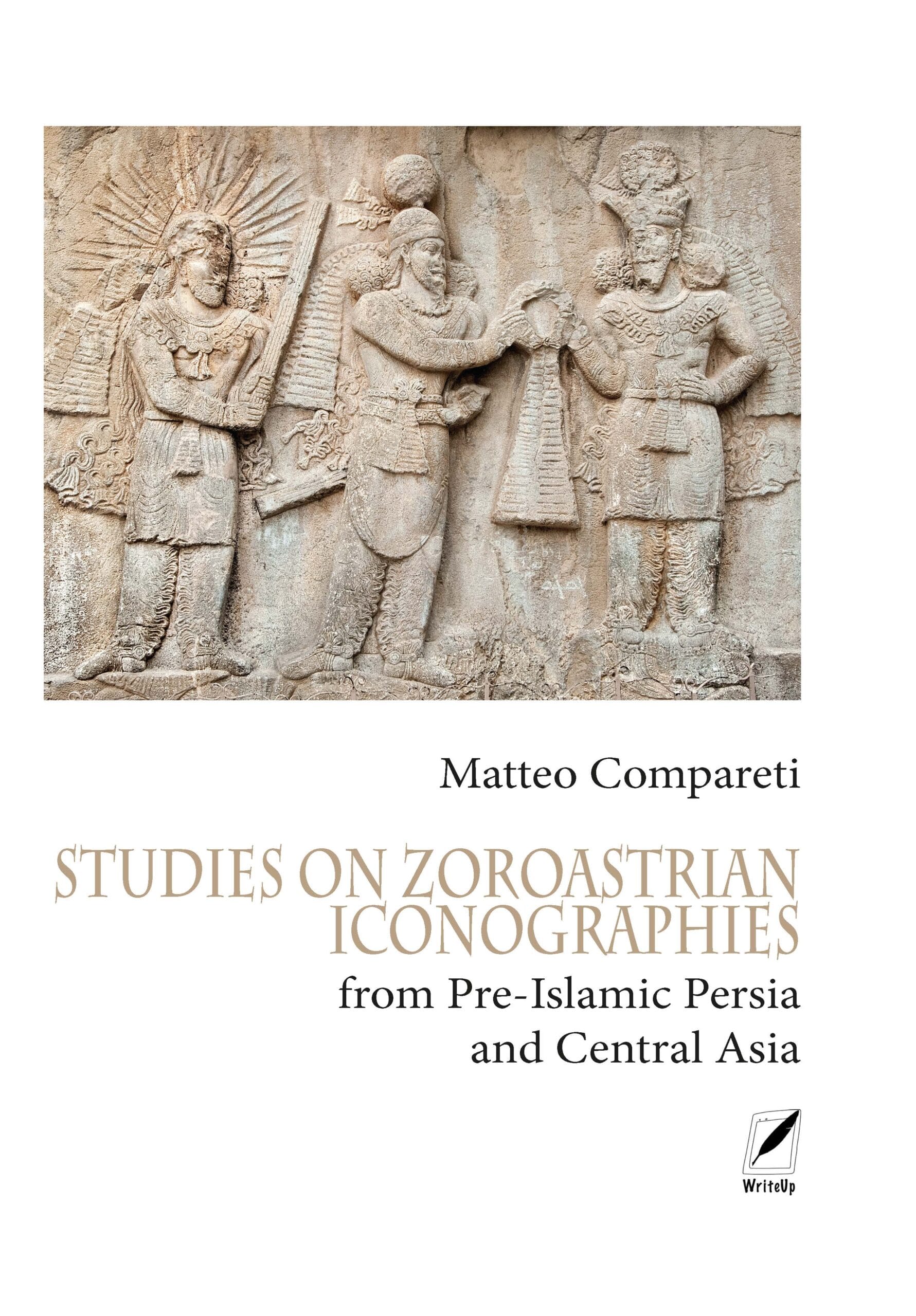
    Sogdiana was an Eastern Iranian land situated in the territories of modern Uzbekistan and Tajikistan. It never formed a significant political or military force although, between the 6th-9th centuries, Sogdians became the main actors in the caravan and maritime trade networks commonly called the “Silk Road”. Most of archaeological and artistic materials about Sogdians come from excavations in ex-Soviet Central Asia, especially the site of Penjikent (Tajikistan). Wall paintings from this important Sogdian site show a native polytheistic faith with Zoroastrian background, which is still puzzling experts of Iranian studies. During the centuries, local artists adopted external cultural elements that – once individuated – could help to shed light on unidentified deities of the Sogdian pantheon. Their comparison with Zoroastrian deities depicted in pre-Islamic Persian arts represents an invaluable instrument to improving our knowledge of this fascinating but still enigmatic field of studies.

  • Landscapes, Scriptures, Symbols and Architectures of Ancient Iran

    The volume 26 of the journal ISIMU is now out and it is dedicated to aspects of ancient Iranian architecture and culture: Landscapes, Scriptures, Symbols and Architectures of Ancient Iran.

    • Fernando Escribano Martín, Carmen del Cerro Linares, Carlos Fernández Rodríguez y Francisco L. Borrego Gallardo: Presentación
    • Silvia Balatti: I materiali scrittori dell’Iran achemenide
    • Pierfrancesco Callieri: Babilonesi a Persepoli. Nuovi studi sull’architettura dell’Antica Persia
    • Fernando Escribano Martín: El jardín persa, intento de explicación y búsqueda de orígenes y trascendencias
    • Carlos Fernández Rodríguez: La gestión del agua y la habitabilidad del sur de Irán durante la Edad del Hierro
    • Zahara Gharehkhani: Criaturas híbridas de la Persia preislámica. Reflexiones y simbolismo
    • Sébastien Gondet: Observations on the environmental setting of the agricultural development and occupational history of Achaemenid Persepolis
    • Alireza Khounani: The Vineyards of Parthian Arsacid Nisa (151–15 BCE): Rent Farming and Cash Crop Agriculture from the Perspective of the Ostraca
    • Giulio Maresca: An overview of the pottery from Sistan in the Late Iron Age/Achaemenid period
    • Negin Miri and Cyrus Nasrollahzadeh: Another bulla of Weh-Šāpur, ĒrānSpāhbed of Kust-i-Nēmrōz from the Treasury of Mostazafan Foundation’s Cultural Institution of Museums in Tehran
    • Davide Salaris and Roberto Dan: Exploring the archaeology and significance of Masjed-e Soleyman: a reassessment of the Elymaean Temple and its socio-cultural context in southwestern Iran
  • Iranian Art

    Blair, Sheila, Jonathan M. Bloom & Sandra Williams (eds.). 2024. Iranian art from the Sasanians to the Islamic Republic. Essays in honour of Linda Komaroff (Edinburgh Studies in Islamic Art). Edinburgh: Edinburgh University Press.

    Introduces Iranian art from classical to contemporary media, showing how art can be a source for history and politics

    • Takes a broad view of the Persianate world
    • Opens a traditional field in new directions
    • Presents a combination of senior scholars and younger voices, and includes perspectives from Asia, Europe and the USA
    • Combines views from the academy, the museum and the laboratory, ranging from the practical to the theoretical
  • Contextualizing Herodotus

    Degen, Julian, Hilmar Klinkott, Robert Rollinger, Kai Ruffing & Truschnegg Brigitte (eds.). 2024. Ancient World in Perspective: Contextualizing Herodotus (Philippika 150). Wiesbaden: Harrassowitz.

    This volume is a collection of papers presented at a workshop commemorating the 20th anniversary of Reinhold Bichler’s monograph Herodots Welt.

    It convenes a group of international specialists discussing Herodotus’ work from different perspectives. From the backdrop of ongoing scholarly debates, this volume seeks to offer a fresh look on the Histories. The various contributions present a nuanced portrayal of Herodotus as an author and the Histories as a literary cosmos, enhancing our comprehension of one of the most significant surviving texts from the Classical period. The topics cover a wide range of themes, including the structure of Herodotus’ historiographical narrative, his responses to the politics of Athens as well as the Achaemenid Empire, and the reception of his work. Finally, Herodotus’ description of the “world”, his conceptual ideas on regions and human culture and also the ongoing problems of how to deal with the Histories as a historical source are central questions addressed in this volume.

    For a ToC, click here.

  • An Armenian Futūh Narrative

    La Porta, Sergio & Alison M. Vacca. 2023. An Armenian Futūh Narrative: Łewond’s Eighth-Century History of the Caliphate (Late Antique and Medieval Islamic near East 4). Chicago: Institute for the Study of Ancient Cultures of the University of Chicago.

    The History of the Armenian priest Łewond is an important source for the history of early Islamic rule and the only contemporary chronicle of second/eighth-century caliphal rule in Armenia. This volume presents a diplomatic edition and new English translation of Łewond’s text, which describes events that took place during the century and a half following the Prophet Muḥammad’s death in AH 11/632 CE. The authors address Łewond’s account as a work of caliphal history, written in Armenian, from within the Caliphate. As such, this book provides a critical reading of the Caliphate from one of its most significant provinces. Reading notes clarify many aspects of the period covered to make the text understandable to students and specialists alike. Extensive commentary elucidates Łewond’s narrative objectives and situates his History in a broader Near Eastern historiographical context by bringing the text into new conversations with a constellation of Arabic, Greek, and Syriac works that cover the same period. The book thus stresses the multiplicity of voices operating in the Caliphate in this pivotal period of Near Eastern history.

  • Festschrift Pierfrancesco Callieri

    Colliva, Luca, Anna Filigenzi & Luca Maria Olivieri (eds.). 2023. Le forme della città: Iran, Gandhāra e Asia Centrale. Scritti offerti a Pierfrancesco Callieri in occasione del suo 65° compleanno (Serie Orientale Roma, Nuova Serie 34). Roma: ISMEO – Ass. Internazionale di Studi sul Mediterraneo e l’Oriente.

    This Festschrift volume is dedicated to Pierfrancesco Callieri, honoring their distinguished contributions to the fields of Iranian Studies. This collection brings together an array of essays by eminent scholars, covering a wide range of topics that reflect the depth and breadth of Callieri’s academic impact. From historical analyses and cultural studies to religious and linguistic explorations and archaeological insights, each contribution not only celebrates Callieri’s legacy but also advances our understanding of these richly diverse regions.

    (more…)
  • Sasanian Administrations and Officials

    Gyselen, Rika (ed.). 2024. Administrations et préposés d’époque sassanide. Nouvelles données à la mémoire de Philippe Gignoux (Cahiers de Studica Iranica 66). Paris: Association pour l’Avancement des études iraniennes.

    This volume brings together studies based on primary sources, often unpublished, which highlight important aspects of the administration of the Sasanian Empire. Some complete our knowledge on the territorial establishment of the various administrations and of the mints, others deal with the actors of these institutions such as the magi and the scribes. The sources used are mainly seals and seal impressions on clay bullae.

    Summary
    (more…)
  • The Oxford Handbook of Palmyra

    Raja, Rubina (ed.). 2024. The Oxford handbook of Palmyra. New York: Oxford University Press.

    The monumental remains of Palmyra (also known as Tadmor) have fascinated travelers and scholars for centuries. The Oxford Handbook of Palmyra gives a detailed analysis of the archaeology and history of this ancient oasis city in the Syrian Desert, spanning evidence from several millennia. With contributions from thirty archaeologists, epigraphists, historians, and philologists, this book covers the city’s archaeological findings and history from its earliest mentions in the pre-Roman era to the destruction of many of its monuments during the Syrian Civil War and the subsequent looting. The authors recap evidence and present significant new findings and analyses from fieldwork they or others undertook in Palmyra prior to the 2011 conflict and discuss the recent occupation by ISIS and calls to defend the site’s remains from current and future threats.

    Description
  • Studies in Iranian Philology

    Barbera, Gerardo, Matteo De Chiara, Alessandro Del Tomba, Bhikkhunī Dhammadinnā, Federico Dragoni & Paola Orsatti (eds.). 2024. Siddham. Studies in Iranian philology in honour of Mauro Maggi. Wiesbaden: Ludwig Reichert Verlag.

    This volume is a tribute to Mauro Maggi, celebrating his distinguished career and significant contributions in the fields of Iranian, Indo-Aryan, and Central Asian philology and linguistics. It features a diverse collection of papers presented by colleagues, former students, and friends, reflecting the broad spectrum of Mauro Maggi’s research interests. This collection not only honours Mauro Maggi’s extensive scholarly contributions but also serves as a valuable resource for researchers in Iranian, Indo-Aryan, and Central Asian studies. It will be of interest and value to scholars of Iranian philology and linguistics, as well as those in Indo-European linguistics, Central Asian philology, and Buddhist literature. Through this comprehensive tribute, the volume underscores the lasting impact of Mauro Maggi’s work and his enduring legacy in the field.

    Description
    (more…)
  • The succession of world empires

    The succession of world empires

    Oellig, Marie. 2023. Die Sukzession von Weltreichen: Zu den antiken Wurzeln einer geschichtsmächtigen Idee (Oriens et Occidens 38). Stuttgart: Franz Steiner Verlag.

    Aufstieg und Niedergang großer Reiche haben die Menschen über Jahrtausende hinweg beschäftigt und fasziniert. So wurden im antiken Mesopotamien bereits um 2000 v. Chr. Vorstellungen von Weltherrschaft entwickelt und Reflexionen über die Entstehung und den Verfall von Macht angestellt. Als besonders wirkmächtig erwies sich ein Konzept, das seit dem fünften Jahrhundert v. Chr. in der griechischen Historiographie greifbar wird: die Sukzession der ‘Weltreiche’ Assyrien, Medien und Persien. Dieses Modell wurde in der Folge durch das makedonische Alexanderreich sowie das Imperium Romanum erweitert und fand schließlich Eingang in das Alte Testament. Über das Buch Daniel, das das Ende des vierten Weltreiches – später als das römische gedeutet – mit der Apokalypse in Verbindung bringt, wirkte die Sukzessionstheorie maßgeblich auf das Geschichtsdenken des Mittelalters (Translatio Imperii) ein und blieb bis in die frühe Neuzeit hinein ein zentrales Prinzip historischer Periodisierung.

    Marie Oellig untersucht die Entstehung und die Genese des Konzepts im Altertum auf breiter Quellengrundlage und kann mithilfe eines interdisziplinären Ansatzes elementare Verbindungslinien zwischen ‘orientalischen’ und ‘griechischen’ Vorstellungswelten aufzeigen.