In a two-part series, Dr. Adam McCollum addresses the possibilities for the field of Judeo-Persian language and literature. Part One addresses the state of the field and Part Two includes a helpful bibliography and four text samples.
DABIR: Digital Archive of Brief notes & Iran Review, 2015, Vol 1, No. 1.
The first issue of the Digital Archive of Brief notes & Iran Review (DABIR) has been published and is available from the official website of DABIR.
The Digital Archive of Brief notes & Iran Review (DABIR) is an open access, peer-reviewed online open access journal published by the Dr. Samuel M. Jordan Center for Persian Studies and Culture at the University of California, Irvine. DABIR aims to quickly and efficiently publish brief notes and reviews relating to the pre-modern world in contact with Iran and Persianate cultures. The journal accepts submissions on art history, archaeology, history, linguistics, literature, manuscript studies, numismatics, philology and religion, from Jaxartes to the Mediterranean and from the Sumerian period through to the Safavid era (3500 BCE-1500 CE). Work dealing with later periods can be considered on request.
Table of Contents: Articles
Saber Amiri Pariyan: “A re-examination of two terms in the Elamite version of the Behistun inscription”
Touraj Daryaee: “Alexander and the Arsacids in the manuscript MU29”
Shervin Farridnejad: “Take care of the xrafstars! A note on Nēr. 7.5″
Leonardo Gregoratti: “The kings of Parthia and Persia: Some considerations on the ‘Iranic’ identity in the Parthian Empire”
Götz König: “Brief comments on the so-called Xorde Avesta (1)”
Ali Mousavi: “Some thoughts on the rock-reliefs of ancient Iran”
Khodadad Rezakhani: “A note on the Alkhan coin type 39 and its legend”
Shai Secunda: “Relieving monthly sexual needs: On Pahlavi daštān-māh wizārdan“
Arash Zeini: “Preliminary observations on word order correspondence in the Zand”
Reviews
Sajad Amiri Bavandpoor: “Review of Smith, Kyle. 2014. The Martyrdom and History of Blessed Simeon bar Sabba’e”
Lloyd Llewellyn-Jones: “Review of Mayor, Adrienne. 2014. The Amazons. Lives and Legends of Warrior Women Across the Ancient World”
Yazdan Safaee: “Llewellyn-Jones, Lloyd & James Robson. 2010. CTESIAS’ History of Persia: Tales of the Orient”
Special Issue
Bruce Lincoln “Of dirt, diet, and religious others”
DABIR
Editor-in-Chief: Touraj Daryaee (University of California, Irvine)
Editors: Parsa Daneshmand (Oxford University) and Arash Zeini (University of St Andrews)
Book Review Editor: Shervin Farridnejad (Freie Universität Berlin)
Yazdan Safaee, one of BiblioIranica’s team members, has written useful and accessible reviews of the first five volumes of the 20 volume comprehensive history of Iran, which were announced by Shervin in May 2015. The reviews are in Persian and accessible from Yazdan’s own website:
The generative etymological dictionary of Indo-European languages
The current version, PIE Lexicon Pilot 1.1, presents digitally generated data of hundred most ancient Indo-European languages with three hundred new etymologies for Old Anatolian languages, Hitttite, Palaic, Cuneiform Luwian and Hieroglyphic Luwian, arranged under two hundred Indo-European roots.
The correspondences contain data of all fourteen sub-branches of the Indo-European languages, Albanian, Anatolian, Armenian, Baltic, Celtic, Germanic, Greek, Indo-Aryan, Iranian, Italic, Old Balkan (Satem), Old Balkan (Centum), Slavic and Tocharian.
The newly discovered Avestan manuscript contains an illuminated Yasna ceremony and belongs to the Dinyār family in Yazd, Iran. Prof. Alberto Cantera has already confirmed that the new manuscript is a Yasna manuscript. The only other known Yasna manuscript of a comparable age is kept at the British Library.
Even though the manuscript has no colophon, according to Alberto Cantera it is most probably by the hand of Mihrabān Anōšīrwān Wahromšāh and should be dated around 1630. The scribe’s hand as well as the illuminations also show a close relation to the Vīdēvdād Sāde of the same scribe, dated to 1647 CE / 1016 Y, kept today in the British Library.
This manuscript is discovered and purchased by Vahid Zolfaghari and is now kept in his private collection. Prof. Alberto Cantera and his team at the Avestan Digital Archive (ADA) project seek to publish and make the manuscript available publicly.
Yasna manuscripts contain the long liturgical text recited during the daily performance of the Yasna, the central ritual in Zoroastrianism. It was originally composed in the ancient Iranian language of Avestan between the 2nd and 1st millennia BCE. Different types of Yasna manuscripts are available, those transmitted with the Pahlavi translation (i.e. Pahlavi-Yasna), those without a translation (i.e. Yasna Sāde) and those with the Sankrit translation (i.e. Sanskrit Yasna). Among the manuscripts of the Pahlavi-Yasna one can distinguish two lines of transmission, namly the Indian Pahlavi-Yasna and the Iranian Pahlavi-Yasna.
The History of Iran Podcast project is an ongoing chronological attempt to trace the History of Iran in an innovative way of keeping the “dynastic framework as a useful way of organising the narrative”, but also “going to stop at certain points and explain and elaborate on certain points”. Starting with some general questions and topics on geography in the very first episodes, this series hosted by Khodadad Rezakhani is an ongoing account of the people, events, historic monents, political and cultural remarks that shaped the History of Iran. An invaluable resource for anyone that needs a ground level survey of the Iranian History.
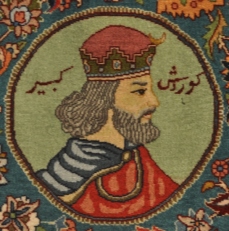
This website is a digital collection of texts from the Parthian empire, one of the biggest and longest-lasting empires of antiquity. Under the kings of the Arsacid dynasty (c. 247 BCE to 224 CE), the Parthians ruled a kingdom that stretched from central Asia in the east to the Euphrates river in the west. Their history is a crucial part of the legacy of ancient Iran, though in many respects it is still poorly understood.
Some of the texts here are in ancient Greek. Others are in Parthian, an Iranian language that outlasted the Arsacid empire and remained in use even after the overthrow of the dynasty. Coming soon are a few inscriptions in Latin composed by Parthians living in the territory of the Roman empire.
At the moment this site is a work in progress, with content being added on a regular basis.
This site is authored and maintained by Jake Nabel, a PhD student in the Department of Classics at Cornell University. His research focuses on Parthia’s relationship with Rome, its imperial peer (and sometimes rival) to the west.
Etienne de la Vaissière has shared another map on his academia.edu page. This time it is of the Tarim basin in the 10th century. He writes about this map:
Map drawn for a review published in Journal Asiatique, 291 1-2, 2003, p. 295-300 of Bregel, Yuri, An Historical Atlas of Central Asia, (Handbuch der Orientalistik, VIII : Central Asia, 9), Leiden : Brill, 2003, 109 p. Please feel free to modify and adapt it to your needs: the layers can be modified in Illustrator. Although I have drawn it I claim no copyright, but would welcome that you mention the source. Actually, the best map of this region and this period has been published in J. Hamilton, Manuscrits Ouïghours du IXe-Xe de Touen-Houang, Louvain, 1986.
Etienne de la Vaissière has kindly shared this map of the Zerafshan valley in the 7th century on academia.edu. He states:
Map drawn for my Histoire des marchands sogdiens, Paris: Collège de France, 2002, map 5. Please feel free to modify and adapt it to your needs: the layers can be modified in Illustrator. Although I have drawn it I claim no copyright, but would welcome that you mention the source.

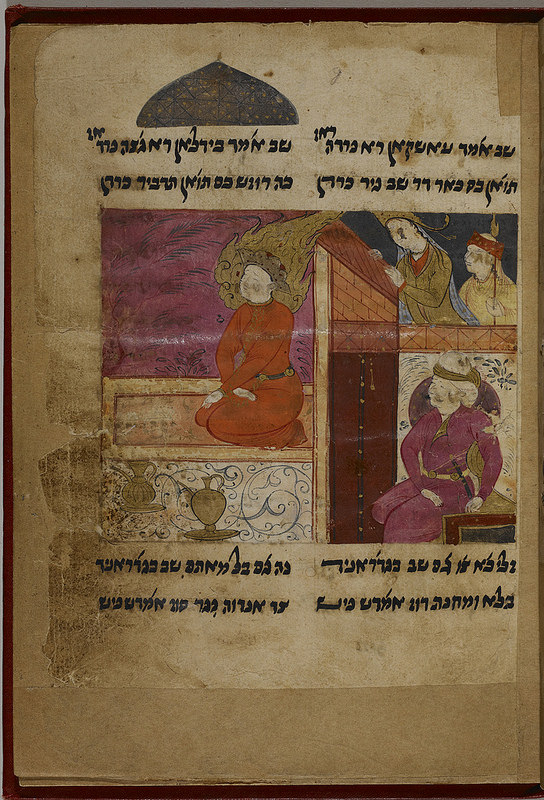 McCollum, Adam. 2015. On Judeo-Persian language and literature. Part One: State of the field. Ancient Jew Review.
 Yazdan Safaee, one of BiblioIranica’s team members, has written useful and accessible reviews of the first five volumes of the 20 volume
  Proto-Indo-European Lexicon
 Parthian Sources Online