Author: Yazdan Safaee

  • Five earthenware Mandaic incantation bowls

    Šafiʿī, Ibrāhīm. 2025. Five earthenware Mandaic incantation bowls in Ābgīne Museum, Tehrān. Journal of Semitic Studies 70 (1): 1-30.

    ĀM. 1 from three perspectives; Photo by ĀM

    This article presents the editio princeps of the Mandaic texts of five incantation bowls housed in Ābgīne Museum, Tehrān (627–S, 626–S, 110–S, 109–S and 108–S). Presumably dated to the 6th-7th centuries, the texts include protective formulae and name of the clients for whom they were written. The texts of 627–S and 626–S are written in a spiral manner, 110–S and 109–S are written in four segments and 108–S, which includes some of the earliest attested evidence of šapta ḏ-pišra ḏ-ainia, with the text arranged as a spoke, like sunrays.

  • Sur les traces de l’empire des Grands Rois

    Briant, Pierre. 2025. Sur les traces de l’empire des Grands Rois: Enquête historiographique (1931-2023). Paris: Les Belles Lettres.

    Plus étendu que ne le fut jamais l’Empire romain, l’Empire achéménide, né vers le milieu du vie siècle puis renversé par Alexandre et ses armées entre 334 et 323, a réuni pendant plus de deux siècles des peuples et des pays d’une immense variété linguistique et culturelle entre l’Indus et la Méditerranée orientale, et de l’Asie centrale à la première cataracte du Nil. Témoignant de la première et seule période où l’ensemble des peuples et pays de la région ont été réunis dans une construction impériale intégrée, son histoire représente une référence unique pour tous ceux qui s’interrogent sur la cohabitation d’ethnies et de populations différentes à l’intérieur de l’espace moyen-oriental dans sa plus grande extension.

    Pourtant, son étude a pendant longtemps été négligée, tenue en lisière de l’histoire de la Grèce, de l’Égypte et de la Mésopotamie. Monumental et passionnant, ce livre raconte comment l’histoire de l’Empire perse-achéménide s’est peu à peu érigée en champ autonome, recouvrant un espace-temps immense, de l’Indus aux Balkans, sur plus de deux siècles. S’attachant à reconstituer les étapes et le rythme de cette exceptionnelle renaissance historiographique, l’auteur montre comment les différentes spécialités ont appris à travailler ensemble, non simplement pour reconstituer l’histoire de telle ou telle partie de l’Empire (Asie mineure, Égypte, Palestine, Babylonie, Perse, Iran etc.), mais aussi pour écrire une vraie histoire impériale, à laquelle chacune des spécialités apportent sa contribution spécifique. Fondée sur un savoir et une documentation colossales mais aussi sur de nombreux témoignages, cette somme amenée à faire date touche aussi par la profondeur humaine qu’elle donne à cette aventure collective.

    (more…)
  • Beiträge zur Iranistik und zum iranischen Manichäismus

    Santos, Diego M. & Marcos Albino. 2024. Beiträge zur Iranistik und zum iranischen Manichäismus I (PHILOLOGIA – Sprachwissenschaftliche Forschungsergebnisse, 276). Hamburg: Dr. Kovač.

    Dieser voraussichtlich erste Band eines gemeinsamen, den iranischen Sprachen und dem iranischen Manichäismus gewidmeten Werkes enthält drei Kapitel, von denen jeder eine selbstständige Untersuchung darstellt.

    In “Manichäisch Parthisch zād-murd ‘geboren werden (und) sterben’” wird versucht nachzuweisen, dass zād-murd ein kopulatives Kompositum aus zwei kurzen Infinitiven und eine Lehnprägung nach Gandhari *jadimarana– (~ buddh. Sanskrit jātimaraṇa-) ‘Geburt und Tod; Saṃsāra’ ist.

    In “Parthisch zan(a)g ‘Art, Gattung’” wird vorgeschlagen, dass zan(a)g eine dekompositionelle Bildung vom Kompositum wispzan(a)g ‘aller Arten’ ist.

    In “Mittelpersisch wāz ud wāg ‘Sprache und Rede’” wird die Phrase wāz ud āwāg, welche in zwei Fragmenten des Šābuhragān bezeugt ist, als Übersetzung einer Phrase in Genesis 11.1 erklärt. Dazu wird eine etymologische Erklärung von āwāg entworfen.

    Alle drei Kapitel enthalten darüber hinaus Beobachtungen zu mehreren mitteliranischen Texten und Wörtern.

    To see ToC, select pages, and index click here.

  • Histoires perses

    Lenfant, Dominique. 2025. Dinon de Colophon, Héraclide de Kymè : Histoire perses (Fragments édités, traduits et commentés par Dominique Lenfant, nouvelle édition revue et augmentée). Paris, Les Belles Lettres.

    Dès le lendemain des guerres médiques, des Grecs d’Asie Mineure composèrent des Persica. Loin de se limiter aux conflits gréco-perses, ces Histoires perses étaient consacrées au passé et aux coutumes de l’empire perse. Chaque génération ambitionna ensuite de renouveler le genre. Un demi-siècle après Ctésias, Dinon de Colophon et Héraclide de Kymè poursuivent ainsi la tradition. Tout en cultivant les anecdotes piquantes et les histoires d’intrigues, ils décrivent l’univers du Grand Roi – de ses prérogatives et du luxe qui l’entoure aux subtiles hiérarchies qui organisent sa cour. Sans se contenter des habituels clichés sur les « barbares » ou les vaincus des guerres médiques, ils dévoilent un pan méconnu de la vision grecque des Perses.

    Leur témoignage est cependant biaisé tant par leur point de vue grec et leurs objectifs littéraires que par la transmission fragmentaire de leurs textes. Il requiert de ce fait une approche spécifique. Le présent ouvrage donne ici, dans une nouvelle édition revue et augmentée, avec le texte et la traduction de leurs fragments, un commentaire qui prend en compte leur mode de transmission et qui les confronte à l’ensemble des sources, grecques et non grecques, textuelles et iconographiques. Il permet d’apprécier les apports de ces sources à l’histoire de l’empire perse et propose un aperçu général du genre des Persica, livrant de précieux aperçus sur les rapports de la culture grecque avec le monde perse.

  • Brill’s Companion to the Campaigns of Philip II and Alexander the Great

    Anson, Edward M. (ed.). Brill’s Companion to the Campaigns of Philip II and Alexander the Great (Brill’s Companions to Classical Studies, 10). Leiden: Brill.

    This Companion whose contributions come from an outstanding array of experts deals exclusively with the military campaigns of Philip II and his son Alexander the Great and the forces that fought in them. In addition to discussions of the strategy and tactics of the two commanders, the Companion examines those elements that went into the determination of these strategies and tactics. Chapters will be devoted to the logistics of these campaigns, military recruitment and training, the care of diseased and injured soldiers, military organization and equipment, and much more. While no study can ever be truly complete, this Companion comes far closer that any such previous attempt.

  • Xerxes against Hellas

    Xerxes against Hellas

    Funke, Peter, György Németh, András Patay-Horváth & Josef Wiesehöfer (eds.). Xerxes against Hellas: An Iconic Conflict from Different Perspectives (Oriens et Occidens 44). Stuttgart: Franz Steiner.

    It is almost exactly 2500 years ago that the decisive clashes of the Persian Wars at Thermopylae, Salamis and Plataia took place. These battles were attributed world-historical significance in antiquity and, even more so, in the centuries that followed. Yet, the details of what happened, as well as their military-political and cultural impact and detailed evaluation, have been the subject of much controversial research, not least because of the difficult nature of the sources. The present volume is the outcome of a conference held in Budapest which celebrated the anniversary of Xerxes’ expedition against Hellas by discussing old and new questions related to the war and the history of its reception. It was jointly organised by the editors of the volume and attracted speakers from around the globe.

    The volume brings together scholars of all branches of classical studies and related disciplines and is organised in two sections: (i) Graeco-Persian Wars, Diplomacy and Acculturation, (ii) Commemorating and remembering the war from antiquity to the present. 19 contributors from 10 different countries provide a good overview of ongoing studies in the field.

  • Ash-Sharq

    Ash-Sharq

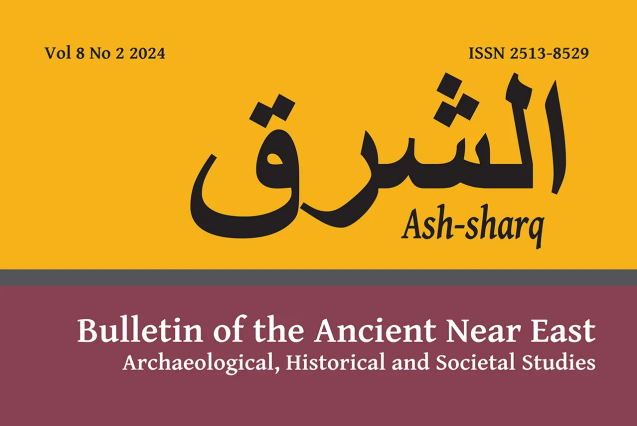
    The two issues of volume 8 of Ash-Sharq are published and contain several interesting contributions. Below are listed the articles that deal with Iranian studies:

  • Iran and the Caucasus 28 (4-5)

    Iran and the Caucasus 28 (4-5)

    The issues 4-5 of volume 28 of Iran and the Caucasus are published and contain several interesting contributions. Below are listed the articles that deal with Iranian studies:

    • Marco Ferrario: Restricted Access Expanders of the Realm. Sacred Kingship and Empire in Early Achaemenid Central Asia
    • Matthias Weinreich: Restricted Access Out of the Mouth of Babes … (Ps. 8:2). Children as Mediums in Pahlavi Literature
    • Mariam Gvelesiani: Georgia and Sasanian Iran. Some Aspects of Royal Imagery in Early Christian Georgian Art and Literary Tradition
    • Saloumeh Gholami and Mehraban Pouladi: Linguistic Insights from a Bilingual Letter: The Malati Dialect of Zoroastrian Dari in Yazd Part I. Transcription, Translation, and Linguistic Structure
  • Parthica (vol. 25)

    Parthica (vol. 25)

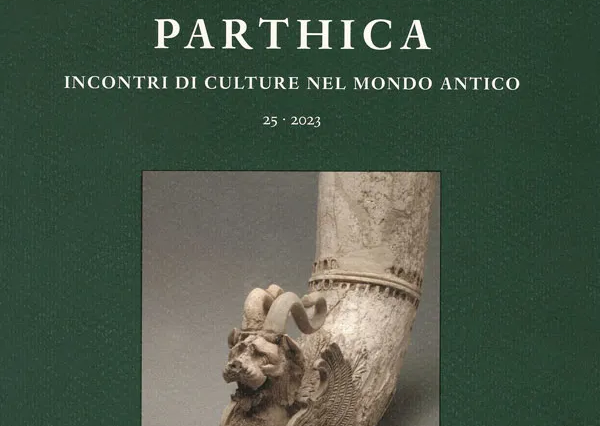
    Volume 25 of the journal Parthica (2023) contains several contributions of relevance to Iranian Studies.

    • Ronald Wallenfels: On the reuse of personal seals in the Hellenistic Near East
    • Robert S. Wójcikowski, Daniele Morandi Bonacossi, Michał Marciak, Bartłomiej Szypuła: Memorials of the battle of Gaugamela in the Navkur Plain
    • Roberto Dan: Hellenistic/Artaxiad remains in the Van fortress? Some thoughts on trench A6 excavated by the American expedition (1938-1939)
    • Francesca Michetti: Antroponimi battriani sulla monetazione pre-kušānide: tre proposte di etimologia
    • Edward Dąbrowa: Arsacid crudelitas: some observations
    • Enrico Foietta: A new altar with an enthroned goddess from Hatra (Iraq)
    • Valentina Gallerani: Parthian and sasanian settlement patterns in the Qadis survey area (Qadisiyah, Iraq)
  • Social Biographies of the Ancient World

    Social Biographies of the Ancient World

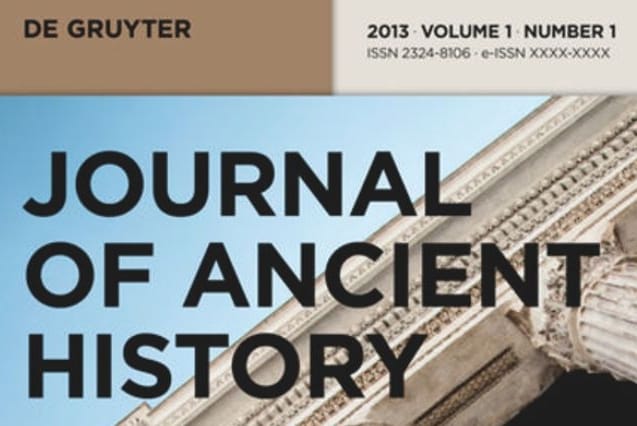
    The latest issue of Journal of Ancient History (volume 12, issue 2) is a special issue: Social Biographies of the Ancient World with Jason M. Silverman as guest editor. Below is the list of articles:

    • Jason M. Silverman, Alex Aissaoui, Rotem Avneri Meir, Jutta Jokiranta, Nina Nikki, Adrianne Spunaugle, Joanna Töyräänvuori, Caroline Wallis, Melanie Wasmuth: Social Biographies of the Ancient World. Studying Ahatabu, Jonathan, and Babatha through a Bourdieusian Approach: Towards a New Historiographical Habitus
    • Adrianne Spunaugle: Ancient Near Eastern Field Theory: Adapting Bourdieu for Social Biographies of the Ancient World
    • Jason M. Silverman, Joanna Töyräänvuori, Melanie Wasmuth: Ahatabu and her Stela (ÄM 7707): Funerary Habitus in Achaemenid Egypt
    • Rotem Avneri Meir, Jutta Jokiranta, Adrianne Spunaugle: Functional Differentiation in 1 Maccabees: Exploring Second Century BCE Judean Society Through the Character of Jonathan Apphus
    • Caroline Wallis, Alex Aissaoui, Nina Nikki: Falling Out with the In-Laws. Understanding the Babatha Archive with Pierre Bourdieu’s Field Theory and Theory of Practice.
    • Emanuel Pfoh: Ancient Individuals and Bourdieu in Context: A Historical Anthropological Response
    • Olga Zeveleva: A Sociological Response: Challenging the Modernity-centrism of Pierre Bourdieu’s Field Approach
    • Helen Dixon: A Levantine Archaeological Response: Thinking with Bourdieu though Limited Data and Explicit Assumptions