Tag: Sasanian

  • The lives and legacies of Bōrān and Āzarmīgduxt

    The lives and legacies of Bōrān and Āzarmīgduxt

    Baca-Winters, Keenan. 2025. To walk in royal ways: The lives and legacies of Bōrān and Āzarmīgduxt. Old World: Journal of Ancient Africa and Eurasia. Brill 5(2). 1–33.

    Amid the political turmoil and external threats that marked the final years of Ērānšahr, also known as the Sāsānian Empire, two sisters, Bōrān and Āzarmīgduxt, ascended the throne. While previous scholars have briefly touched upon these women, this paper examines the entire zeitgeist of their reigns, shedding light on their personalities, decisions, and the challenges they faced in a politically crumbling empire. By analyzing their responses to the broader political landscape of an Ērānšahr beset by civil war, a recent defeat by the Romans in the war of the seventh century CE, and the Islamic invasion, this paper reveals the complexities of Bōrān and Āzarmīgduxt’s leadership and their unwavering determination to navigate the tumultuous currents of their time. Through an exploration of primary sources, this paper offers a richer, more personal understanding of Bōrān and Āzarmīgduxt and their resilience in the fall of an empire established by their forefathers.

    Abstract
  • Palmyra, the Roman Empire, and the Third Century Crisis

    Palmyra, the Roman Empire, and the Third Century Crisis

    Raja, Rubina & Eivind Heldaas Seland. eds. 2025. Palmyra, the Roman Empire, and the Third Century Crisis: Zooming in and Scaling up from the Evidence. Stuttgart: Steiner.

    The third century is often seen as a period of crisis in the Roman world, marked by political upheaval, violence, war, religious strife, hyperinflation, climatic instability, pandemics, and border incursions. These troubled times, however, coincided with the peak of Palmyra’s prosperity. They encompassed the Syrian city’s drift towards centralized rulership and short-lived political hegemony in the Near East, as well as its reach for imperial power and downfall in the years 270–272 CE.

    How can this discrepancy between metropolitan crisis and peripheral prosperity be explained? Along with experts on different aspects of Palmyra, this volume gathers contributions from leading scholars working with the Roman Empire, and with neighboring regions inside and beyond the imperial borders. Highlighting parallels, discrepancies, connections, and disconnections between developments in Palmyra and other parts of the world with which Palmyra interacted, the aim is a more critical, detailed, and nuanced understanding of the situation in the Roman Near East in the third century CE.

    Table of contents: click here.

  • Sasanian Law in its Social Context

    Sasanian Law in its Social Context

    Macuch, Maria. 2025. Sasanian law in its social context (Iranica 34). Wiesbaden: Harrassowitz Verlag.

    Sasanian law has remained largely an unknown entity outside the specific field of Iranian Studies due to the immense difficulties involved in understanding the relevant legal sources. Sasanian Law in its Social Context by Maria Macuch is the first attempt to reconstruct the legal system of Sasanian Iran (224–651 CE), systematically and in detail, covering all areas of law as far as they can be reconstructed on the basis of the available material.
    Macuch focuses mainly on Middle Persian sources and original documents in the Pahlavi cursive script, but also makes extensive use of other significant legal texts mentioning Sasanian law, including the Babylonian Talmud, Syriac, Arabic and New Persian sources. Besides describing the basic institutions in all legal fields, the work aims to understand fundamental legal concepts reconstructed from the dispersed, often fragmentary and enigmatic material, and to explain the main functions of the vast network of intertwined legal constructions in the field of family and property law. It is argued that this specific complex of characteristic institutions, unique to the Sasanian legal system, only makes sense within the framework of a strictly hierarchical social system that granted considerable privileges to its aristocratic and religious elite. The significant impact of Sasanian law on other legal systems is discussed throughout the work and specifically in the last chapter. Numerous Middle Persian texts with new editions and translations by the author are assembled in the appendices. Pahlavian legal terms and phrases are clarified in the glossary.

  • The Formation of the Sasanian Empire: Administration and Elites in Comparison with the Roman Empire

    The Formation of the Sasanian Empire: Administration and Elites in Comparison with the Roman Empire

    Purwins, Nils. 2025. Der Aufbau des Sasanidenreiches: Administration und Eliten im Vergleich zum Römischen Reich (Ancient Iran Series 18). Leiden: Brill.

    The work provides in two volumes the first comprehensive overall concept of the administrative and social structure of the Sasanian Empire (5th-7th century). In more than 1.000 contemporary leather documents, seals, ostraca, inscriptions and texts, which are brought together here for the first time, the subjects of the king of kings report in words and pictures on their lives in the various provinces of the empire, on the organisation of the military, civil and religious administration and on the circles of power at the court of their ruler. At the same time, this work offers the first systematic structural comparison with the Eastern Roman Empire, so that the organisations of two ancient empires are treated here with a wealth of supporting illustrations, diagrams and maps. The aim is nothing less than to answer the question of the extent to which Ērānšahr and the Imperium Romanum really were the “two eyes that illuminate the world from above”, as the Great King Husraw II is said to have once claimed (Theophylaktos).

  • The Pahlavi Papyri in their Historical Context

    The Pahlavi Papyri in their Historical Context is the second round of the Pahlavi Papyri Workshop to be held in Innsbruck: Tuesday, 25 November – Wednesday, 26 November 2025. The workshop is organized by Bernhard Palme, Robert Rollinger and Touraj Daryaee.

    Address: Seminar rooms 04K100/04M100 (4th floor) and 14 (1st floor), Ágnes-Heller-Haus, Innrain 52a, 6020 Innsbruck

    To see the program, click here.

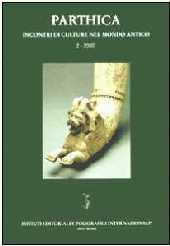
  • Parthica (vol. 26)

    Parthica (vol. 26)

    Volume 26 of the journal Parthica (2024) contains several contributions of relevance to Iranian Studies.

    • R. PALERMO – E. FRANCO – M. LA PORTA – C. RASMUSSEN: Exploring the Hellenistic period in North Mesopotamia landscape studies and excavations at Gird-I Matrab (Iraqi Kurdistan), p. 9
    • C. LIPPOLIS – V. MESSINA – G. PATRUCCO – A. SPANO: Rapid digital documentation of endangered archaeological contexts. A case-study from Seleucia on the Tigris (central Iraq), p. 29
    • M. MORIGGI: Aramaic graffiti in the houses of Hatra: The epigraphic point of view, p. 41
    • A.A. CHAVERDI: Two newly discovered artifacts from the city of Gur, Ardaxsir-Xwarrah, Firuzabad, p. 47
    • F. IZZI: Ain Sinu (Ninawa, Iraq): A military outpost on the Sasanian western limes? New studies on the military architecture of the Sasanian empire, p. 55
    • K. MAKSYMIUK – P. SKUPNIEWICZ: A silver plate with an ostrich hunt scene from the Wyvern Collection, p. 85
    • E. RASHIDIAN: The landscape elements of a dastgerd according to the Bozpar Valley and similar case studies in the Iranian highlands, p. 103
  • Iran and Persianate Culture in the Indian Ocean World

    Iran and Persianate Culture in the Indian Ocean World

    Peacock, Andrew (ed.). 2025. Iran and Persianate Culture in the Indian Ocean World. London: Bloomsbury.

    Most of the historiography of the Iranian world focuses on interactions and migrations between Iran, Central Asia and India. Nonetheless, this Iranian world was also closely connected to the maritime one of the Indian Ocean. While scholarship has drawn attention to diverse elements of these latter interactions, ranging from the claims to Shirazi descent of East African communities, to Persian elements in Malay literature, and Iranian communities of merchants in China, such studies have remained largely isolated from one another. The consensus of historiography on the Indian Ocean presents it as an ‘Arabic cosmopolis’, or, in earlier times, a Sanskrit one. The aim of this book is thus to bring together scholars working on disparate aspects of Persianate interactions with the Indian Ocean world from antiquity to modern times to provide a more rounded picture of both the history of the Persianate world, broadly conceived, and that of the Indian Ocean.

    The book brings together a collection of internationally renowned scholars from a variety of disciplines – including archaeology, history, literature, linguistics, art history – and covers interactions in Iran’s political and commercial relations with the Indian Ocean world in history, Persian-speaking communities in the Indian Ocean world, Persian(ate) elements in Indian Ocean languages and literatures, Persian texts dealing with the Indian Ocean, and connections in material culture.

    Table of Contents

    List of Figures and Tables
    List of Contributors
    Acknowledgements

    Introduction
    A.C.S. Peacock

    Chapter 1. The Sasanian Origin of Siraf?
    Seth M.N. Priestman
    Chapter 2. Mark Marking on Ceramic Transport Jars – Clues to Persianate Actors and Networks in the Indian Ocean World (8th through 10th Centuries AD)
    Elizabeth Lambourn
    Chapter 3. The Shirazis in East Africa, myth or reality?
    Mark Horton
    Chapter 4. Maritime relations between the Persian Gulf and China: An overview from the Song through the Ming periods (10th-17th centuries)
    Ralph Kauz
    Chapter 5. The Role of Iran in the Islamicisation of the Maldives
    Jost Gippert
    Chapter 6. Medieval Khurasan and the Indian Ocean World
    A.C.S. Peacock
    Chapter 7. From Devas to Muwakkils: Manifestations of Indic Gods in Persianate Works
    Maya Petrovich
    Chapter 8. Traditional Malay Conversion Narratives, Sufi Hagiography, and Persian Historiography: Crafting Political Legitimacy while “Centring the Periphery” in the Malay World
    Alexander Wain
    Chapter 9. The Jami? al-barr wa’l-ba’r: The place of ‘birds of paradise’ in the elaboration of Perso-Islamicate traditions in the eastern frontiers of Indonesia
    Raha Ebrahimi
    Chapter 10. Another Ship of Persians to Siam in the 17th Century: An Account of a Persian Shi?i Anthology in Patna, Dhaka and Burma
    Majid Daneshgar
    Chapter 11. Arabic-Persian Bilingualism and Persianate Identities in the Early Modern Western Indian Ocean: The Case of Mirza Muhammad Fayyaz
    James White
    Chapter 12. Unfinished Hyperboles! Adam’s Footprint in Sri Lanka and Wonder on the Edge of Modernity
    Vivek Gupta
    Chapter 13. Rejecting the Persianate Past: A Pioneering Urdu History of the Indian Ocean
    Nile Green
    Chapter 14. Royal Exile in the Indian Ocean: Reza Shah’s Sojourn in Mauritius
    H.E.Chehabi

  • Studia Iranica (52/2)

    The new issue of Studia Iranica is out (volume 52, issue 2). Here is the table of contents:

    • En hommage à notre collègue et ami, cofondateur et premier codirecteur de Studia Iranica, membre du comité de rédaction, Philippe Gignoux 1er mars 1931, Solaize – 21 septembre 2023, Montmorillon
    • FATTORI, Marco: Avestan haēma and Middle Persian xēm ‘Character, Disposition’ On a Forgotten Line in the Iranian Xwaršēd Niyāyišn
    • GYSELEN, Rika: Aštād yazd-ayār, général du roi sassanide Husraw II Une trace sigillographique
    • NOURZAEI, Maryam: On Nominal and Pronominal Morphosyntax in Kholosi
    • DZITSTSOITY, Yuriy, FALILEYEV, Alexander: Ossetic qæbys / γæbes ‘Embrace’ and sæt / sætæ ‘Saliva’ Etymological Notes
    • RICHARD, Francis: Un témoignage inédit de la posterité de l’œuvre du peintre Behzād Collaboration ou émulation entre les peintres Qāsem-‘Ali et Behzād dans le Ketābḫāneh de Hérat
    • RYBÁR, Lukáš: Habsburg Intelligence on Safavid Persia. The Case of Michael Černović
    • GYSELEN, Rika: Philippe Gignoux (1931-2023)
    • Comptes rendus
  • Reflections on the Tapestry of Family and Household in Ancient Iran

    Reflections on the Tapestry of Family and Household in Ancient Iran

    Jahangirfar, Milad (ed.). 2025. Reflections on the Tapestry of Family and Household in Ancient Iran (Studia Persica 6). Bologna: Persiani Editore.

    This volume offers a collection of ten articles focusing on various aspects of family and household in ancient Iran (ca. the 2nd millennium BCE to ca. the end of the 7th century CE). This book deals with aspects of the family in pre-Islamic Iran that are less explored or require renewed attention. The contributions draw upon a range of sources, including Old Elamite documents, Middle Elamite terracotta figurines, Sogdian wall paintings, Old Persian inscriptions, Achaemenid administrative tablets, and passages from the Avesta and Middle Persian texts. The inclusion of references to Greek, Latin, and Armenian writings, and passages from Ferdowsi’s Shahnameh enriches the discussion by bringing in alternative perspectives and accounts of relevant issues. Approaching the topic from a multidisciplinary perspective helps to create a more nuanced understanding of the role of family and household in ancient Iran.

    Contents
    – Introduction (Milad Jahangirfar)
    – Script and Witness as a Hereditary Vocation in the Old Elamite Period (Mohammad Amin Mirghaderi)
    – Household Religion in Context: Middle Elamite Terracotta Figurines and Their Judahite Counterparts (Francesco Del Bravo)
    – The Divine Couple Formed by Nana and Nabu/Tiš in Sogdian Art: A Powerful Amulet for the Protection of Children and Households (Matteo Compareti)
    – Some Reflections on the Concept of “Family” in the Gāthās (Mina Kambin)
    – “For the Increase of the House”: Children in Ancient Iran (Jenny Rose)
    – Some Remarks on the Family in pre-Islamic Iran according to the Ardā Wīrāz-nāmag (Mateusz M.P. Kłagisz)
    – Ancient Iranian Women at War: A Gender Role at Variance than the Greco-Roman Familial System? (Kaveh Farrokh)
    – Parthian Hostages in Rome: Keeping Alive Royal Family Members during the Parthian Kingdom (Berta González Saavedra and Juan Antonio Álvarez-Pedrosa Núñez)
    – The Institution of Zoroastrian Marriage xwēdōdah: Genesis and Typology (Pavel Basharin)
    – About the xwēdōdah Once Again (Katarzyna Maksymiuk and Joanna Szklarz)

  • Sasanian Studies 3

    Sasanian Studies 3

    Farridnejad, Shervin & Touraj Daryaee (eds.). 2024. Sasanian Studies: Late antique Iranian world | Sasanidische Studien: Spätantike iranische Welt. Vol. 3. Wiesbaden: Harrassowitz Verlag.

    Sasanian Studies: Late Antique Iranian World is a refereed journal that publishes papers on any aspect of the Sasanian Empire and ist neighboring late antiquity civilizations. The journal welcomes essays on archaeology, art history, epigraphy, history, numismatics, religion and any other disciplines which focuse on the Sasanian world. This annual publication focuses especially on recent discoveries in the field, historiographical studies, as well as editions and translations of texts and inscriptions. We aim to facilitate dialogue and contact among scholars of Sasanian Studies around the world. The journal will publish papers mainly in English, but also in German, French, Italian and may also consider Persian and Arabic.

    (more…)