Category: Books

  • In memory of Philippe Gignoux

    In memory of Philippe Gignoux

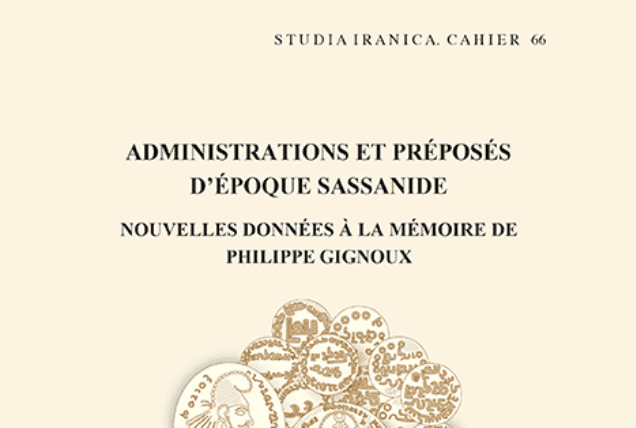
    Gyselen, Rika (ed.). 2024. Administrations et préposés d’époque sassanide: Nouvelles données à la mémoire de Philippe Gignoux (Cahiers de Studia Iranica 66). Paris: Association pour l’avancement des études iraniennes.

    This volume brings together studies based on primary sources, often unpublished, which highlight important aspects of the administration of the Sasanian Empire. Some complete our knowledge on the territorial establishment of the various administrations and of the mints, others deal with the actors of these institutions such as the magi and the scribes. The sources used are mainly seals and seal impressions on clay bullae.

    Summary
  • Text, script and language in Bactria and Serindia

    Text, script and language in Bactria and Serindia

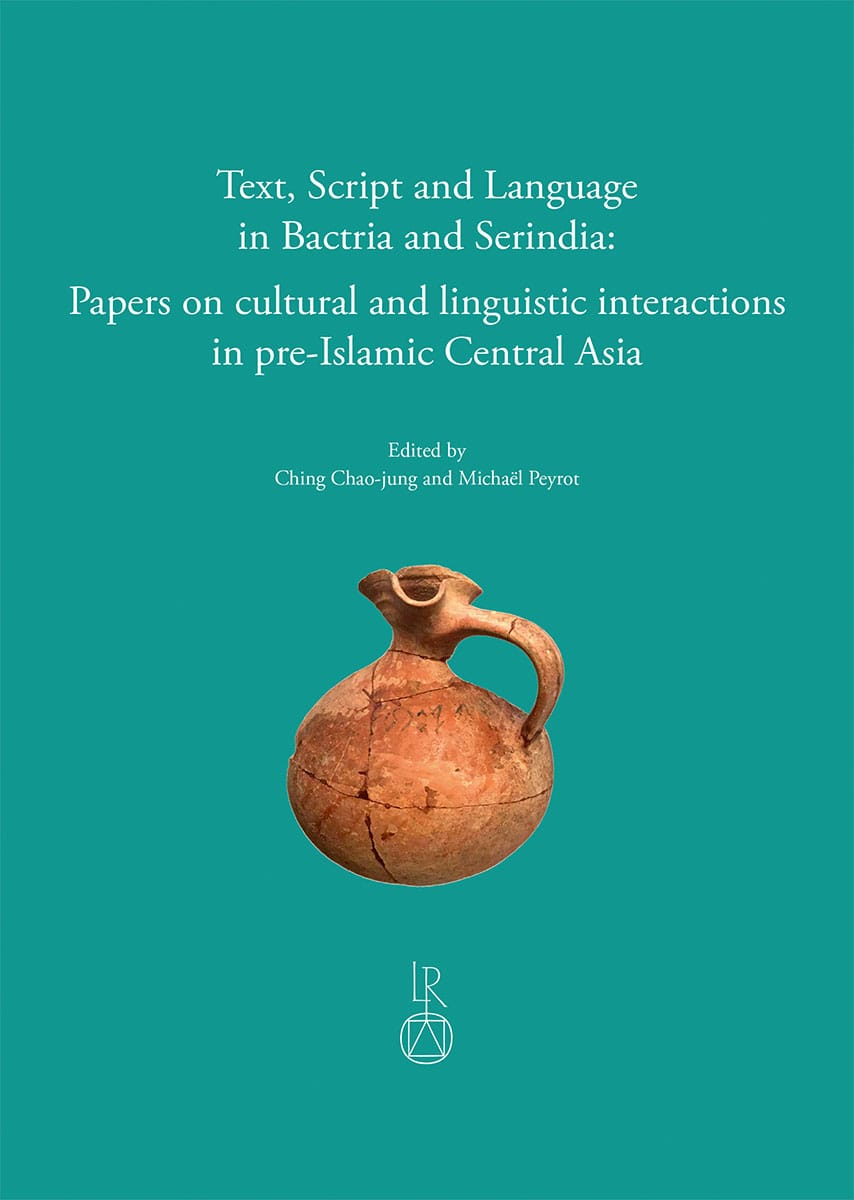
    Ching, Chao-jung & Michaël Peyrot (eds.). 2026. Text, script and language in Bactria and Serindia. Papers on cultural and linguistic interactions in pre-Islamic Central Asia (Beiträge zur Iranistik 55). Wiesbaden: Reichert Verlag.

    This collective volume unites ten papers by international specialists in history, philology, linguistics, palaeography and archaeology, dealing with texts written in Bactrian, Khotanese, Tumshuqese, Tocharian, and Gāndhārī (Niya-Prakrit) from Afghanistan, Uzbekistan, Pakistan and Northwest China, as well as with classical Chinese Buddhist scriptures and the newly discovered Almosi inscriptions of Tajikistan. With studies of the Kharoṣṭhī, Brāhmī, Graeco-Bactrian scripts and the “unknown Kushan script”, the book presents important advances in longstanding problems of Central Asian philology. The volume will be of interest to scholars and students working on cultural and linguistic interactions in Kushan and post-Kushan times.

    Table of Contents

    • Ching Chao-jung: Bactria and Tukharistan in Chinese Buddhist scriptures: A case study of three Vibhāṣā texts
    • Alessandro Del Tomba: A comparative study of the Mahāvaidehaghr̥ta in Sanskrit, Khotanese, and Tocharian B
    • Federico Dragoni: Was the Khotanese Brāhmī subscript hook borrowed from the Kharoṣṭhī anusvāra?
    • Pavel B. Lurje: The “Unknown script” of Bactria: Unpublished materials and fresh interpretations
    • Francesca Michetti: On the origin of Bactrian final –ο
    • Miyamoto Ryoichi: Notes on Wakhsh and Rām-sēt in the Bactrian documents
    • Ogihara Hirotoshi: A new look at ownership clauses in Tumshukese sale contracts
    • Michaël Peyrot: On the so-called “Fremdvokal” ä in Tocharian and Khotanese and its origins
    • Niels Schoubben: Gāndhārī light on Eastern Middle Iranian and vice versa: Three new examples
    • Nicholas Sims-Williams: The Bactrian inscription of Ayrtam: A minimal reading
  • The diversification of Indo-Iranian and the position of the Nuristani languages

    The diversification of Indo-Iranian and the position of the Nuristani languages

    Halfmann, Jakob. 2025. The diversification of Indo-Iranian and the position of the Nuristani languages (Beiträge Zur Iranistik 54). Wiesbaden: Reichert Verlag.

    This book offers a new approach to the long-standing problem of the genealogical affiliation of the Nuristani languages, a small group of closely related languages spoken in the Eastern Hindu Kush, within the Indo-Iranian subgroup of Indo-European. This topic is approached via a step-by-step examination of the crucial isoglosses, while taking into account more sample data than was available to previous researchers. The author concludes that the Nuristani languages were likely historically more closely affiliated with the Iranian than the Indo-Aryan subgroup, though they must have been isolated from the Iranian continuum early on and subsequently have come under intense contact influence from Indo-Aryan languages.

  • Gāthās of Zarathuštra

    Gāthās of Zarathuštra

    Kellens, Jean. 2026. Les Gâthâs attribuées à Zarathuštra. Aux origines de l’Avesta et de la religion zoroastrienne. Paris: Les Belles Lettres.

    At the source of the Avesta, the collection of the oldest sacrificial recitations of the Zoroastrian religion, one finds a small corpus of poems, the Gāthās—“songs” composed in a particularly archaic language. These venerable chants are regarded by the faithful as the very work of the founding prophet, Zarathustra, and this act of faith is largely endorsed by many representatives of contemporary scholarship. These are difficult texts, with complex grammar and sophisticated rhetoric, which have inspired many learned interpretations but only rare attempts at popularization, often driven by the desire to turn them into distant mirrors in which our own image is reflected. The translation offered in this volume, and the clarifications that accompany it, aim to make this corpus readable while preserving the originality of a voice that comes from the depths of time and is not addressed to us.

    The translator, Jean Kellens, is a leading scholar in Avestan studies. Professor emeritus at the Collège de France, he held the Chair of Indo-Iranian Languages and Religions from 1993 to 2014. In his work, he seeks to shed light, through comparison, on the earliest literatures of India and Iran.

  • Debating Cyrus

    Debating Cyrus

    Johnson, David M., Gabriel Alexander Danzig and Rodrigo Illarraga (eds.). 2026. Debating Cyrus: Leadership in Xenophon’s ›Cyropaedia‹ (Xenophon Studies 2). Berlin: De Gruyter.

    Is Xenophon’s Cyrus the Great the model leader he seems to be, or does his apparent success actually demonstrate the dangers of imperialism and one-man rule?

    Debating Cyrus gathers contributions from many of the world’s leading scholars in Xenophontic Studies, and features scholars with a wide range of approaches to reading classical texts. Our essays discuss the surprisingly subtle techniques Xenophon employs, and study topics including ambition, the rule of law, hunting, tragedy, romance, and the use Cyrus makes of love and fear. A cluster of essays considers Cyrus’ one apparent failure — the failure to ensure his kingdom will prosper after him. Other essays show what we can learn about the Cyropaedia by comparing it to other works by Xenophon and his contemporaries.

    Our aim is not to resolve the debate about Cyrus, a debate that will live on as long as readers care about Xenophon’s magisterial account of the founder of the greatest empire of his day and disagree about what sort of leadership to expect from a leader like Cyrus. Our goal is to prepare readers to engage in the debate themselves.

  • Herodotus and Women

    Herodotus and Women

    Zaccarini, Matteo. 2024. Erodoto e le donne: La presenza femminile nelle Storie. Rome: Carocci.

    Elena partì da Sparta con i Troiani, ma, forse, fu una fuga volontaria più che un rapimento. La regina di Lidia, disonorata dal marito, congegnò una vendetta esemplare e teatrale. L’etera Rodopi, in origine una schiava, divenne una figura leggendaria grazie alla fama e a un monumento eccezionali. L’uomo più potente al mondo, il Gran Re persiano Serse, rischiò la rovina per via della rivalità tra donne di corte. In Grecia i Persiani furono sconfitti, ma la straordinaria Artemisia, unica donna tra le loro fila, uscì vincitrice su tutti. A guardar bene poi, la vittoria dei Greci fu dovuta anche a una bambina prodigio, Gorgo. E così via. Attraverso figure femminili ordinarie o eccezionali, le Storie di Erodoto indagano gli aspetti più profondi della natura umana, costruiscono un universo complesso e sfaccettato, insinuano il dubbio sul senso delle grandi guerre e sulle gesta dei grandi uomini. Di volta in volta con sottigliezza, ironia, tragica consapevolezza e incredibile modernità. Prima monografia sul tema, il volume analizza la narrazione del “padre della Storia” sul femminile e ripensa gli stereotipi sulla misoginia degli antichi Greci.

  • Kleines Gatha-Lesebuch

    Kleines Gatha-Lesebuch

    Hoffmann, Karl. 2025. Kleines Gatha-Lesebuch: Aus dem Nachlass herausgegeben von Bernhard Forssman, unter Mitwirkung von Jürgen Habisreitinger. Mit einem Beitrag von Almut Hintze. (Ed.) Bernhard Forssman. Heidelberg: Heidelberg Asian Studies Publishing.

    This book is open access and can be downloaded here.

    Dieses Buch enthält Stücke aus den “Gathas”: poetischen Texten, als deren Verfasser Zarathustra angesehen wird, der Stifter der Parsen-Religion. Die Sprache dieser Dichtungen ist eine frühe Stufe des Avestischen, einer Schwestersprache des Altpersischen im alten Iran. Die sprachliche und inhaltliche Deutung der Gathas stößt auf zahlreiche Schwierigkeiten. Der bedeutende Avesta-Forscher Prof. Karl Hoffmann (1915 – 1996) legte sich für seinen Unterricht eine Sammlung von verhältnismäßig einfachen Textstücken mit eigenen Übersetzungen an. Diese Sammlung wird nunmehr aus seinem Nachlass herausgegeben, erweitert um verschiedene Beigaben, u.a. um einen Beitrag von Prof. Almut Hintze (London) über die Gathas und um ein vollständiges Vokabular.

  • Scent, Colour and Glitter in the Ancient World

    Scent, Colour and Glitter in the Ancient World

    Soudavar Farmanfarmaian, Fatema. 2025. Scent, colour and glitter in the ancient world: A comparative history of aromatics, cosmetics and adornment, from the Mediterranean to the China Seas. London: I.B. Tauris.

    Aromatics, cosmetics and personal adornment have had a major role in the evolution of human society, particularly in the cradles of civilization between the Nile and the Indus.

    Far from being concerned with the frivolities of vain pursuits, their study touches on religion, cosmology, rituals and magic, life and the afterlife, sexuality and procreation, artistic expression, technology, craftsmanship, aesthetics, administrative structures, long­-distance trade and cross-cultural exchanges – in sum, all the essentials that underpin human civilization.

    This richly illustrated book provides a history of luxury items from the Neolithic period to late Antiquity. Egyptian and Mesopotamian cosmetics are discussed first, along with the vast region between the Nile and the Indus, with the Iranian plateau at its core. Through the latter, the book ventures westwards to the Greco-Roman world and eastwards to the Indian subcontinent and China. The differing focus of each chapter gives a fuller picture of the global role of aromatics, cosmetics and jewellery within a broader civilizational framework that includes archaeological discoveries that have come to light in the last six decades.

    Description
  • Le livre de Yōišta Friiāna

    Le livre de Yōišta Friiāna

    Pirart, Éric. 2025. Le livre de Yōišta Friiāna. Introduction, édition, traduction et commentaire (Publications d’Études Indo-Iraniennes 5). Strasbourg: Université de Strasbourg.

    Yōišta Friiāna est un héros mythologique présent dans toutes les strates de la littérature zoroastrienne ancienne et médiévale, l’archaïque Uštauuaitī Gāθā, deux Yašt de l’Avesta récent, le Dēnkard et d’autres livres pehlevis. Sa confrontation avec un démon, contée dans le petit livre pehlevi qui porte son nom, rappelle fortement le mythe grec d’Œdipe et de la Sphinx.

    Résumé
  • Dabir (vol. 12)

    Dabir (vol. 12)

    Volume 12 of Dabir (2025) is now available both online and in print, featuring two issues:

    • Salman Aliyari Babolghani: The Imperfect with the t-Type Prefix in New Iranian and Its Connection to the Old Iranian Augmented Imperfect Optative
    • Majid Daneshgar: Reading Ismāʿīlī Islam in Aceh: Shāh Shams Sabziwārī’s Poems Copied in the 15th-Century Indonesia
    • Meysam Mohammadi: Middle Persian, Early New Persian and Fahlawī Quotations in Tārīx-e Qom
    • Salman Aliyari Babolghani: The Verb ‘to Become’ and Its Significance in Western Iranian Historical Dialectology: the Case of Persian and Lori
    • Majid Daneshgar: An Unknown Malay-Javanese Booklet Belonging to Thomas Erpenius: Early Days of the Shaṭṭārī Prayers in Indonesia
    • Pouria Shokri and Ahmad Salehi Kakhki: The Morphology and Classification of Tiles from the Ilkhanid Era until the Timurid Invasion, with Emphasis on Techniques, Forms, and Glazes
    • Hossein Sheikh: Review of Zamāna wa Zindagi-ye wa Kārnāma-ye Mollā Huseyin Wāˁiz-i Kāšifi, written by Mostafa Gohari-ye Fakhrabad
    • Sun Wujun[孫 武軍] and Chen Fan[陳 帆]: Review of Zhonggu Xianjiao Dongchuan Jiqi Huahua Yanjiu 中古祆教東傳及其華化研究 [Studies on the Spread of Zoroastrianism in Medieval China], written by Zhang, Xiaogui [張小貴]