• Zeitschrift der Deutschen Morgenländischen Gesellschaft

    Zeitschrift der Deutschen Morgenländischen Gesellschaft

    The latest issue (175.2) of the legendary Zeitschrift der Deutschen Morgenländischen Gesellschaft (ZDMG) has been published and is accessible here.

    Research articles

    Die ZDMG und ihre „Kinder“. Über die Rolle wissenschaftlicher Zeitschriften in der Geschichte der Orientalistik
    Thomas L. Gertzen
    Page 273 – 292


    Beyond Rage and Fear. Negative Emotions in Middle Babylonian Letters
    Jacob Jan de Ridder
    Page 293 – 310


    Ein christliches Liebesgedicht eines Muslims aus dem 10. Jahrhundert. Mudrik b. ʿAlī aš-Šaybānīs (st. 1000) muzdawiǧah über ʿAmr b. Yūhannā an-Naṣrānī
    Werner Diem
    Page 311 – 342


    Following the Path. On the Early Modern Commentary Tradition on Ibn al-Fāriḍ’s Poem of the Way
    Enrico Boccaccini
    Page 343 – 368


    Contributions to Iranian Etymology III
    Marco Fattori
    Page 369 – 395


    Was ist Iranistik? Eine fachgeschichtliche Würdigung von Bert G. Fragner (1941–2021)
    Christoph U. Werner
    Page 397 – 409


    The Yuktidīpikā on Yogins’ Perception
    Ołena Łucyszyna
    Page 411 – 435


    Das Menschen- und Kinderopfer im alten und modernen Indien – Material, Interpretation, Debatte
    Adelheid Herrmann-Pfandt
    Page 437 – 466


    Bringing Tibetan Buddhism Down to Earth. Part II: Gnam babs kyi dar ma bam po gcig go (IOL Tib J 370/6) Between Revelation and Legitimisation
    Joanna Bialek
    Page 467 – 492


    Were There Really Cham Muslims in Hainan and Guangzhou in the Late Tenth Century? A Re-Examination of Relevant Chinese Sources
    Johannes L. Kurz
    Page 493 – 518

  • Calque and Loanword in Early ʿAbbāsid Time (750–800 CE)

    Calque and Loanword in Early ʿAbbāsid Time (750–800 CE)

    Abedi, Milad & Johannes Thomann. 2024. The emergence of Arabic scientific terminology at the eastern contact zone: Calque and loanword in early ʿAbbāsid time (750–800 CE). Asiatische Studien – Études Asiatiques 78(4). 705-717.

    Superstratum languages often become substratum languages after military defeats. This was the case with Middle Persian in the Islamic Empire. There were different phases of interference between Middle Persian and Arabic. For example, Middle Persian terms, especially in administration and technology, were borrowed into Arabic. Later, in the first decades of Abbasid rule, a new scientific terminology was developed in Arabic based on translations of Sanskrit and Middle Persian texts in the fields of mathematics, astronomy, and medicine. Besides that, some scientific concepts of Chinese origin were received too. Most of these early Arabic scientific texts are lost, having been replaced later in the 3rd/9th century by translations of Greek scientific works. However, many fragments of them are preserved in secondary tradition, and such materials have been only partially studied. This paper will discuss cases of Arabic borrowings, including calques and loanwords from Sanskrit and Middle Persian.

  • Weaponry and a healed wound from the Parthian era

    Weaponry and a healed wound from the Parthian era

    Eghdami, Mohammad Reza, Majid Gholamzadeh Roudbordeh & Meysam Navaeiyan. 2025. Weaponry and a healed wound from the Parthian era (247 BCE to 224 CE): Insights from the Liyarsangbon cemetery, Guilan, Iran. International Journal of Osteoarchaeology Early View. 1–9.

    The current research examines the health and medical treatment implications associated with an iron arrowhead found among the skeletal remains of an individual unearthed from the Parthian cemetery at Liyarsangbon, Iran. This site is dated to the period between 247 bc and ad 224, as determined through relative dating methods. Non-invasive testing methods, including XRF and Quantometer analysis, established the elemental composition of grave artifacts, while CT Hounsfield scans assessed damage around the arrowhead within the bone. The soil exhibited a pH level of 8.67, signifying its alkaline nature. Among the metallic residues surrounding the subject of investigation, iron was identified as the predominant metal, with average concentrations of 89.93 (XRF) and 90.93 (Quantometer). A Hounsfield unit measurement of 4000 suggested a metallic object within the bone. This study focuses on the production of iron artifacts and examines their practical effectiveness. The intricate design of the arrowhead, characterized by its sharp precision, underscores the advanced level of craftsmanship within the toolmaking industry and reflects a high degree of expertise in metallurgy. Its ability to penetrate deeply into the lateral condyle of the right tibia serves as a testament to the skill and technological sophistication involved in its creation. Conversely, the inability to remove the embedded arrowhead from the bone reveals the constraints and shortcomings in the surgical practices of this particular society, shedding light on the limitations of medical techniques during that era.

    Abstract
  • Man, Landscape, and Society in Arsacid and Sasanian Iran

    Man, Landscape, and Society in Arsacid and Sasanian Iran

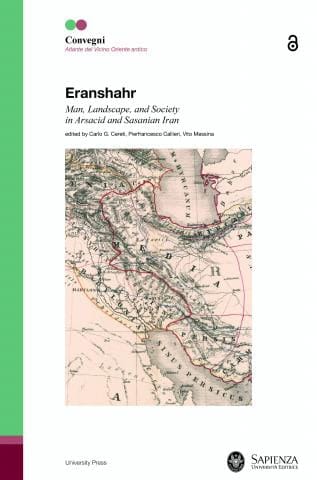
    Cereti, Carlo Giovanni, Pierfrancesco Callieri & Vito Messina (eds.). 2025. Eranshahr. Man, Landscape, and Society in Arsacid and Sasanian Iran (Collana Convegni 75). Rome: Sapienza Università Editrice.

    This fourth volume of the Atlas of the Ancient Near East (OCAVOA) collects 15 contributions by members of the three Units composing the PRIN 2017 ‘Eranshahr: Man Landscape and Society in Arsacid and Sasanian Iran. Texts, material culture, and society from Arsaces to Yazdegard III. Three case studies: Pars, Pahlaw and Khuzestan’ (2017PR34CS). These papers were presented during the conclusive workshop of the project, held in Ravenna on February 22-23, 2024. The project was conceived in 2017 and launched in 2018, representing a collaborative effort by a multidisciplinary team of scholars from Sapienza University of Rome, Alma Mater Studiorum University of Bologna, and Turin University, as well as several international partners. The project aimed to study the long millennium bridging two important transition periods in the history of western Asia, the first marking the passage from the Seleucid to the Arsacid era, the second being the fall of the Sasanian Empire and the rise of the Islamic Caliphate. In this framework, the book contains a set of archaeological, historical-geographical, and cultural studies on three ancient regions of western Iran during the Arsacid, Sasanian, and early Islamic periods, which combine into a coherent and innovative narration, shedding new light on the Iranian world in Antiquity, Late-Antiquity and the Early Middle Ages and opening the way for future investigations.

  • From Alexander to Kanishka

    From Alexander to Kanishka

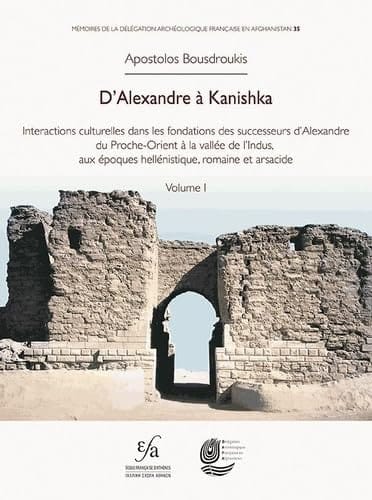
    Bousdroukis, Apostolos. 2025. D’Alexandre à Kanishka : Interactions culturelles dans les fondations des successeurs d’Alexandre, du Proche-Orient à la vallée de l’Indus, aux époques hellénistique, romaine et arsacide : Volume I & Volume II (MDAFA 35). Athens: École française d’Athènes.

    From the Eastern Mediterranean to the Indus Valley, the successors of Alexander the Great founded, as early as the 4th century BCE, an impressive network of cities inspired by Macedonian urban models. Who were their inhabitants? How did these cities function and evolve within such diverse cultural contexts as the Near East, Mesopotamia, or Bactria? In this two-volume work, Apostolos Bousdroukis invites us to rediscover these foundations through a scholarly investigation grounded in the most recent archaeological evidence. Civic institutions, public monuments, sanctuaries, domestic architecture, and religious practices are all examined, not only in their local particularities but also in their capacity to absorb, transform, or blend Greek and indigenous traditions. Far from offering a simple urban history, this study sheds light on the complex interactions between Greek settlers and local populations — encompassing processes of adoption, adaptation, and cultural hybridization. It reveals how these cities became dynamic centers of exchange and cultural innovation, contributing to the shaping of new identities in a world undergoing profound transformation.

  • The Assyrian Provincial Seal of Surkh Dom-i Luri, a pattern for Darius I’s Seal

    Alibaigi, Sajjad. 2025. A Clue to a Puzzle: The Assyrian Provincial Seal of Surkh Dom-i Luri, a pattern for Darius I’s Seal. Arta 2025.004.

    This short article examines the iconographic origins of the famous seal of Darius I, for which an Egyptian provenance has been proposed and now in the British Museum (BM 89132). Although the influence of the glyptic art of the first millennium BC on Achaemenid seal-carving is well evident, scholars have paid less attention to this influence on the cylinder seal of Darius I. Among the Assyrian seals and impressions of the second and first millennia BC, there are important examples that are iconographically similar to the seal of Darius, but the provincial seal of Surkh Dom provides the most clues to the connection between the seal of Darius and the Assyrian style seals. This seal, which was found from the excavations of the Surkh Dom shrine, is more similar to Darius’ seal than any other. It seems that the Assyrian provincial style of Surkh Dom-i Luri seal should also be added to the long list of influences of Neo-Assyrian art on Achaemenid and considered as a pattern for the seal of Darius I.

  • A Military Origin for New Persian?

    Vaissière, Étienne de La. 2025. A military origin for New Persian? Acta Orientalia Academiae Scientiarum Hungaricae. Akadémiai Kiadó 78(3). 471–489.

    The question of the transition from Middle Persian to New Persian has been hotly debated. This article attempts to answer two questions: who spoke New Persian before it was put into writing in the middle of the 9th c.? This social group is identified with the soldiers of the armies of Abū Muslim, i.e. peasants from Marw
    and their descendants. They came during one century to the forefront of Abbasid political and administrative life and imposed their specific dialect as a political language, in the shadow of Arabic. The second question is: what could have been the origins of the spoken language in the Marw oasis of the first half of the 8th c.? The article tries to demonstrate, on a much more tentative basis, that the demographic history of an oasis twice manned by soldiers from the South, first Middle Persian-speaking ones and then Arabic ones, both groups added to the local, Parthian-speaking population, is well reflected in the unique combination of
    Middle Persian, Arabic and Parthian characteristic of Early New Persian. Early New Persian is the language of 8th c. Marw, or more generally Outer Khurāsān. This Marw hypothesis, based on the presence of Parthian vocabulary, is however very cautious, as nothing is known of the grammar of spoken late Middle Persian and many of the linguistic differences between Middle and New Persian might have evolved separately in different historical processes.

    Abstract
  • The first Hyrcanian tiger?

    The first Hyrcanian tiger?

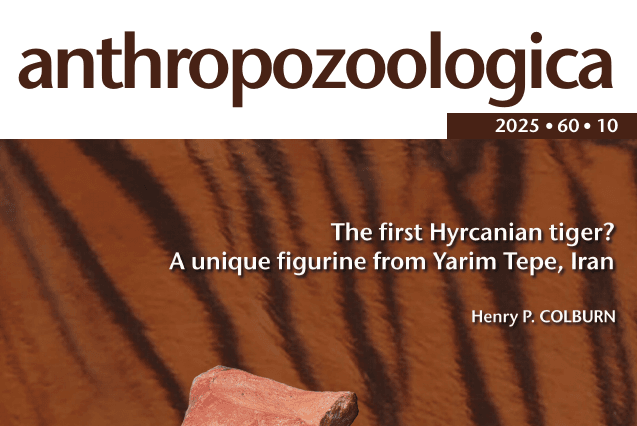
    Colburn, Henry P. 2025. The first Hyrcanian tiger? A unique figurine from Yarim Tepe, Iran. Anthropozoologica 60(10). 131–142.

    The article is also available here.

    Tigers (Panthera tigris Linnaeus, 1758) are rare in ancient art outside of India and Central Asia. In the Mediterranean world they were associated with the East, and all the danger and exoticism that it entailed, especially with the region of Hyrcania (modern Gorgan), on the southeastern coast of the Caspian Sea. In Iran itself they do not appear until the Sasanian Empire (c. 224-651 CE), and their appearance has been attributed to influence from Central Asia. However, a ceramic figurine of a tiger was excavated at Yarim Tepe in Golestan Province, Iran (in the region of Gorgan) in 1960. It is made of a ceramic fabric known to archaeologists as “Caspian Black-on-Red Ware”, and based on its occurrence at other sites in northeastern Iran such as Shah Tepe, Tureng Tepe and Tepe Hissar, this type of pottery, and the tiger itself, likely dates to c. 3500 to 3100 BCE. This would make it among the oldest depictions of a tiger in the ancient world and certainly the earliest in Iran. Although the exact purpose of the figurine is unknown, it must have played a role in the identities of the people living at Yarim Tepe. As such, it stands at the head of a long line of images of tigers in later Iranian art and literature.

    Abstract
  • Dura-Europos: Past, Present, Future

    Dura-Europos: Past, Present, Future

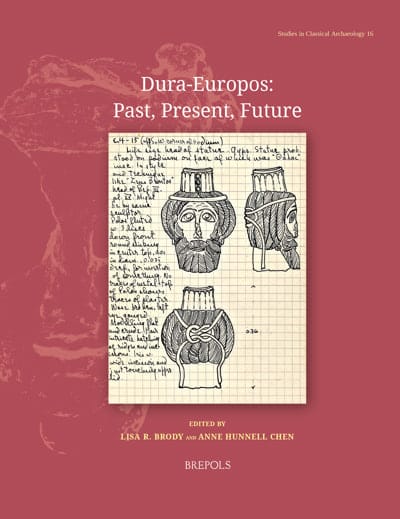
    Brody, Lisa & Anne H. Chen (eds.). 2025. Dura-Europos: Past, Present, Future. Turnhout. Brepols.

    This volume brings together an international and interdisciplinary host of scholars to reflect on the complicated legacies of exploration at the archaeological site of Dura-Europos, situated on the western bank of the Euphrates River near modern Salihiyeh (Syria). A chance discovery after World War I kicked off a series of excavations that would span the next century and whose finds are today housed in collections worldwide, including the Yale University Art Gallery, the Louvre, and the National Museum in Damascus. Dura-Europos exemplifies a multiethnic frontier town at the crossroads of major trade routes. Its textual remains and remarkably-preserved Christian, Jewish, and polytheist religious sanctuaries provide key resources for the study of antiquity and attest to the cross-cultural interconnectivity that was demonstrably central to the ancient world but which has been too often obscured by Eurocentric historiographic traditions and siloed disciplinary divisions.

    Foreign-run, large-scale archaeological campaigns of the early twentieth century, like those at Dura-Europos, have created narratives of power and privilege that often exclude local communities. The significance of these imbalances is entangled with the destruction the site has experienced since the 2011 outbreak of conflict in Syria. As a step toward making knowledge descendant of early excavations more accessible, this volume includes Arabic summaries of each paper, following up on the simultaneous Arabic interpretation provided at the 2022 hybrid conference whose proceedings form the core of this publication. The papers address topics connected to essential themes in relation to Dura-Europos: long-distance trade relations and cross-border interactions in antiquity, including the exchange of technologies, people, and materials; Christianity, Judaism, and other religious practices, and their relations to one another; contemporary trafficking of looted artifacts; cultural heritage and the Islamic State; and the evolving role of museum collections, technologies, and archival materials for research.