This book examines the Zoroastrian community in the late Qajar and early Pahlavi period beyond the borders of Iran to trace this Parsi-Persian relationship. A major theme is the increase in philanthropy directed to the Zoroastrians of Iran by the Parsis and the involvement of the British in encouraging Parsi feelings of patriotism towards Iran. The book shows that not only were Parsis affected by events taking place in Iran, they also contributed to the broader change in attitudes towards Zoroastrians in that country.
Description
Buhler’s book will be launched at an event in SOAS. For more information, see this link.
The King’s Road offers a new interpretation of the history of the Silk Road, emphasizing its importance as a diplomatic route, rather than a commercial one. Tracing the arduous journeys of diplomatic envoys, Xin Wen presents a rich social history of long-distance travel that played out in deserts, post stations, palaces, and polo fields. The book tells the story of the everyday lives of diplomatic travelers on the Silk Road—what they ate and drank, the gifts they carried, and the animals that accompanied them—and how they navigated a complex web of geographic, cultural, and linguistic boundaries. It also describes the risks and dangers envoys faced along the way—from financial catastrophe to robbery and murder.
The Darb Zubaydah (DZ) is a Hajj pilgrimage road stretching from Kufa in Iraq to Mecca in Saudi Arabia (Al-Rashid Reference Al-Rashid1977; Peterson Reference Petersen1994). As part of the ‘Endangered Archaeology in the Middle East and North Africa’ project (EAMENA), a remote sensing survey of the Iraqi section of this tentative World Heritage Site was carried out. Two previously unlocated DZ waystations, al-Qadisiyyah and al-’Udhayb, were identified during this survey (Figure 1). These historic sites are best known from texts describing one of the most famous battles of the early Islamic conquests.
The Bundahišn was a sort of final clearinghouse for Iranian religion and cosmogony, completed shortly before the Arabian conquest of Iran and the extinguishing of most forms of Indo-Iranian religion from the world. It has been mined extensively by scholars – especially Georges Dumézil – for the many traces of the Indo-European past it contains. With his encyclopedic knowledge of IE linguistics and Sanskrit and classical literature, Professor Malandra has accompanied his translation with notes which not only illuminate the more confusing elements of the text, but also ground it in the world of Indo-European and Indo-Aryan literature. Readers will surely appreciate the author’s clear and engaging writing as he guides them through this intriguing text.
Table of Contents
Preface
List of Abbreviations
Introduction
Translation of The Bundahišn, chapters I-XXXVI with extensive notes
Appendix A – Translation of the Wizīdagīhā ī Zādspram text with notes;
Date: 26 November 2024 Time: 7:00 pm to 8:30 pm Venue: SOAS, Phillips Building Room: Djam Lecture Theatre Event type: Film screening followed by Q&A with the director & reception
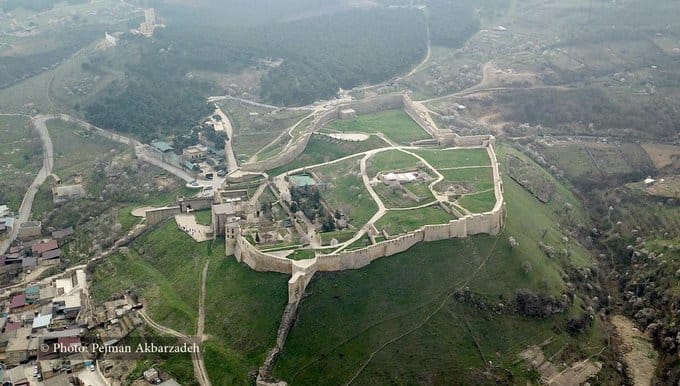
“Derbent: What Persia Left Behind” is a comprehensive documentary that explores the unique history and archaeology of this UNESCO World Heritage Site. The documentary features exclusive footage shot in Derbent just before the Russo-Ukrainian war, along with interviews with renowned scholars who illuminate the rich yet often overlooked history of the fortifications. Funded by the Persian Heritage Foundation and the Soudavar Memorial Foundation, the film also highlights the critical condition of the Middle Persian (Pahlavi) inscriptions found in the region, the northernmost of their kind in the world. (More Information: Derbent Online.)
The table of contents of the latest issue (62/2) of the journal Iran:
Abbas Moghaddam & Elnaz Rashidian: Visiting Tol-e Tahmachi, a Fifth Millennium BCE Settlement in the Persian Gulf Littoral, Southwest Iran
Sheler Amelirad & Behroz Khanmohamadi: Typological Study of Metal Pins in Northwestern Iran Based on the Bayazid Abad (Bayazi Awa) Archaeological Assemblage
Mostafa Dehpahlavan & Zahra Alinezhad: The Cylinder Seals of Qareh Tepe in Sagzabad, Iron Age II and III
Mohsen Javeri & Majid MontazerZohouri: Vigol and Harāskān Fire Temple: Archaeological Evidence About the Veneration of Fire in the Center of the Iranian Plateau During the Sasanian Period
Shahram Jalilian & Touraj Daryaee: The Image of the Sasanian King in the Perso-Arabic Historical Tradition
Esmaeil Sangari, Zohreh Noori, Amirhossein Moghaddas, Aliakbar Abbasi & Reza Dehghani: The Iconography of Dancers and Their Garments on Sasanid Silver Vessels (Case Study: Four Silver Vessels with Different Features)
Michael Shenkar: The So-Called “Fravašis” and the “Heaven and Hell” Paintings, and the Cult of Nana in Panjikent
Moujan Matin: A Medieval Stonepaste Ceramic Production Site in Moshkin Tepe, Iran: Ceramics, Wasters, and Manufacturing Equipment
Philip Henning Grobien: The Origins and Intentions of the Anglo-Persian Agreement 1919: A Reassessment
This volume contains the text of the five Ehsan and Latifeh Yarshater Distinguished Lectures on Iranian Studies, organized by the Unité Mixte de Recherche 7528 “Mondes iranien et indien”, and delivered in 2018 at the Collègue de France in Paris.
It presents a reflection on the nature of narration in classical Persian literature, its role as a central cultural reference system, and the connection that narrative production may maintain with the different fields of knowledge that govern the human experience of the world. Taking a tale of the Alexander legend as a case study, the volume is structured in five chapters, with five main themes: first, the main tools and values of Persian narration; the link of story-telling with Persian moral reflection; the absorption of scientific notions into the fabric of tales; their gradual assumption of symbolic and mystical values; and finally the circulation of tales in popular literary domains alongside various forms of folk knowledge.
With Peter Groves & John Haldon 12 November 2024, at 5pm & on Zoom Levine Auditorium, Trinity College, University of Oxford
The transitions of the title are those in the life and intellectual development of one of the leading historians of late antiquity and Byzantium. Averil Cameron recounts her working-class origins in North Staffordshire and how she came to read Classics at Oxford and start her research at Glasgow University before moving to London and teaching at King’s College London. Later she was the head of Keble College Oxford at a time of change in the University and its colleges. She played a leading role in projects and organisations even as the flow of books and articles continued, in an array of publications that have been fundamental in shaping the disciplines of late antiquity and Byzantine studies in the twentieth and twenty-first centuries.
Iranian Studies, the subject matter of this bibliographic blog, is not an easily defined field. It seems to me that we often mean the study of Zoroastrianism or ancient Iran, when we post about Iranian Studies. But even if we limit the scope of our work to what we might intellectually call the study of pre-Islamic Iran—due to the historical break in the transmission of Iranian religions—a workable definition still eludes us, as a vast number of pre-Islamic Iranian texts and concepts are only known to us through their Islamic garb. It becomes even more complex to define the field of our activities when we include neighbouring fields. I am painfully aware that it becomes still more complicated, if we consider publications that fall slightly outside of the academic genre. However, my approach was from the start a pragmatic one, as I wanted to be able to continue our work for as long as we could and without too much pressure. I know that we often miss publications by our colleagues from neighbouring disciplines; so, here I want to address one shortcoming that is close to my own interests and heart: two memoirs by eminent scholars of the other late antiquity (bold and provocative claim). One by the well-known Peter Brown (Princeton University), whom I have not had the pleasure to meet, and one by the equally well-known and wonderful Averil Cameron (University of Oxford), whom I have.
The end of the ancient world was long regarded by historians as a time of decadence, decline, and fall. In his career-long engagement with this era, the widely acclaimed and pathbreaking historian Peter Brown has shown, however, that the “neglected half-millennium” now known as late antiquity was in fact crucial to the development of modern Europe and the Middle East. In Journeys of the Mind, Brown recounts his life and work, describing his efforts to recapture the spirit of an age. As he and other scholars opened up the history of the classical world in its last centuries to the wider world of Eurasia and northern Africa, they discovered previously overlooked areas of religious and cultural creativity as well as foundational institution-building. A respect for diversity and outreach to the non-European world, relatively recent concerns in other fields, have been a matter of course for decades among the leading scholars of late antiquity.
The transitions of the title are those in the life and intellectual development of one of the leading historians of late antiquity and Byzantium. Averil Cameron recounts her working-class origins in North Staffordshire and how she came to read Classics at Oxford and start her research at Glasgow University before moving to London and teaching at King’s College London. Later she was the head of Keble College Oxford at a time of change in the University and its colleges. She played a leading role in projects and organisations even as the flow of books and articles continued, in an array of publications that have been fundamental in shaping the disciplines of late antiquity and Byzantine studies in the twentieth and twenty-first centuries.
The Achaemenid period (550–330 BCE) is rightly seen as one of the most formative periods in Judaism. It is the period in which large portions of the Bible were edited and redacted and others were authored—yet no dedicated interdisciplinary study has been undertaken to present a consistent picture of this decisive time period. This book is dedicated to the study of the touchpoints between Yahwistic communities throughout the Achaemenid empire and the Iranian attributes of the empire that ruled over them for about two centuries. Its approach is fundamentally interdisciplinary. It brings together scholars of Achaemenid history, literature and religion, Iranian linguistics, historians of the Ancient Near East, archeologists, biblical scholars and Semiticists. The goal is to better understand the interchange of ideas, expressions and concepts as well as the experience of historical events between Yahwists and the empire that ruled over them for over two centuries. The book will open up a holisitic perspective on this important era to scholars of a wide variety of fields in the study of Judaism in the Ancient Near East.