• Slavery & Abolition

    Volume 44, issue 4 (2023), of the journal Slavery & Abolition has just been published. This special issue, entitled Slavery in Byzantium and the Medieval Islamicate World: Texts and Contexts, is edited by Jelle Bruning and Said Reza Huseini. It features two articles of particular interest to Iranian Studies. One by Said Reza Huseini on Slavery Represented in Bactrian Documents, and one by Nazanin Tamari on Zoroastrian Fire Foundations: A Portrait of Slaves and Slaveholders.

    This special issue of Slavery & Abolition presents six studies on the history of slavery in the greater Mediterranean basin, the Near East and the Iranian world during the second half of the first millennium CE. The articles cover a large area that stretches from the Iberian Peninsula in the west to Bactria in the east, an area that was at that time largely controlled by East and West Roman emperors, Sasanian shahs and, later, Muslim caliphs. Despite the widely varying nature of the various historical environments brought together in this special issue, they combine to tell a common story.

    From the editors’ introduction
  • The Syriac Legend of Alexander’s Gate

    Tesei, Tommaso. 2023. The Syriac legend of Alexander’s gate. Oxford: Oxford University Press.

    This book is the first monographic study entirely consecrated to the Syriac text entitled Neṣḥānā d-Aleksandrōs (also known as the Syriac Alexander Legend), a seminal text for later Christian and Muslim apocalyptic traditions. While the scholarly consensus commonly dates the Neṣḥānā to the time of the Byzantine emperor Heraclius (r. 610–641 CE), this study demonstrates that an earlier version of the text was produced during the reign of Justinian I (r. 527–565). This new historical contextualization of the text enables one to better delineate the development of politicized forms of apocalypticism during Late Antiquity, a process in which the Neṣḥānā played a decisive role. By analyzing the contents and the ideology of the text, the book explores the origins and developments of important literary motifs of medieval literature worldwide, including the characterization of Alexander as a pious prophet-king (in both Christianity and Islam alike), and the story of the gate that he erects to confine the eschatological nations of Gog and Magog. Moreover, the book sheds light on lesser-known aspects of political debates in the sixth-century Near East and offers historians a valuable insight into important aspects of Justinian’s reign, as seen by an author who was not on the emperor’s payroll.

  • Estudios Iranios y Turanios (Vol. 5)

    Estudios Iranios y Turanios 2023, Vol. 5, has now been published. The whole issue is dedicated to the Avestan, Middle Persian (Pahlavi) and Ossetian Studies.

    • Alberto Cantera: The interpretatio iranica of Heterograms in Book Pahlavi: The Case of YTYBWN- “To Sit Down, to Dwell and to Set” and Some Related Problems
    • Götz König: Nicht-avestische Texte im Xorde Avesta: die Texte des Danksagens
    • Jaime Martínez Porro: Text and Context of the Yasna ī Rapiθβin
    • Paolo Ognibene: About Some Kabardian Loanwords in Ossetic
    • Éric Pirart: La vejez avéstica
  • The Central Asian world

    Féaux de la Croix, Jeanne & Madeleine Reeves (eds.). 2023. The Central Asian world (The Routledge Worlds). London & New York: Routledge.

    This landmark book provides a comprehensive anthropological introduction to contemporary Central Asia. Established and emerging scholars of the region critically interrogate the idea of a ‘Central Asian World’ at the intersection of post-Soviet, Persianate, East and South Asian worlds. Encompassing chapters on life between Afghanistan and Kazakhstan, Turkmenistan and Xinjiang, this volume situates the social, political, economic, ecological and ritual diversity of Central Asia in historical context. The book ethnographically explores key areas such as the growth of Islamic finance, the remaking of urban and sacred spaces, as well as decolonising and queering approaches to Central Asia. The volume’s discussion of More-than-Human Worlds, Everyday Economies, Material Culture, Migration and Statehood engages core analytical concerns such as globalisation, inequality and postcolonialism. Far more than a survey of a ‘world region’, the volume illuminates how people in Central Asia make a life at the intersection of diverse cross-cutting currents and flows of knowledge. In so doing, it stakes out the contribution of an anthropology of and from Central Asia to broader debates within contemporary anthropology.

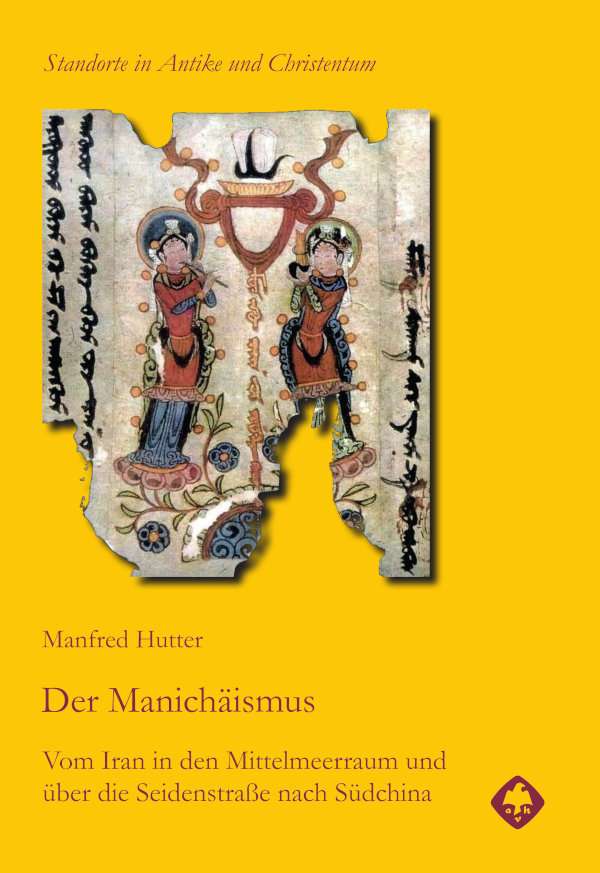
  • Der Manichäismus

    Hutter, Manfred. 2023. Der Manichäismus. Vom Iran in den Mittelmeerraum und über die Seidenstraße nach Südchina. Anton Hiersemann Verlag.

    Das erste umfassende deutschsprachige Handbuch der unterschiedlichen religionsgeschichtlichen Ausformungen des Manichäismus seit 1961.

    Der in der Mitte des 3. Jahrhunderts u.Z. entstandene Manichäismus war die erste „weltweit“ verbreitete Religion. Mani (216-277) präsentierte seine aus biblisch-gnostischen und iranisch-zoroastrischen Vorstellungen schrittweise entwickelte Lehre als den älteren Religionen überlegen, um die Lehre Jesu im Westen, Zarathustras im Iran und Buddhas in Indien abzulösen. Dieser Überlegenheitsanspruch wurde jeweils lokal spezifiziert, was von christlichen Theologen, zoroastrischen Priestern und chinesischen buddhistischen Gelehrten nicht unkommentiert blieb. Dadurch lässt sich diese Religion durch religionsinterne Quellen sowie externe Fremdbeschreibungen facettenreich rekonstruieren.

  • The Steppe Frontiers of Pārsa

    Ferrario, Marco. 2023. The steppe frontiers of Pārsa: Negotiating the Northeastern borderlands of the Teispid-Achaemenid Empire. Journal of Ancient Civilizations 38(2). 129-189.

    The present paper seeks to offer a new interpretative scenario against the background of which to assess the dynamics underlying the interactions between the Achaemenid Empire (starting with Cyrus’ conquest of Central Asia) and the peoples of the steppes, which presided over the formation of what it is usually referred to as the frontier of the Empire itself in Baktria, Sogdiana, and Chorasmia.

    To this end, a set of literary sources comes under critical scrutiny, beginning with Herodotus and Strabo. The reason for this is that, despite the increase of the available evidentiary record, their interpretation in strongly oppositional terms (steppes versus sown) of the above-sketched process has been, and continues to be, very influential. In a second step, archaeological data and comparative evidence of a historical-ethnographic nature will be added, with the overarching aim of framing the narrative of the classical sources into a broader and, as it shall be argued, more proper social, economic, and ecological context.

    The outcome of such a study will hopefully be a more nuanced and complex picture of a crucial phase of Achaemenid history in Central Asia. In the light of the framework presented in the following pages, while on the one hand the driving force and organizational capacity of the newly formed Empire will emerge as decisive elements in the establishment of a new, distinctive, “imperial space” north of Bactr(i)a, on the other hand, the role of local communities in negotiating the modalities of their integration within the networks resulting from the birth and expansion of Achaemenid rule in the area will appear as having been of no less paramount importance.

  • Three Persian Martyr Acts

    Harvey, Susan Ashbrook, Reyhan Durmaz, Michael L. Payne, Daniel Picus & Noah Tetenbaum. 2023. Three Persian martyr acts (Persian Martyr Acts in Syriac: Text and Translation 9). Piscataway, NJ: Gorgias Press.

    This volume brings together the texts and translations for three Syriac martyr acts, set in Sasanian Persia during the reign of Shapur II (309-379 CE). These texts offer compelling witness to the challenges of a community’s need to honor memory and experience, and evidence towards the formation and sustenance of Christian identity in the midst of Persian society and culture.

  • Babylonian Jews and Sasanian Imperialism

    Gross, Simcha. 2024. Babylonian Jews and Sasanian imperialism in late antiquity. Cambridge: Cambridge University Press.

    The new publication date for this book is now February 2024.

    From the image offered by the Babylonian Talmud, Jewish elites were deeply embedded within the Sasanian Empire (224-651 CE). The Talmud is replete with stories and discussions that feature Sasanian kings, Zoroastrian magi, fire temples, imperial administrators, Sasanian laws, Persian customs, and more quotidian details of Jewish life. Yet, in the scholarly literature on the Babylonian Talmud and the Jews of Babylonia , the Sasanian Empire has served as a backdrop to a decidedly parochial Jewish story, having little if any direct impact on Babylonian Jewish life and especially the rabbis. Babylonian Jews and Sasanian Imperialism in Late Antiquity advances a radically different understanding of Babylonian Jewish history and Sasanian rule. Building upon recent scholarship, Simcha Gross portrays a more immanent model of Sasanian rule, within and against which Jews invariably positioned and defined themselves. Babylonian Jews realized their traditions, teachings, and social position within the political, social, religious, and cultural conditions generated by Sasanian rule.

  • Avestan-Middle Persian tense mismatches

    Peschl, Benedikt. 2023. Avestan-Middle Persian tense mismatches in the Zand and the Middle Persian “performative preterite.” Indogermanische Forschungen 128(1). 9–64.

    This article addresses the issue of Avestan (Av.)/Middle Persian (MP) tense mismatches that are occasionally found in the Zand, the MP translation with commentary of the Avesta. While most of these mismatches turn out to be aspectually insignificant or illusory once examined more closely, some of them appear to illustrate the use of the MP preterite as a temporally unspecified perfective category, contrasting with its usual perception as a simple past. In accordance with a pattern found also in non-translational MP literature, the perfective usage of the preterite is argued to be present in the translation of a series of Av. performative utterances in Visperad 3 (the “installation of the Av. priestly college”). Moreover, its use can be observed when the Zand depicts two punctual events as temporally coinciding within a timeless (gnomic) statement. Proceeding from these observations, I discuss the expression of performativity in MP on a more general level. The observations shared in this article support the view that, if considered diligently, the older Zand texts have the potential to contribute valuable data to the linguistic description of MP. Conversely, the article shows how paying close attention to the MP translators’ use of verbal forms may inform our interpretation of the Zand.

  • Journal of Eastern Mediterranean Archaeology and Heritage Studies

    The latest issue (11/2-3) of Journal of Eastern Mediterranean Archaeology and Heritage Studies is devoted to Phoenician studies. Among other interesting contributions, a handful of papers interest scholars of Iranian history and culture.

    • Ann E. Killebrew: Phoenician Iron Smithing and Cult at Persian-Period Tel Akko
    • Ida Oggiano; Fabio Porzia: The Bearded Man and the Pregnant Woman Terracotta Figurines: A Case of Divine “Open Relationship” in Persian-Period Levant?
    • Meir Edrey: Achaemenid / Early Zoroastrian Influences on Phoenician Cultic Practices during the Persian Period