Author: Yazdan Safaee

  • Das achaimenidisch-persische Imperium

    Das achaimenidisch-persische Imperium

    Degen, Julian (ed.). 2025. Das achaimenidisch-persische Imperium. Wiesbaden: Springer.

    Diese Einführung bietet einen systematischen Überblick über die Geschichte des achaimenidisch-persischen Imperiums, das weithin auch als „Perserreich“ bekannt ist. Dabei handelt es sich um die erste imperiale Formation der Antike, der es durch umfangreiche Eroberungen gelang, einen beeindruckenden Herrschaftsapparat zu errichten, der sich von Indien bis in nach Griechenland und von Äthiopien bis nach Zentralasien erstreckte. Dieses Imperium stellte die Bühne für zahlreiche schillernde Persönlichkeiten der Alten Welt dar, zu denen Kyros, Dareios, Xerxes, aber auch Alexander III. (der Große) zählen. Darüber hinaus setzte das Großreich Entwicklungen in Gang, die großen Einfluss auf die Welt Afro-Eurasiens ausübten und deren Dynamiken selbst in der Zeit nach seinem Niedergang bedeutsam waren. Insbesondere die Konflikte des Imperiums mit den Griechen fanden großen Nachhall in der antiken Geschichtsschreibung und ihre Präsentation stellt nach wie vor einen Orientierungspunkt des kollektiven Gedächtnisses moderner europäischer Gesellschaften dar. Aufgrund der enormen räumlichen Ausdehnung dieses Großreichs, das Herrschaft über eine Vielzahl an Kulturen ausübte, ist die Erforschung seiner Geschichte Gegenstand interdisziplinärer Forschungen. So sammelt diese Einführung Beiträge aus der Feder internationaler Spezialistinnen und Spezialisten aus unterschiedlichen Fachbereichen, die tiefgehende Einblicke in zahlreiche Aspekte der Geschichte des achaimenidisch-persischen Imperiums aus verschiedenen Perspektiven bieten.

  • Journal of Iran National Museum

    Journal of Iran National Museum

    The new issue (vol. 3, issues 1/2) of Journal of Iran National Museum is out. It is open access.

    Table of contents:

    • Sepehr Zarei: Giant Cores and Large Flake Production at Dehtal: An Acheulean Site in the Northern Hinterland of Persian Gulf, Iran
    • Hossein Davoudi; Marjan Mashkour; Fereidoun Biglari: Animal Biodiversity during the Late Pleistocene and Early Holocene in the Zagros Mountains: Evidence from the Wezmeh Cave
    • Arkadiusz Sołtysiak: Human remains from Zard-e Sahel, Kashan, Iran
    • Ali Khayani; Sahar Abdolahi: A Door Sealing from Tape Jameh Shuran Sofla, the Mahidasht Plain, Western Central Zagros
    • Saman Hamzavi Zarghani; Cyrus Barfi; Samira Jafari; Mohsen Zeidi: Tol-e Khaki: Tracing the Footsteps of a Chalcolithic Community in the highlands of Fars Province, Southern Zagros Mountains, Iran
    • Rouhollah Yousefi Zoshk; Hassan Afshari Salaki; Donya Etemadifar: Agricultural Practices in Proto-Elamite Susa: An Analysis of Proto-Elamite Tablets at Iran National Museum (MDP 26)
    • Parsa Daneshmand: An Inscription of Hammurapi in the National Museum of Iran
    • Kiumars Alizadeh: From Hanni to Kidin-Hutran the son of Kurluš: a new look into the Arjān bowl
    • Wouter Henkelman: Tacara- and *tacarana-: Palatial terminology in a new exemplar of A2Sde and in the Persepolis Fortification archive
    • Fahimeh Homayoun; Siroos Zare; Younes Zare; Hamid Fadaei: The Newfound Footprints of a Discrete Decoration Type on the Column Capitals at Persepolis: An Outline
    • Zahra Alinezhad: A Review of Coin Finds From Ernst Herzfeld’s Excavations at Persepolis in the National Museum of Iran
    • Sepideh Qaheri: Aegyptiaca of Achaemenid Persia: re-examination of the documentation from Iran
    • Lena Ohrstrom; Natascha Bagherpour Kashani; Roger Seilera; Beata Bode; Abolfazl Aali; Sara Khalifeh Soltani; Shapour Shirani; Gabriela Ruß-Popa; Thomas Stöllner; Frank Rühli: Paleopathological assessment of the ancient Iranian salt mummies #1, #7 and #X, Chehrābād salt mine of Douzlākh, Iran
    • Ali Aarab; Leila Khamooshi; Bahareh Salimian Rizi; Ali Shojaee Esfahani; Yimin Yang: The Origin of Cobalt: A Review of Blue Glazed Ceramics in Iran and China from the 12th to the 17th Centuries CE
    • Manouchehr Moshtagh Khorasani; Andrej Vladimirovich Gromov: An Analysis of the Arms and Armor of the Battle Scene titled “the battle of Yerevan” (National Museum of Iran)
    • Ali Tarmigh: Seismic Risk Mitigation of Art Objects in Museums
    • Naghmeh Hosein Qazvini: Museum and the sublime (Based on Kantian sublime)

  • Studia Iranica (52/1)

    Studia Iranica (52/1)

    The new issue of Studia Iranica is out (volume 52, issue 1). Here is the table of contents:

    • Maryam NOURZAEI, Thomas JÜGEL: On the Function of -ag in Middle Persian. Evaluative Marker or Derivational Suffix?
    • Parviz MOHEBBI: Sweet Orange and Mandarin in Iran and India (14th-19th Centuries) with a Glimpse at Europe
    • Piero DONNINI: Khayyām Literacy among Turkman Copyists
    • Willem FLOOR: Trois Rapports inédits de fonctionnaires belges concernant l’occupation ottomane (1907) et russe (1911) du territoire iranien
    • Comptes rendus

  • Authority, Assimilation and Afterlife of the Epilogue of Bīsotūn (DB 4:36–92)

    Authority, Assimilation and Afterlife of the Epilogue of Bīsotūn (DB 4:36–92)

    Barnea, Gad. 2025. Imitatio Dei, Imitatio Darii: Authority, Assimilation and Afterlife of the Epilogue of Bīsotūn (DB 4:36–92). Religions 16(5), 597.

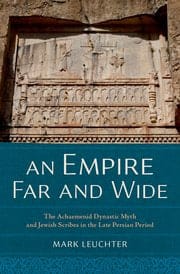
    The Bīsotūn inscription of Darius I (DB) is a masterpiece of ancient literature containing descriptions of historical events, imperial propaganda, cultic statements, ethical instructions, wisdom insights, blessings and curses, and engagements with posterity. It was disseminated far and wide within the empire and left a lasting impression on the cultures with which it came into contact. However, a specific section of this royal inscription (DB 4:36–92), carefully crafted to address future audiences in the second person, stands out sharply from the rest of the text. This passage has made a striking, profound, and durable impression on future generations—which extended over the longue durée in both time and space. This article focuses on the decisive cultic theme undergirding DB in general and its fourth column in particular namely, the king’s profound sense of imitatio dei in the cosmic battle against “the Lie,” complemented by his appeal to an imitatio Darii by all future audiences of his words. The impact of this call can be traced in later literature: in a DB variant found at Elephantine and, most notably, a hitherto unknown exegetical legend found in Qumran, which seeks to explain this portion of DB through an Achaemenid court tale.

  • The Achaemenid Persian Empire and its Non-Western Borderlands: A Change of Paradigm

    The Achaemenid Persian Empire and its Non-Western Borderlands: A Change of Paradigm

    The conference will once again centre on the Achaemenid Empire and those borderlands that research has only sporadically looked at so far: the Central Asian east, India and the Indian Ocean in the south-east, as well as the steppe regions in the north and north-east. The focus here is on interactions not only in spatial but also in temporal dimensions and thus on the systematic recording of innovations, breaks and continuities.

    Organized by Robert Rollinger

    (more…)
  • Elam and Its Neighbors

    Elam and Its Neighbors

    Prechel, Doris & Alexander Pruß (eds.). 2025. Elam und seine Nachbarn. 10. Internationales Colloquium der Deutschen Orient-Gesellschaft, 8.–10. April 2019, Mainz. Wiesbaden: Harrassozitz.

    Die antike Kulturregion Elam im Südwesten des heutigen Iran war über Jahrtausende hinweg eines der bedeutendsten Zentren politischer Macht und kultureller Entwicklung in Vorderasien. Neben dem benachbarten Mesopotamien spielte es im späten 4. Jahrtausend v. Chr. eine bedeutende Rolle bei der Entstehung und Entwicklung urbaner Gesellschaftsformen im Vorderen Orient. Im späten 3. und dem 2. Jahrtausend v. Chr. war der elamische Staat zeitweise so mächtig, dass seine Herrscher mehrfach entscheidend in die Geschichte Babyloniens eingreifen konnten. Auch nach der Zerschlagung des elamischen Reiches im 7. Jahrhundert v. Chr. hat Elam bis in die Zeit des Achämenidenreiches (550–330 v. Chr.) seinen eigenständigen kulturellen Charakter bewahren können. Totz seiner offenkundigen Bedeutung sind Elam und seine Kultur lange Zeit nur von wenigen Spezialisten erforscht worden.

    Mit dieser zentralen Kulturregion des Alten Orients und den Beziehungen zu ihren Nachbarn hat sich das 10. Internationale Colloquium der Deutschen Orient-Gesellschaft befasst, dessen Beiträge in diesem Band versammelt sind. Der zeitliche Rahmen reicht dabei von der Mitte des 3. Jahrtausends v. Chr. bis in die Achämenidenzeit. Die besondere Betonung der Beziehungen Elams zu seinen Nachbarn soll verdeutlichen, dass Elam nicht nur ein östliches „Anhängsel“ Mesopotamiens war, sondern ein wichtiger Knotenpunkt in einem bis nach Zentralasien, das iranische Hochland und die Golfregion reichenden Netzwerk.

    See the table of contents here.

  • Eating and Drinking in the Ancient Near East

    Eating and Drinking in the Ancient Near East

    Martino, Stefano de, Elena Devecchi and Maurizio Viano (eds.). 2024. Eating and drinking in the ancient Near East: Proceedings of the 67th Rencontre Assyriologique Internationale, Turin, July 12–16, 2021 (dubsar 33). Münster: Zaphon.

    This volume comprises many of the papers presented at the 67th Rencontre Assyriologique Internationale in July 2021 in Turin. Due to pandemic restrictions the participants of the conference could not meet in person. The encompassing topic “Eating and Drinking in the Ancient Near East” is broad and declinable under different perspectives. Key lectures (1) have been delivered by Cécile Michel on “Gender Aspects in Food and Drink Preparation” and by Theo van den Hout on “Hittite Foodways: The King as the Provider of his People”. Subsequent lectures grouped around the following sections: (2) Food Production, (3.) Resource Management, (4.) Rituality, Banquet and Commensality, (5.) Medicine and Literature, (6.) Philological and Archaeological Researches, (7.) Varia. The lections feature both philological as well as archaeological topics, presenting new insights into well-known texts as well as hitherto unpublished material. Among others Paola Paoletti examines “Butter and Cheese Production in the Third Millennium BCE Babylonia”, Juliette Mas “Funerary Drinking Vessels in Early and Middle Bronze Age Upper Mesopotamian Burials”, while Ludovico Portuese pursues “The Assyrian Royal Banquet”, and Jan Tavernier “The Use of Eggs in Mesopotamian Medicine and beyond”, to list just a few of the 35 articles.

    Two contributions investigate topics that are related to ancient Iran:

    • Francesca Giusto: Dairy Production in SW Iran from the Middle Elamite to the Neo-Elamite Period
    • Trudy Kawami: What Fine Ceramics Can Tell Us About Social Drinking in Iron Age Iran
  • Late Achaemenid Texts from Šāṭer

    Late Achaemenid Texts from Šāṭer

    Abed, Basima & Johannes Hackl. 2024. Late Achaemenid texts from Šāṭer: The archive of Šamaš-zēru-ibni, Part 1 (dubsar 30). Münster: Zaphon.

    The 67 texts presented in this volume are part of a larger group of (Babylonian) Late Achaemenid legal documents from Šāṭer, a city that is believed to be located somewhere in the area northwest of Uruk up to the outskirts of Nippur. Together with a brief introduction and indices, it included transliterations, autographed copies and photographs of a group of texts that were confiscated from illicit excavators by the Iraqi Antiquity Authorities as part of a larger group of texts now housed in the Iraq Museum. The common element that ties these texts together is their identical archival and commercial context; they can be identified as certain components of the archive belonging to Šamaš-zēru-ibni, son of Ayyanaˀad, an agricultural entrepreneur who was active in and around the Southern Babylonian city Šāṭer during the second half of the fifth century BCE.

  • Contributions on History and Culture of Elam and its Neighbouring Regions

    Contributions on History and Culture of Elam and its Neighbouring Regions

    Mofidi-Nasrabadi, Behzad (ed.). 2024. Contributions on History and Culture of Elam and its Neighbouring Regions (Elamica 14). Hildesheim: Franzbecker.

    The new book in the series Elamica is out and it contains three contributions:

    • T. Brandes & D. Prechel: Keilschrifttexte aus Haft Tappeh (KHT) der Ausgrabungen zwischen 2005 und 2012. Teil 3
    • B. Mofidi-Nasrabadi: Supplementum zu den Tontafeln der rezenten Ausgrabungen in Haft Tappeh
    • B. Rafiei-Alavi & M.-A. Emami: A Diachronic View of Copper-Alloys in the Elamite Metallurgy, A Reassessment of Susa Copper-Based Metal

  • Bridging the Gap: Disciplines, Times, and Spaces in Dialogue

    Bridging the Gap: Disciplines, Times, and Spaces in Dialogue

    Kallas, Nathalie (ed.). 2025. Bridging the gap: Disciplines, times, and spaces in dialogue. Vol. 2. Oxford: Archaeopress.

    This volume gathers the papers presented at sessions 3, 7 and 8 from the conference Broadening Horizons 6, held at the Freie Universität Berlin, 24–28 June 2019, and is available in open access.

    The second volume compiles papers presented in three enlightening sessions: Session 3 – Visual and Textual Forms of Communication; Session 7 – The Future of the Past. Archaeologists and Historians in Cultural Heritage Studies; and Session 8 – Produce, Consume, Repeat. History and Archaeology of Ancient Near Eastern Economies. Within this volume, the 20 papers traverse diverse topics spanning multiple periods, from the 5th millennium BCE to the Roman Empire, and encompass a wide array of geographical regions within the Near East.

    Among other relevant contributions, the following papers deal with aspects of ancient Iranian history and culture:

    • Delphine Poinsot: Sexuation of animals’ bodies in the bullae from Qasr-I Abu Nasr
    • Olivia Ramble: Generations of Writing: The Secondary Inscriptions of Darius’ tacara at Persepolis
    • Takehiro Miki: Deciphering the Skills of the Prehistoric Painting Technique: Case Study of the Painted Pottery of the 5th Millennium BCE from Tall-e Bakun A (Fars province, Iran)
    • Yazdan Safaee: Persian Female Weavers in the Persepolis Economy